Venezuela’s leadership has been unquestionably more cooperative since President Donald Trump ordered the arrest of dictator Nicolás Maduro. Yet the country can’t realize its full economic potential – which benefits Americans and Venezuelans alike – without taking concrete steps toward holding elections.
Dictatorships can sometimes provide the perception of stability for investors. But in Caracas, Trump is working with the remnants of a regime of socialists who systematically dismantled everything that was appealing about the country as a place for investment. Credibility with international investors is particularly important in a country like Venezuela, where the economy is dependent on long-term investment for its languishing oil industry.
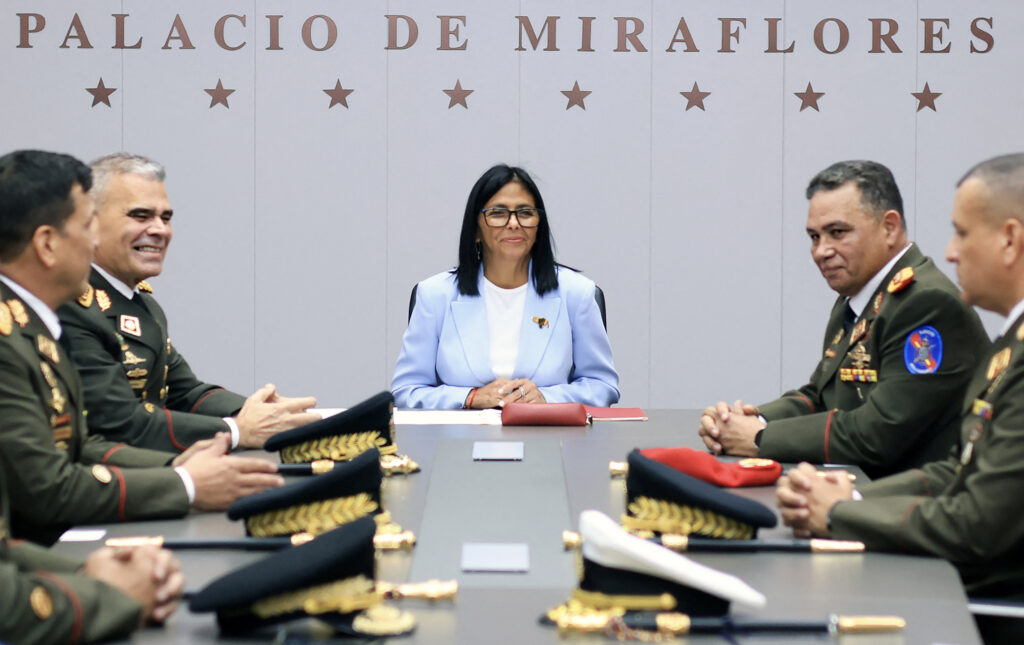
Venezuela’s interim leader, Delcy Rodríguez, has proved pliable, but that’s only because she knows firsthand that Trump is willing to use U.S. military force if she’s overly obstinate. Trump’s successor won’t necessarily enjoy that credibility.
Trump is using carrots to co-opt the new leaders. Earlier this month, he lifted sanctions imposed in 2018 on Rodríguez when she was Maduro’s vice president. With her help, Venezuela’s National Assembly passed legislation to allow more private and foreign investment in energy and mining.
But what Caracas giveth, it has before taketh away. Under Hugo Chávez in 2007, companies like ExxonMobil and ConocoPhillips lost billions to asset seizures and nationalization. An Exxon executive estimates thatbringing Venezuela’s oil output back to 3 million barrels a day would cost “hundreds of millions of dollars.”
Without elections, Venezuela will continue to operate under the specter of Chavismo. Companies need to feel safe sending not just their capital but also their employees to the oil fields. Six Citgo executives, including five U.S. citizens, were unjustly held hostage by the Maduro regime for nearly five years. They were used as bargaining chips to secure the 2022 release of two nephews of Maduro who were jailed in the U.S. for drug trafficking.
The state security apparatus is still full of socialist thugs, and Rodríguez has rivals inside her government who are not as amenable to partnering with Washington. What’s to stop them from taking more hostages in years to come?
Though Exxon and Conoco have recently sent teams to assess market opportunities, their top executives have expressed understandable trepidation about the risks required to return. In January, Exxon CEO Darren Woods called the country “uninvestable” and later argued that Venezuela needs a “transition into representative government.” In March, ConocoPhillips CEO Ryan Lance called the country’s reforms “woefully inadequate.” He is still trying to recoup $12 billion his firm lost under Chávez.
It’s true that Venezuelan oil production has rebounded to over 1 million barrels a day and the government has adopted a variety of liberalizing reforms. And one Venezuelan economist even believes the country’s economy could grow up to 15 percent this year.
Yet this kind of growth won’t be sustainable with a fundamentally unreliable regime. That’s not a call for an Iraq-style democracy campaign; it’s a recognition of reality for businesses around the world.
The post Why democracy still matters in Venezuela appeared first on Washington Post.