Julia R. Cartwright is a senior research fellow in law and economics at the American Institute for Economic Research.
As Americans grapple with stubbornly high prices, stagnant real wages, geopolitical uncertainty and a housing market that has locked out a generation, Washington is throwing a party in orbit.
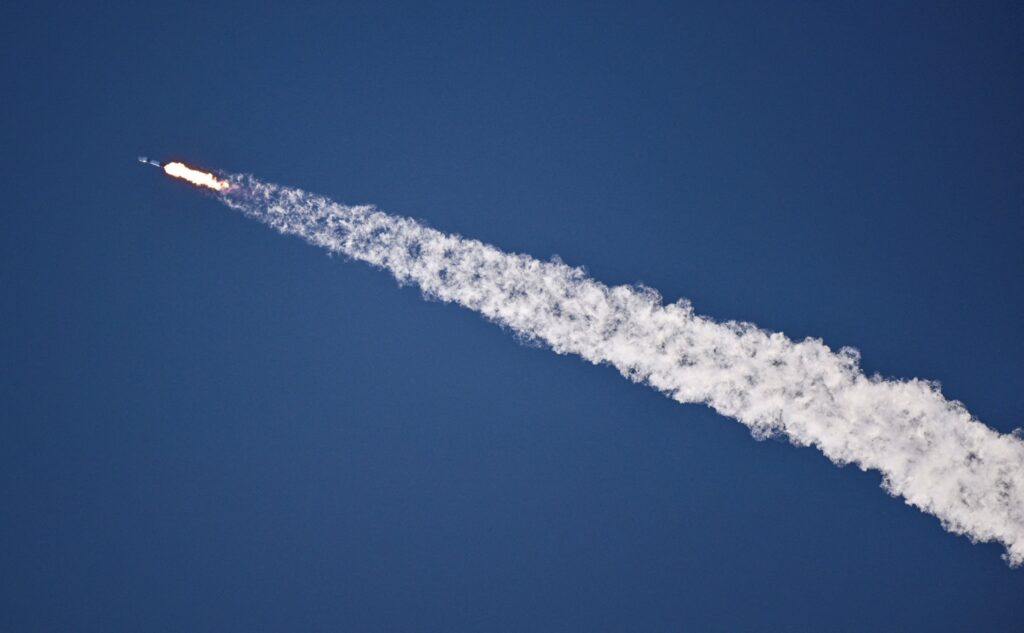
The launch of Artemis II, NASA’s crewed lunar flyby, will cost about $4.1 billion. The entire program is expected to exceed $100 billion by the time astronauts are scheduled to step on the lunar surface once again in 2028. That is enough to send every American a check for roughly $300. Instead, that money is being aimed at the moon.
The mixed track record of government-run space programs makes one thing clear: There are better uses for taxpayer resources. SpaceX has already shown the way, cutting launch costs, capturing the majority of global payload mass and building a satellite network that has proved itself on battlefields. It is time for the market, not Washington, to lead humanity into space.
NASA spends approximately $25 billion per year of taxpayer money. When pressed to justify this, proponents point to a familiarcatalogue of products the agency first produced: memory foam, image sensors and emergency blankets. For a program that has consumed the economic output of a small nation, the returns look less like economic engines and more like marginal consumer upgrades. Do these improvements justify the cost? Could a competitive private market produce them faster and cheaper?
SpaceX has already answered those questions. As even NASA admits its moon program is “unaffordable,” it has also become a major SpaceX customer, thanks to the company’s reusable Falcon 9 rockets, which have reduced launch costs by 70 percent. The company’s founder, Elon Musk, says it now launches about 90 percent of the world’s payload mass sent into orbit. NASA’s own independently verified estimates found that developing a rocket like the Falcon 9 through traditional NASA contracting would have cost roughly $4 billion. SpaceX did it for $390 million.
The reason is structural. SpaceX created its commercial satellite internet Starlink to be the primary funder of its extraterrestrial ambitions. Dependence on real customers, not congressional appropriations, forces a cost discipline that NASA has never achieved.
In 2025, SpaceX generated approximately $8 billion in profit and $16 billion in revenue — a figure that could soon exceed NASA’s entire annual budget. Starlink, which serves over 9 million subscribers across 155 countries reportedly accounted for the vast majority of the company’s revenue last year. The company also holds government contracts, including a $5.9 billion agreement from the Pentagon for 28 national security launch missions through 2029.
This is not a government program dressed up as progress. This is a real business, building real things that happen to be pointed at the stars.
Starlink has already proved what a commercially driven space program can mean in the real world. Within days of Russia’s 2022 full-scale invasion of Ukraine, Starlink terminals became the essential backbone of Ukrainian military communications, with Ukraine at one point accounting for 58 percent of global traffic on the system. When Russia attempted to jam the signal, SpaceX rolled out a software update that bypassed it within days. Meanwhile, Artemis II’s Space Launch System rocket missed its launch date at least three times and was billions of dollars over budget.
The real beneficiaries of Artemis II are aerospace engineers with six-figure salaries and contractors like Boeing, which received roughly $270 million in award fees amid years of delays and enormous cost overruns. NASA has become, and perhaps always was, welfare for the highly educated.
The SpaceX plan to go public tells a different story. The company filed for an initial public offering and is targeting a valuation of up to $1.75 trillion, with a goal of raising approximately $75 billion. It would be the largest IPO in history, with roughly 30 percent of shares reserved for individual buyers, triple the Wall Street standard.
For the first time, ordinary Americans will have the chance to own a piece of the space economy rather than simply bankroll it. With Artemis, the public writes the check and gets memory foam. With SpaceX, it can buy stock and share its growth. That’s the difference between being a taxpayer and being an investor.
Artemis II is, perhaps sadly, not a giant leap for mankind. It is a reminder of how America used to reach for the stars — slowly, expensively and without accountability. SpaceX has shown what space exploration looks like when it must earn its keep: cheaper, faster and driven by people willing to invest their own money, not just spend someone else’s. The final frontier will not be reached by Washington but by markets that reward innovation and demand results.
The post Shooting $100 billion in taxpayer funds to the moon is not a win appeared first on Washington Post.