George F. Will’s March 2 op-ed, “At last, the credibility of U.S. deterrence is being restored,” made a strong case in endorsing U.S. military action in Iran. And he was correct in saying “Donald Trump’s administration has chosen not to wager U.S. safety on Iran’s abandoning its multi-decade pursuit of nuclear weapons, or on Iran’s acquiring them but not really meaning ‘Death to America.’”
The problem is that the foundation of the system we are supposed to be living under is that no such “wagers” are to be made by any president alone.
I would have thought that given Will’s previous critique of Trump’s exercise of executivepower, he would have acknowledged the danger of not obtaining congressional authorization.
James Hyatt, Germantown
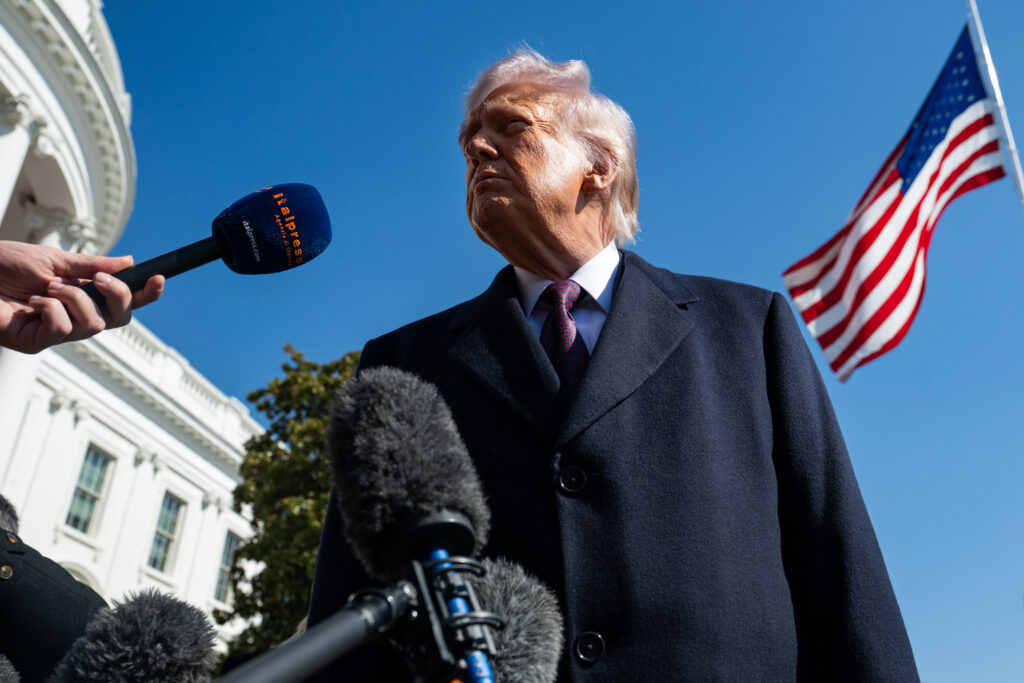
The debate over President Donald Trump’s strikes on Iran has quickly turned into a familiar ritual. Members of Congress are demanding to know why he did not seek prior authorization. Those concerns are serious. But they are not new, and they are not unique to this president.
President Barack Obama ordered military action in Libya in 2011 without a specific vote from Congress, arguing that the operation did not rise to the level of “hostilities” under the War Powers Resolution. During his tenure, hundreds of counterterrorism strikes in Yemen, Somalia and Pakistan proceeded under the broad 2001 Authorization for Use of Military Force rather than fresh congressional approval.
President Joe Biden also authorized repeated strikes against Iran-backed militias in Syria and Iraq and against Houthi targets in Yemen without seeking new authorization beforehand, citing Article II powers and existing authorizations for use of military force.
If Congress believes presidents are stretching their authority, it has tools beyond news releases and posts on X. It can pass a new authorization, repeal outdated ones or use its power of the purse.
War powers should not expand or contract depending on which party controls the White House. Constitutional consistency matters more than selective outrage.
Andrew Logan Lawrence, Savannah, Georgia
I am writing out of profound concern over President Donald Trump’s decision to strike Iran — a move that the March 1 front-page article “Push from Saudis, Israel helped move Trump to attack Iran” described as a “war of choice.”
Trump has pledged for years to keep the United States out of new wars. Yet this action appeared to occur without clear evidence of an imminent Iranian attack on the U.S. or its allies.
If Iran’s nuclear capability had been “obliterated,” as claimed by Trump, the rationale for further escalation demands clarification. The American public deserves transparency regarding the necessity, legality and long-term consequences of such serious military action, which has destabilized much of the Middle East.
Jagjit Singh, Los Altos, California
Listen to Iranians
The March 1 Metro article “Hundreds gather near White House, other D.C. sites to protest attack” was incomplete. It prominently covered “hundreds” of anti-war protesters, but it ignored a far larger and more revealing gathering in Georgetown, where several thousand people — most of them Iranian — celebrated and expressed support for the attacks and for the end of the Islamic regime.
The much larger Georgetown crowd waved the old imperial Iranian flag alongside American and Israeli flags. That contrast was central to understanding the moment, yet it went unmentioned in the Metro article.
Millions of Iranians around the world were celebrating. That was the story of the day.
Geoffrey Brand, Washington
Save Social Security
Ramesh Ponnuru’s Feb. 26 op-ed, “Don’t save social security,” deserves credit for elevating Social Security’s urgent financial challenge and offering constructive ideas to address it. But it’s far from clear that “few Americans would design [Social Security] as it currently is” if they could build the program from scratch.
Social Security’s fundamental structure is sound. The program is both redistributive, providing the highest benefits relative to income to those retirees with the lowest lifetime earnings, and individually fair, with benefits closely tied to lifetime contributions to the program.
After more than 40 years without reform, Ponnuru’s observation that Congress should thoughtfully pursue program updates that reflect the nation’s evolving demography and economy is correct. As Ponnuru observed, the highest benefits Social Security provides are larger than needed, while the lowest should be strengthened. Major demographic shifts in recent decades mean workers must ultimately contribute somewhat more to Social Security during their careers.
But none of this requires a new program design. What’s needed is the kind of reform Congress undertook regularly throughout the 20th century: straightforward, bipartisan adjustments to ensure Social Security continues as the backbone of retirement security for generations to come.
Emerson Sprick, Washington
The writer is director of retirement and labor policy at the Bipartisan Policy Center.
If the income cap on paying into Social Security were eliminated — if people earning more than $184,500 in 2026 continued to pay into the fund after that amount — the present system could continue for more than 40 years, according to an estimate from the Social Security Administration’s Office of the Chief Actuary.
The problem isn’t benefits. The problem is the amount of money that is paid in. Higher earners should pay their fair share.
Robert Byron, Simsbury, Connecticut
Common sense on poverty
The March 2 news article “Conservatives want schools to teach their formula to beat poverty” noted my research with Ron Haskins showing that if everyone simply got a decent education, worked full-time and did not have children before they were married (or in a committed relationship), there would be very little poverty (and also, we found, a large majority who would be middle-class). Our findings have been verified by others, including studies showing that the relationship is causal and not just correlational.
I don’t think this is just a conservative message. It’s an American view. I have found it resonates strongly with most middle- and working-class individuals in focus groups and surveys. Moreover, it’s what most of us teach our own children.
I served in the Clinton administration and saw how powerful it was to talk about these values with ordinary Americans, and I think Democrats should embrace such values. I do worry about legislators telling teachers what to teach. But these messages are not conservative; they are just plain common sense and could help reduce poverty and revive the American Dream.
Isabel Sawhill, Washington
The writer is a senior fellow emeritus at the Brookings Institution.
The post Trump’s strikes on Iran renew an old question appeared first on Washington Post.