Israel said its military had seized areas of southern Lebanon on Tuesday as part of its escalating conflict with Hezbollah, as the Iran-backed armed group fired volleys of drones at the country in a second day of fighting.
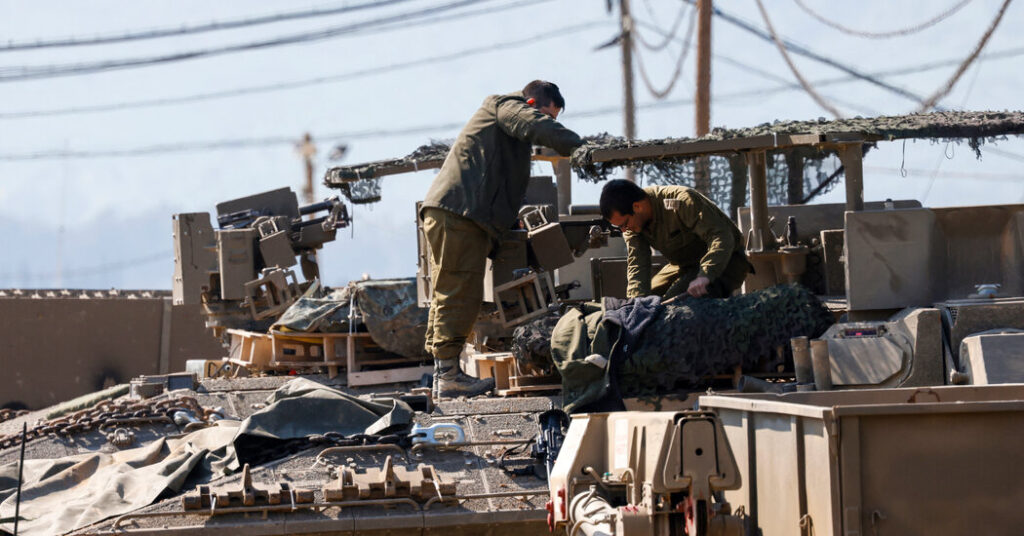
Israel Katz, the Israeli defense minister, said Israeli forces had been ordered to advance and take control of additional strategic locations in Lebanon to prevent attacks on Israeli border communities. Israel already controls five relatively small “points” inside Lebanon close to the border from which it refused to withdraw after it signed a cease-fire with Hezbollah in November 2024.
Nadav Shoshani, an Israeli military spokesman, said the move was purely defensive and intended to remove an imminent threat from Israeli towns next to the border.
But the announcement prompted fears that Israel could be weighing a wider ground assault in Lebanon similar to the one it launched during the yearlong war between Israel and Hezbollah that ended in late 2024.
Hezbollah said on Tuesday that it had fired a wave of drones at Israeli territory. Air-raid sirens went off in northern Israel, but there were no immediate reports of casualties.
The escalation of hostilities between the two sides began on Monday, when Hezbollah fired a volley of rockets at Israel in retaliation for the killing of Iran’s supreme leader, Ayatollah Ali Khamenei. Iran had long backed Hezbollah along with other proxy militias it cultivated to project power throughout the region.
In response, Israeli forces launched successive waves of airstrikes across Lebanon, including near the southern edge of the capital, Beirut. The Israeli military said it had assassinated Hussein Makled, a senior Hezbollah official; the group did not comment on his fate.
The attacks prompted many Lebanese to flee their homes in the country’s south, taking their belongings with them. Lacking formal shelters, displaced people sought safety in schools and mosques, with no idea how long the renewed conflict might last.
Once one of the Middle East’s most feared paramilitaries, Hezbollah emerged from two years of fighting severely weakened. Israel has assassinated many of its top leaders, including Hassan Nasrallah, the group’s secretary-general, and killed scores of its fighters.
On Monday, Nawaf Salam, the Lebanese prime minister, condemned Hezbollah’s decision to attack, which he called unlawful. In an unusually unequivocal denunciation of the armed group, he called to ban Hezbollah’s military activities.
Gabby Sobelmancontributed reporting.
Aaron Boxerman is a Times reporter covering Israel and Gaza. He is based in Jerusalem.
The post Israeli Forces Advance in Lebanon and Seize Land, as Hezbollah’s Fight Escalates appeared first on New York Times.