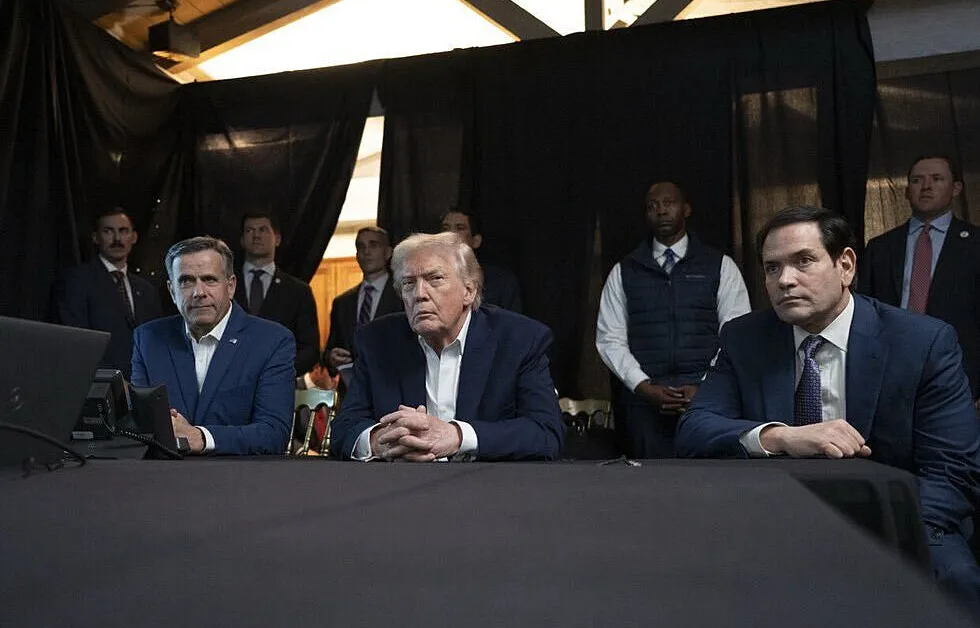
The military raid ordered by President Donald Trump to capture and extract Venezuelan leader Nicolas Maduro represents the starkest expression yet of his administration’s intent to reassert American dominance in the Western Hemisphere. Whether Trump thinks that Russia and China can apply the same spheres-of-influence principle to parts of Europe and the Asia Pacific remains unclear.
[time-brightcove not-tgx=”true”]
The big risk as things stand is that an adversary misreads his mixed signals, oversteps, and triggers an escalation nobody wants. But a world in which great powers dictate affairs in their respective backyards, if Trump does move that way, is more likely to descend into chaos or conflict than to achieve stable equilibrium.
Maduro’s capture masks big questions about Venezuela’s near-term future. Delcy Rodriguez, a stalwart of the Chavista regime, which has run the country for more than two decades, has been sworn in as president. Chavismo, the regime’s ideology, gets its name from the late socialist leader Hugo Chavez, and defines itself by anti-imperialist rhetoric, confrontation with Washington, and close ties with American adversaries from Cuba to China to Russia to Iran.
For now, Trump appears disinclined to oust the Chavista regime, which has a stranglehold on the Venezuelan state. He shows little sympathy for Venezuela’s opposition, whose leader Maria Corina Machado had lobbied for a U.S. intervention aimed at more profound change, and seems to have scant interest in a genuine democratic transition. In any case, any attempt at regime change could provoke violent resistance from the army and a plethora of militias invested in the status quo.
Instead, the immediate goal appears to be grabbing the country’s vast oil reserves, though even there, challenges are formidable. Getting more Venezuelan crude flowing will require billions of dollars and years of work. American companies won’t invest without a better sense of what Venezuela’s future holds. At the same time, it remains to be seen how much Trump can work with Rodriguez and what oil concessions she can offer while keeping the fiercely nationalist Chavista movement and the military in line. Other American demands might be less complicated: Venezuela cutting subsidies to and severing ties with Cuba, for example, or distancing itself from Russia and China.
While Venezuelans live with a deeply uncertain future, the seizure of Maduro caps a year of Trump demonstrating ever more brazenly his belief that Washington must have free rein in the Western Hemisphere.
The wild western hemisphere
Greenland, a sparsely populated, mineral-rich, icebound island, is an autonomous Danish territory located between the Arctic and North Atlantic Oceans. Early in 2025, President Trump appeared fixated on taking control of the territory, insisting on its vital importance for American security.
Such expansionist rhetoric had receded as Trump’s attention turned elsewhere, but, emboldened by the audacious raid in Caracas, the president and his top lieutenants have again indicated the intent to bring Greenland under U.S. control. Trump has even appointed an envoy to that end. Seizing the island militarily would be an extraordinary step, an open confrontation with a NATO ally. Secretary of State Marco Rubio has reportedly told U.S. senators that is not the plan.
Political pressure and subterfuge to extend American influence, perhaps combined with a bid to buy the island, seem more plausible but are unlikely to work. Others in the administration decline to rule out using force. After what happened in Venezuela, it is hard not to take them seriously.
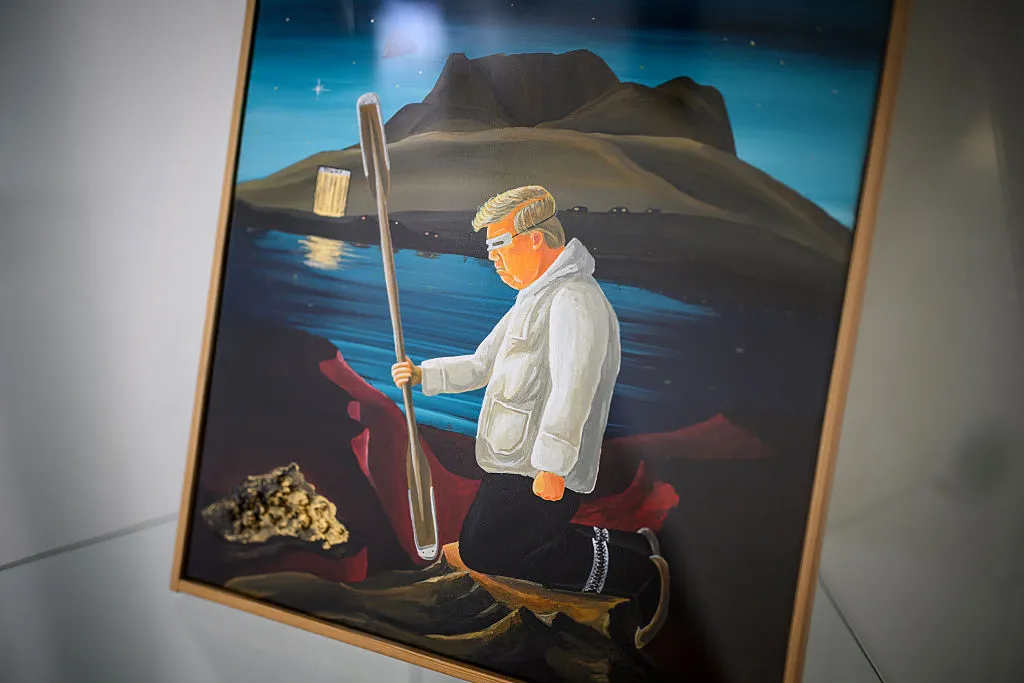
The past year has also seen Trump threaten to reannex the Panama Canal, menace Canada, and interfere openly in Latin American politics. He has leveraged tariffs to punish enemies and bailouts to reward friends, albeit with mixed success. (Trump aided Javier Milei’s re-election bid in Argentina but failed to stop the sentencing of the former Brazilian leader Jair Bolsonaro for an attempted coup.) He has threatened Cuba and Colombia, despite Washington’s longstanding ties to Bogota. He has blown up small boats allegedly running drugs off the Caribbean and Pacific coastlines, and he has floated the idea of unilateral strikes on cartels and fentanyl labs in Mexico.
The message is clear: Washington will throw its weight around in the Western Hemisphere and it wants rivals located elsewhere, China and Russia especially, out—or at least out of critical sectors. It’s a doctrine elaborated clearly in an otherwise muddled national security strategy. In a nod to old-school gunboat diplomacy, it rests on threats and acts of violence. At least part of the point of the smash-and-grab operation in Venezuela was to display raw military power.
Reactions from Moscow and Beijing to Maduro’s snatching have varied. Russia’s condemnations of the American assault have lacked the outrage that marked denunciations of earlier U.S. meddling in Venezuela. The Kremlin did not make much fuss even when the U.S. stopped a Russian-flagged ship transporting sanctioned oil after Moscow had formally asked Washington not to do so. Chinese statements have been stronger and grown in intensity as the U.S. intention to control Venezuelan oil has become clearer.
Neither country has taken concrete steps to defend the regime. Indeed, Maduro discovered all too abruptly—as had his Iranian counterparts last year—the limits of Russian and Chinese backing in the face of American military might. But they may try to stop Rodriguez from yielding to American pressure aimed at curbing their influence in Venezuela. Maduro’s government had been Russia’s main South American partner. Venezuela owes the Chinese government billions of dollars.
Certainly, both Russia and China will resist any wider campaign by Washington to squeeze them out of the continent. China, in particular, is deeply engaged in South America, where it is a large trading partner for many countries. Many of the region’s leaders, even among those who support Trump, value Chinese investment. For its part, Beijing views links in the region as vital to its Belt and Road initiative and energy and mineral supplies.
Sauce for the goose, sauce for the gander
Still, the advantages of Trump’s unabashed embrace of spheres-of-influence politics in the Western Hemisphere are self-evident for Russian President Vladimir Putin and Chinese President Xi Jinping.
Long before Russia’s all-out invasion of Ukraine in 2022, Putin had characterized the collapse of the Soviet Union as disastrous, lamenting the independence of former Soviet states in Eastern Europe and the Caucasus. He has spent years attempting to re-establish Russia’s hegemony in its near abroad and chafed at NATO’s eastward expansion. The deals Moscow proposed to the U.S. and NATO just before Russian tanks rumbled across Ukrainian borders in 2022 show that the Kremlin wants to renegotiate wider European security to give Russia more sway and constrain the military capacity and activities of NATO member states in its neighborhood.
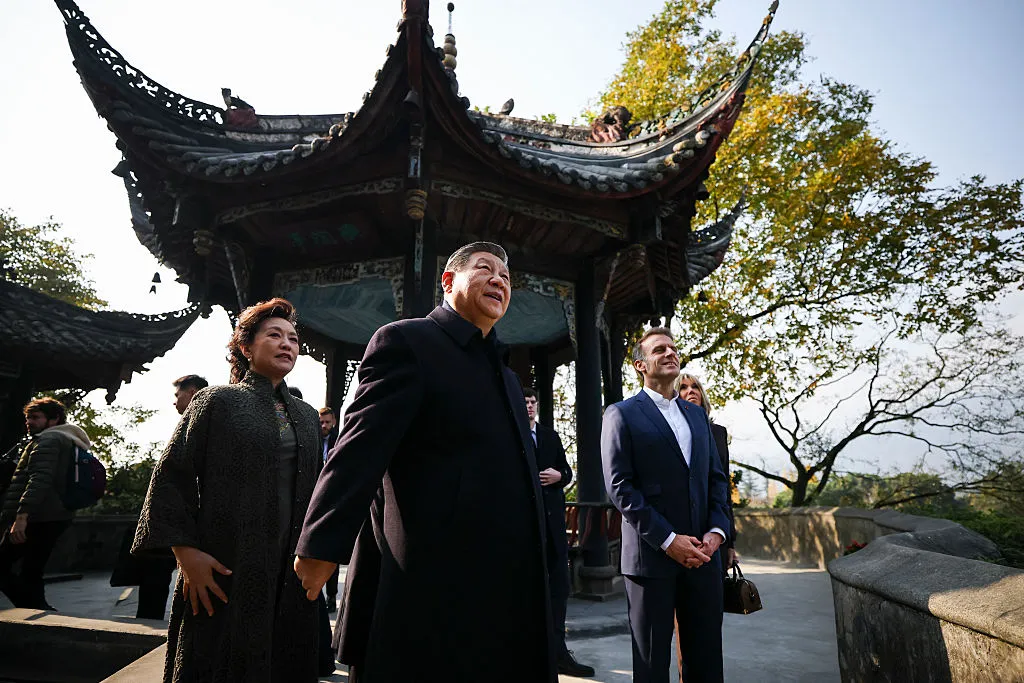
For Xi, the calculus is similarly territorial: intensifying Chinese coercion of Taiwan so as to eventually bring it under mainland rule; advancing maritime claims in the waters surrounding China; and—more broadly—enjoying sufficient influence over the so-called first island chain (the arc of archipelagos stretching from Japan through Taiwan and the Philippines to Borneo) that no rival power can block Chinese access to the Pacific and Indian Oceans. A return to great-power spheres of influence would tacitly legitimize these longstanding strategic goals.
If Washington pushes other countries around or pursues territorial expansion in the hemisphere where it sits, surely Moscow and Beijing can do the same? Conversely, if the U.S. insists that Russia and China stay out of the Western Hemisphere, what justifies America’s military presence in Europe and the Asia Pacific? When senior officials in the Trump Administration suggest that might makes right, that international law is irrelevant, and that small states are expendable, they are not just undermining the international order underwritten by the U.N. Charter, they are providing a soundtrack that plays beautifully in the Kremlin and the Chinese halls of power.
That said, what matters most to Xi and Putin is not what Trump does in America’s vicinity but what he does in Europe and the Asia-Pacific—regions in which they see their own spheres of influence. It’s those signals Beijing and Moscow will be watching most carefully. For now, it’s less clear whether Trump plans to extend to Europe or the Asia the spheres-of-influence policy he is applying closer to home. The president himself and top officials send mixed messages. Even behind closed doors, administration insiders say different things.
Winter is coming
European capitals arguably have the strongest cause to fear that Trump would give Putin a freer hand in the continent’s east—all the more so if the U.S. does try to take control of Greenland and thus imperil NATO.
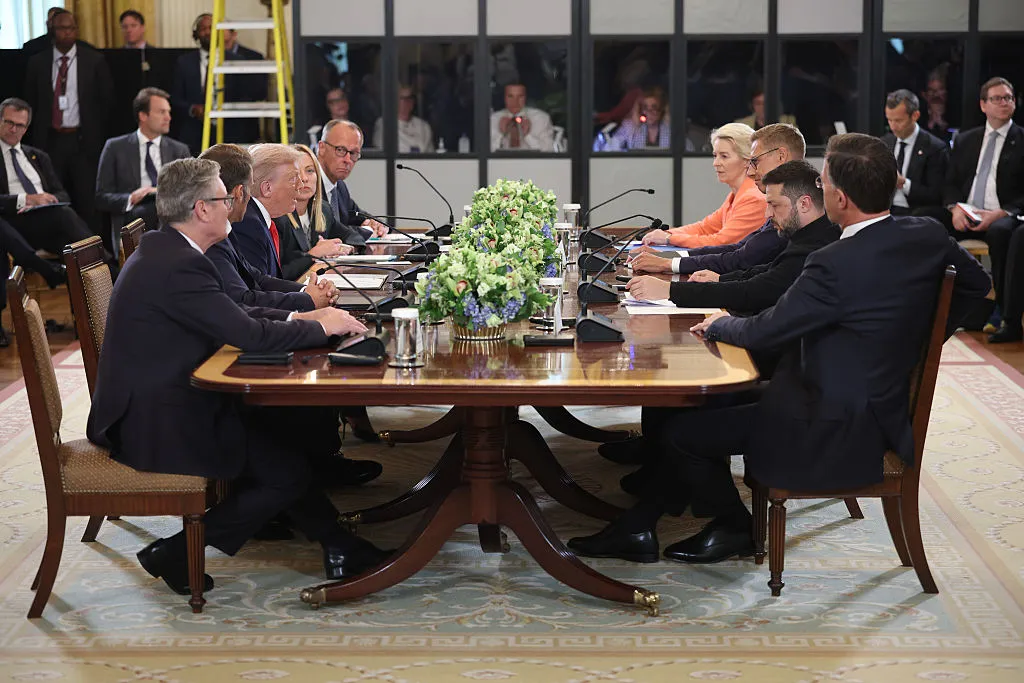
Over the past year, Trump’s mistreatment of Ukrainian President Volodymyr Zelenskyy and his evident disdain for the continent’s elites have often been excruciating to witness.
It’s true that despite Trump’s apparent inclination toward a bargain with Russia and his confusing Ukraine diplomacy, he has not deployed the full weight of American leverage to compel Kyiv and European capitals into accepting a peace deal on Moscow’s terms. Trump has cut off material aid to Ukraine, yet Washington continues to provide critical intelligence and to sell weapons to European allies, who then pass them to Kyiv. Russian officials now tend to see stalled Ukraine talks as evidence that Trump will not abandon Kyiv or European allies.
Still, the American pressure on Zelenskyy to accept an ugly deal—one that would strip Ukraine of meaningful deterrence by capping the size of its military and denying it reliable security guarantees—appears poised to intensify.
Putin, meanwhile, is testing the continent’s defences through a combination of surveillance drones, disinformation campaigns, and acts of sabotage, including suspected jamming of air-traffic-control frequencies at numerous European airports. These operations may now likely escalate further. Putin will probably calibrate his interference to maintain a veneer of plausible deniability. That fiction won’t convince anyone but it will ensure that there isn’t much pressure in Washington for Trump to intervene.
European leaders, for all they talk about the dangers, are moving too slowly to plug gaps in the continent’s security architecture that American disengagement would expose. Even with their best efforts, they need time and some degree of American support in Ukraine. They may also have to contend with Washington backing far-right politicians who, paradoxically, reject the very defense spending hikes that Trump needled out of European leaders. Wary of incurring Trump’s wrath, European leaders for the most part have responded cautiously to his threats to seize Greenland and offered only meek criticism of the assault on Venezuela, even as it is widely seen as breaching the U.N. Charter.
European leaders fear that Russia could overreach beyond Ukraine, forcing a NATO member to respond. As their own commitments to Kyiv and mutual hostility with Russia grow, any number of actions and reactions would risk a dangerous escalation. That threat is accentuated by Trump’s Venezuela intervention and would ratchet up dramatically if he makes a move on Greenland.
Under the Red Sky
Trump’s intentions in the Asia-Pacific remain still harder to read. So far, he has strained— but not jettisoned —America’s alliances. His meetings with counterparts in Australia, Japan, the Philippines, and South Korea have been cordial, and senior U.S. officials continue to signal support for those allies.
Trump has not revised the U.S. posture of “strategic ambiguity” toward Taiwan. That approach has long aimed to deter a Chinese invasion by reinforcing the island’s defences while remaining vague about whether Washington would come to Taiwan’s defense. At the same time, the approach has sought to dissuade Taipei from declaring or making moves toward independence, which Beijing would take to mean hope of reunification (as it would call taking over Taiwan) was disappearing. Indeed, Trump in December approved an $11 billion weapons package for Taipei, prompting Beijing to stage one of its most aggressive military drills ever around the island.
It beggars belief that Trump would cede Taiwan’s advanced semiconductor industry to China, when the American military and industry still depend on it, or cede to China primacy in a region that generates half of global trade. Senior American officials explicitly deny any such intention.
Still, American allies in the Asia-Pacific sense the mood shifting. Hit hard by Trump’s tariffs, they fear what he might give up for the trade deal he clearly desires with Beijing – all the more so as Xi bested Trump in their tariff spat. American allies increasingly worry about Trump’s apparent disinterest in Asia-Pacific security, his tendency to consider China as an economic rival rather than a comprehensive geostrategic competitor, and his downgrading of the region’s strategic importance.
They worry about the implications for the balance of power in the Asia-Pacific if senior American policymakers and much of the U.S. military increasingly put the Western Hemisphere first. Despite big weapons deliveries to Taiwan, Trump himself evinces little interest in the island’s security, and he reacted nonchalantly to China’s drills around Taiwan last month.
In South Korea, there are growing calls for Seoul to develop its own nuclear deterrent. Even in Japan, where nuclear weapons have traditionally been considered unthinkable, concerns about the reliability of U.S. security guarantees have led lawmakers and officials to whisper about the possibility.
Granted, Xi seems unlikely to interpret Trump’s Venezuela intervention as an opening for China to invade Taiwan. Beijing’s calculations are based less on events the other side of the world than on longer-standing considerations, including the difficulty of mounting an amphibious assault, the readiness of China’s military amid continued purges of top commanders, and the massive cost of such a move, particularly given China’s sluggish economy. In any case, Chinese leaders see no precedent in the Venezuela operation for Taiwan, whose status they regard as a domestic issue.
Besides, Xi is more likely to bide his time, avoid a confrontation up with the U.S., and steer clear of unnecessary risks while regional dynamics in Asia appear to be shifting in China’s favor. He may even be cautiously optimistic about politics in Taipei, given opposition leaders’ obstruction of defense reforms and openness to talks with mainland officials.
The greater, more immediate danger, as in Europe, lies in misstep or miscalculation. Dangerous scenarios could unfold were Beijing to overstep, believing that Trump would not respond. A quarantine or blockade of Taiwan could easily escalate, as could a collision with a U.S. boat or a plane or an altercation with the Philippines or Japan, both U.S. allies. In such scenarios, despite his desire to avoid escalation, Trump would face immense domestic pressure to respond and bristle at any suggestion Xi had made him look weak.
The wrong ordering principle
Powerful forces militate against the idea of organizing the world into spheres-of-influence. No stable equilibrium would be arrived at easily. Where would the boundaries of such spheres fall in the Arctic or Pacific, for example? Influential midsize powers—some of which have nuclear weapons and others of which might acquire them—get a say, even if they must make greater accommodations with regional bullies. Moreover, despite Trump’s apparent admiration for Putin and Xi, distrust among capitals is so rife, and the American president so impetuous, that he appears as likely to clash with fellow strongmen as to carve up the world alongside them. His calls for dramatic hikes in the U.S. defense budget do not suggest a single-minded focus on the Western Hemisphere.
Nor would such an approach offer a blueprint for the Middle East, a region of enduring strategic importance. Arab governments eager to turn the page on years of upheaval see Washington as the only power capable—if rarely willing—of restraining a bellicose Israel. Many Arab leaders also want the U.S. to help manage Iran, which is weakened but still poses a threat in their eyes. Without American engagement no understanding about a regional balance of force will develop among Arab powers, Iran, Israel and Turkey.
As for Africa, some thinkers on the continent argue that distracted big powers will leave it alone; a pox on all their houses, in other words. That perspective is understandable, given decades of foreign meddling in Africa. But the lawlessness embodied in spheres-of-influence politics would most likely unleash an ever more frenzied scramble for the continent’s resources by predatory midsize powers.
How Trump’s sphere-of-influence gambit plays out will depend on his next steps. If the regime in Venezuela—without Maduro but still Chavista—rebuffs American demands, will Trump take further military action aimed at more fundamental change, which could plunge the country into factional violence? Or, fired up by seizing Maduro and seeking distraction from political troubles at home, will he attempt something similar elsewhere?
The most perilous next move would be a renewed push to bring Greenland under American subjugation. Such a gambit could well spell the end of NATO, as Denmark’s leader has warned, or at least its radical transformation, and test European unity, with huge implications for the continent’s security. It’s not hard to track a path from there to Russia trying something more reckless in the Baltics.
Attempting to reorganize the world around spheres of influence is a recipe for disaster. We’re not there yet. But Trump’s Venezuela raid has brought us a big step closer.
The post Trump and the Dangers of Spheres of Influence appeared first on TIME.