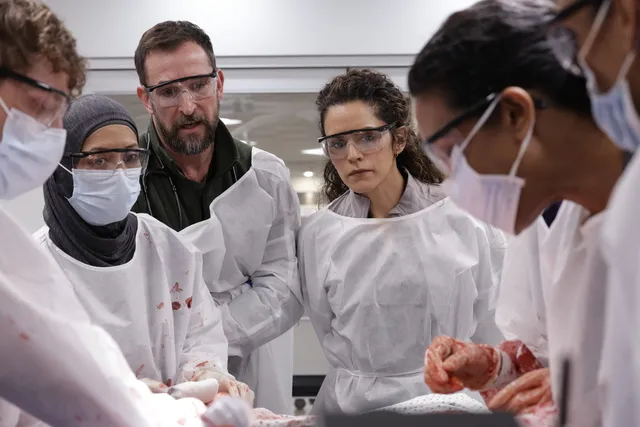
The stars and stripes are flying as Dr. Michael Robinavitch motorcycles to work in the opening sequence of The Pitt’s excellent second season. It’s 7 a.m. on the Fourth of July, a holiday that will flood the Pittsburgh Trauma Medical Center with heatstroke cases, injured swimmers, and kids messing around with fireworks. Before that chaos takes hold, it’s worth noticing the American flags that flank the entrance to the emergency department. In choosing this day to revisit the Pitt’s tireless ER staff, one of the most deservedly acclaimed shows that premiered last year doesn’t just wring gross-out humor from a hot dog-eating-contest winner’s digestive distress (though it’s not too self-serious to resist doing that). It also reclaims the increasingly fraught concept of patriotism as a practice of caring for our neighbors, whoever they may be.
[time-brightcove not-tgx=”true”]
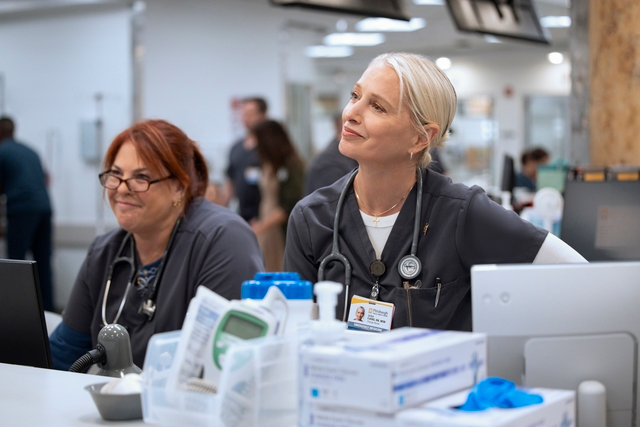
Ten months have passed since the events of Season 1, when a mass shooting at a local music festival pushed the already overworked, under-rested team past their limits. This is a transitional day in the ER. Robby—The Pitt executive producer, writer, director, and star Noah Wyle’s instantly iconic attending physician—is leading his final shift before a three-month leave that sounds like an awfully good idea following his meltdown last season. “I give him one,” predicts veteran nurse Dana Evans (Katherine LaNasa), who’s back on the job despite declaring herself done after being assaulted by a patient; it takes a workaholic to know one. Covering for Robby while he’s away will be Dr. Baran Al-Hashimi (Sepideh Moafi), a technology enthusiast and trauma center newbie who’s already making big changes, and whose untested idealism clashes with his jaded pragmatism. In the wake of Tracy Ifeachor’s much-speculated-about departure from the show, there are also signs that the writers are setting her up to be his new love interest.
Happily, there hasn’t been much other attrition at the Pitt. Dr. Mel King (Taylor Dearden) is still treating patients with openhearted thoroughness, though she’s anxious about the deposition she’ll have to give, in the afternoon, after being named in her first malpractice case. Dr. Trinity Santos (Isa Briones), still brash but now an overloaded second-year resident, reminds Mel that such lawsuits are a standard occupational hazard, and that the hospital protects her from liability. With her 21st birthday looming, the prodigy Victoria Javadi (Shabana Azeez) continues to resist her star-surgeon mom’s (Deepti Gupta) pressure to train in surgery. Just returning to the ER, a rehabbed and humbled Dr. Frank Langdon (Patrick Ball) is desperate to earn Robby’s forgiveness for the nearly career-ending transgression of taking a patient’s meds. But his former mentor isn’t ready to absolve him, banishing Langdon to triage in a transparent act of avoidance.
In some ways, The Pitt’s breakout first season put it at a disadvantage going into the second. The real-time format is no longer a novelty. Characters whose relationships and backstories and defining personal conflicts were revealed slowly as they went about the workday are no longer so mysterious. Viewers will also go in, this time, aware that a 15-episode season must mean an extra-long shift for at least some of the main cast, so one or more major crises seem inevitable. With only nine episodes sent to critics, I couldn’t spoil creator and showrunner R. Scott Gemmill’s endgame for the season if I wanted to. But so far, one small twist that ups the pressure on Robby and his team aside, Gemmill shows little interest in the kind of hysterical stake-raising that could easily turn a hospital drama absurd (see: Grey’s Anatomy).
Instead, we get the subtler pleasures of observing how characters evolve and connect. From our first glimpse of Dennis Whitaker, a.k.a. Huckleberry (Gerran Howell)—now a full-fledged resident despite an extremely typical-for-Whitaker delay in receiving his updated badge—it’s clear the timid student doctor we met in Season 1 has found his footing in the ER. There’s a heartening exchange in which Dr. Cassie McKay (Fiona Dourif), a recovering addict who got a late start in the medical field, offers her support to Langdon as he works his 12-step program. Gemmill finds fresh uses for the real-time structure, too. As common as sexual assault storylines are in procedurals of all kinds, I had never, before this season, encountered one that did justice to the sheer amount of time, care, and gentleness it takes to assemble a rape kit.
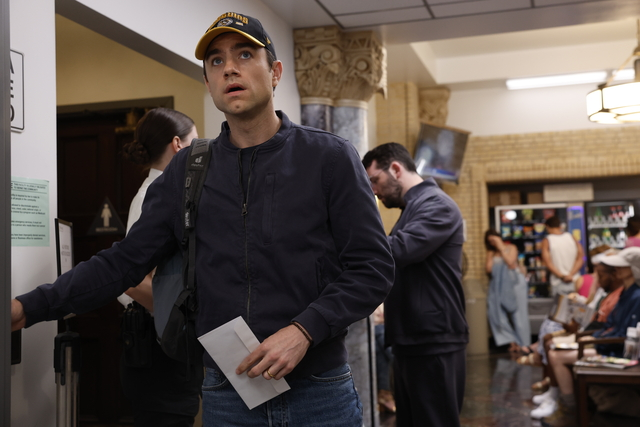
Few shows that become phenomena the way The Pitt did in its first outing escape a sophomore backlash, and it’s easy to anticipate what the criticisms will be in this case. Isn’t a drama where public-health heroes smack down the scourges of poverty, discrimination, violence, anti-science lunacy, and, in the new season, AI’s encroachment into workplaces that thrive on human expertise just impotent, virtue-signaling, liberal competency porn? Doesn’t it all reek of sanctimony and self-congratulation? Occasionally it does. A scene where Robby looks on like a proud papa as Whitaker leads the latest student cohort in the staff’s customary moment of silence following a patient’s death, for instance, tugs a bit too deliberately on the heartstrings.
Most of the time, though, even if it’s largely preaching to the progressive-pilled, The Pitt feels more like an inoculation against the normalization of cruelty than an unearned distraction from it. This is, in part, a function of how many different and surprising storylines Gemmill juggles—how frequently we see well-intentioned assumptions proven wrong, how little time the heroes get to celebrate triumphs, how often they fail as a result of exhaustion or systemic obstacles too entrenched to overcome or just dumb luck. The Pitt is not a fantasy of success in the face of impossible odds. It’s a vision of how much better things could be if more of us committed to showing up for our community, to reaching out rather than closing off, to trying instead of shutting down.
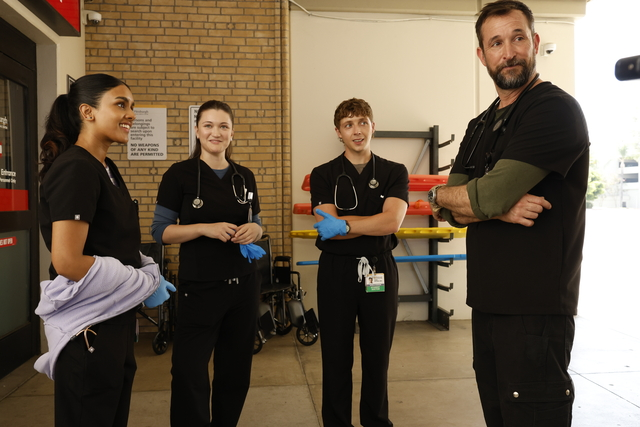
This—not nationalism or jingoism or American-flag lapel pins—is the form of patriotism the show is championing. You see it most vividly through the patients who prove most memorable. A filthy man whose stench sets off a rebellion in the waiting room sees his dignity restored under Dana’s gruff but nonjudgmental care. (Fresh off an Emmy win, LaNasa has essentially been promoted to second lead, and she makes the most of it.) A baby abandoned in the restroom gets the same scrupulous attention one with well-insured parents would enjoy. When a callous new student doctor, James Ogilvie (Lucas Iverson), can’t restrain himself from cracking jokes at the expense of a suffering man whose weight exceeds the limits of the ER’s equipment, he’s the one who comes off as an embarrassment, not the patient. By showing us professionals who honor the humanity of people who are too often dehumanized on screen and in the world, The Pitt isn’t just lionizing its central characters; it’s also laying the groundwork for conversations that give dimension to lives that have more in common with viewers’ own than we might like to admit.
So, sure, it’s all very Emma Lazarus coded. Give the Pitt your tired, your poor, your huddled masses yearning—sometimes literally—to breathe free. But that poem is no smug cliché. Its place in our national mythology has been under attack for a while now. Last year, a French politician demanded that the U.S. return Lady Liberty to France. If she drops her torch, The Pitt suggests, it’s on all of us to pick it up.
The post The Pitt Reclaims Patriotism in a Second Season That Surpasses the First appeared first on TIME.