2026 is a tipping point year.
That’s not because we should expect a coming confrontation between the two biggest powers, the U.S. and China. Nor are tensions between the U.S. and Russia likely to spiral out of control this year. Instead, 2026 looks set to be a time of great geopolitical uncertainty, because the U.S. is unwinding its own global order.
[time-brightcove not-tgx=”true”]
1. U.S. political revolution
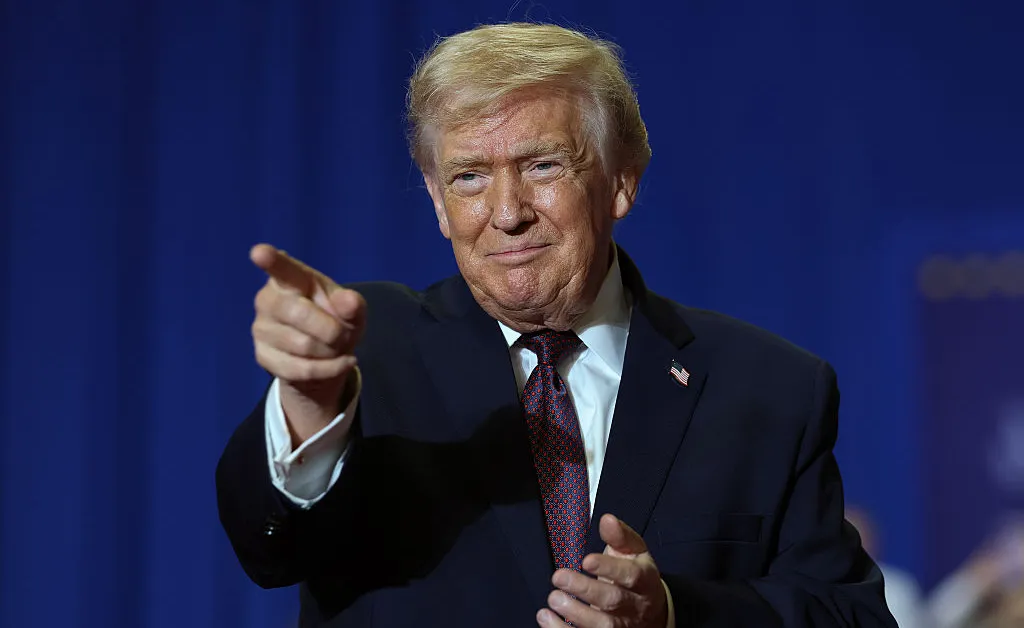
What began as tactical norm-breaking has become a system-level transformation: President Donald Trump’s attempt to systematically dismantle the checks on his power, capture the machinery of government, and weaponize it against his domestic enemies. With many of the guardrails that held in Trump’s first term now buckling, we can no longer say with confidence what kind of political system the U.S. will be when this revolution is over. Ultimately, the revolution is more likely to fail than succeed, but there will be no going back to the status quo. The U.S. will be the principal source of global risk this year.
2. Overpowered
The defining technologies of the 21st century run on electrons: EVs, drones, robots, batteries, AI. All require the “electric stack.” China has mastered it, becoming the first “electrostate.” The U.S. is ceding it, cementing the country’s status as the world’s largest petrostate. In 2026, that divergence will become impossible to ignore. While Washington asks countries to buy 20th-century energy, Beijing offers 21st-century infrastructure at knockoff prices. Emerging markets will increasingly favor China’s offering. The cumulative effect is a geopolitical turning point: A growing share of the world’s energy, mobility, and industrial systems will be built on Chinese foundations, bringing Beijing commercial benefits and influence that soft power alone could never deliver. The AI race raises the stakes—the U.S. may build the best models, but China may win the market if it can power and deploy AI at scale.
3. The Donroe Doctrine
President Trump is reviving and reinterpreting the logic of the Monroe Doctrine in an effort to assert U.S. primacy over the Western Hemisphere. The big news this year is Venezuela, where Washington’s escalating regime-change campaign has resulted in a headline win for Trump with Nicolás Maduro’s ouster and trial in the U.S. But taking out Maduro was the easy part; transitioning to a stable, U.S.-friendly, if not democratic government will be more challenging. Across the region, heavy-handed American tactics will risk spurring backlash and unintended consequences.
Read More: Trump’s Goals in Venezuela Don’t Add Up
4. Europe under siege
France, Germany, and the U.K. each enter the year with weak, unpopular governments under siege from the populist right, the populist left, and the Trump Administration. All three risk paralysis at best and destabilization at worst—and at least one leader could fall. Europe’s ability to address its economic malaise, fill the security vacuum left by America’s retreat, and sustain support for Ukraine past 2026 will suffer. If Washington overtly interferes in European elections or takes the dramatic step of annexing Greenland, the postwar alliance framework, already strained, could fracture.
5. Russia’s second front
The most dangerous front in Europe this year will shift from the trenches in Donetsk to the hybrid war between Russia and NATO as Vladimir Putin seeks to erode European support for Ukraine before economic strain impairs his ability to prosecute the hot war. After years of absorbing punishment, NATO will for the first time push back on Russia’s gray-zone operations. The alliance will shoot down drones, hold exercises close to the Russian border, and take tougher offensive cyber action. This combination will result in more frequent and dangerous confrontations in the heart of Europe. As all sides grow more risk-acceptant, the margin for error will narrow.
6. State capitalism with American characteristics
The most economically interventionist administration since the New Deal will entrench further in 2026. Trump’s state capitalism is personal and transactional: Businesses that align with him receive favorable treatment; those that don’t risk finding themselves at a disadvantage. The toolkit is expansive and includes tariffs, equity stakes, revenue-sharing deals, regulatory leverage, investment-for-market-access agreements. The transactional logic extends to foreign governments as well. With midterms approaching and economic discontent rising, Trump will double down on interventionism rather than pull back. Tariffs will face constraints this year, so the Administration will rely on other tools, picking winners and losers at a scale not seen in modern U.S. history. The precedent will stick for future administrations.
7. China’s deflation trap
China’s deflationary spiral will deepen and Beijing won’t do anything to stop it. With the 21st Party Congress looming in 2027, Xi Jinping will prioritize political control and technological supremacy over the consumption stimulus that could break the cycle and prevent a Japanese-style “lost decade.” The pain will fall hardest on the young, who are increasingly giving up on the “China Dream.” Beijing will keep trying to export its way out, flooding global markets—an approach that most trading partners may absorb this year but won’t tolerate forever.
8. AI eats its users
AI is a revolutionary technology, but it can’t yet live up to investor expectations. Under growing pressure to justify sky-high valuations and unconstrained by guardrails, a number of leading AI companies will adopt extractive business models (such as experimenting with ads embedded in conversations where, unlike traditional search, there’s no way to distinguish neutral information from paid influence) that threaten social and political stability—like social media, but worse. Social media captured attention; AI programs behavior, shapes thoughts, and mediates reality. The near-term threat is not superhuman machines but the decline of thinking, feeling, and social humans.
Read More: The Architects of AI Are TIME’s 2025 Person of the Year
9. Zombie USMCA
North American trade will be stuck in limbo this year. The USMCA won’t be extended, updated, or killed—it will stagger on as a zombie, keeping businesses and governments guessing. Trump doesn’t want a new trilateral deal; the zombie agreement lets him keep squeezing Mexico and Canada for bilateral concessions. Tariff exemptions for compliant goods will hold, but for sectors the U.S. wants to reshore—autos, steel, aluminum—the days of free and predictable North American trade are over.
10. The water weapon
Water is already one of the most contested shared resources on the planet, but it is increasingly becoming a loaded weapon. Half of humanity already lives under water stress, and there’s no architecture to manage it. In 2026, the governance vacuum will deepen—the Indus Waters Treaty suspended, Ethiopia’s Nile dam operational with no binding agreement, China building the world’s largest dam with no downstream treaty. In Africa, extremists exploit ungoverned water scarcity to recruit and control populations. In South Asia, nuclear-armed rivals are turning rivers into leverage. No single crisis may erupt this year. But the weapons are loaded, the guardrails are off, and when the next shock comes, water will make it worse.
Red herrings—the risks that are overrated
“Tariff-man” at large
Trump’s unilateralist instincts are intact, but his trade leverage will be more constrained going forward. China’s rare earth leverage pushed him toward a deal rather than a fight he couldn’t win. The economic order is increasingly multipolar, and other countries have options. With the midterms approaching, Trump will have less room for tariffs that drive up prices.
Read More: Why Trump Will Blink First on China
De-globalization
Despite stagnant trade growth and elevated tariffs, globalization grinds on. Peak tariffs are behind us, and countries outside the U.S. want to preserve the system while hedging. New trade deals are still being struck even as tariffs grab headlines, and supply chains remain sticky. De-risking is not de-globalization.
Spheres of influence
The Western Hemisphere elevated in U.S. strategy, deals with Xi, acceptance of Russian gains—it looks like a 19th-century carve-up. But the U.S. remains a global power with global ambitions, just pursued more transactionally. The law of the jungle is back. Spheres of influence aren’t—the world is both too interconnected to carve up and too fragmented to hold together.
Sell America
After “Liberation Day,” pundits declared American exceptionalism dead. Yet the dollar remains the safe haven, and the U.S. remains the most investable major economy. The reason: TINA (there is no alternative). The U.S. is too big, too innovative, and too hard to replace.
The post The Top 10 Global Risks for 2026 appeared first on TIME.