MINNEAPOLIS — After working the graveyard shift, a security guard wearing a Santa hat, glasses and a white beard drove through falling snow one recent morning to the Moose bar and grill, one of this city’s premier gambling institutions.
He sipped a blueberry-flavored vodka cocktail and shelled out a few bucks for some pull tabs — cardboard tickets that peel open to reveal a combination of images and, if you are lucky, cash prizes.
At the other end of the bar festooned with snowflakes and tinsel, Rick Erickson was on a losing streak, winning just enough in small prizes to keep playing but not enough to go home. “Sometimes you win,” Erickson said, laughing. “But mostly you lose.”
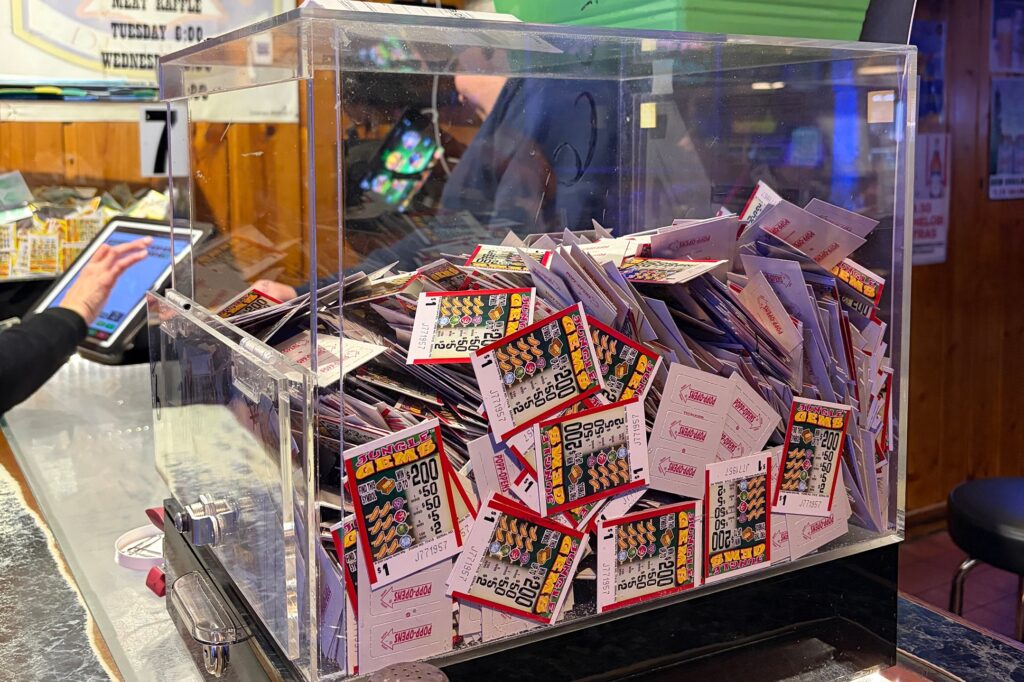
Pull tabs, legal in Minnesota and a few other states, have been a cherished Midwestern tradition for nearly 50 years. Unlike state-run lotteries, the games benefit local nonprofits like hockey associations, veterans groups, fire departments and even churches. Each box of pull tabs has a theme, and the prizes available are posted on the side of the box. When a winning pull tab is purchased, the person selling them crosses out that prize.
But as with many traditions, technology is encroaching, igniting a political and cultural battle. In some bars, vending machines are replacing the venerable pull tab ladies who traditionally sell cards. Others have switched to games on electronic tablets, which in recent years became the subject of a regulatory debate after Native-American-owned casinos complained they competed too directly with slot machines.
Loyalists say e-tabs just aren’t the same, decrying the lack of personal interaction and the reliance on screens. The machines don’t allow for strategizing. Unlike a clear plastic box that allows players to monitor the ratio of pull tabs sold to the number of big prizes that remain, each machine-dispensed ticket has the same random chance of winning. E-tabs also don’t have the smaller “playback” prizes that keep the game flowing, with players buying back in and other bar patrons encouraged to follow suit.
The communal aspect is part of the charm, said Bill Lindeke, who wrote a book about Minneapolis bars in which he chronicles pull tab culture. “Being together in a room is something we need right now,” he said. “There’s addiction problems that apply, just like any gambling. But here, it’s a little more social, there’s more of a culture to it. And it’s going to a good cause, so you feel less bad about it.”
Even in single-digit weather, on a snowy afternoon, pull tab aficionados congregate in local bars with friends in the hope of winning the old-fashioned way. Players start by approaching a pull tab “lady” — who is sometimes a man — to buy a few handfuls of the matchbox-sized cards. If they’re lucky, the vendor may let them choose from where in the box they want their pull tab — the back left corner, for example, or way at the bottom.
Each tab costs a dollar or two. Prizes range from $2 to $500 and — very occasionally — as much as $1,500. Serious players suss out which boxes are hot based on whether others have already pulled winners.
While the gambling may be charitable by definition, it attracts its fair share of vice. The games are intermittently the subject of fraud investigations, with bartenders sometimes found to be illegally pocketing part of the profit. The Minnesota Department of Public Safety’s Alcohol and Gambling Enforcement agency this spring uncovered a crime ring in which eight people worked together to allegedly steal hundreds of thousands of dollars in cash from various pull tab operations across the state.
On the day Erickson was at the Moose, he and a female friend took turns pulling their tabs and heading back to the pull tab lady’s booth to buy more.
“The plan is if he wins I’ll jump him in the parking lot, and if I win he’ll jump me,” said the friend, who did not give her name to a reporter. Eventually she gave up on the gambling and ordered dessert from the bartender, who offered it on the house because it was her birthday.
Across town, Brad Wedgewood was spending his morning e-tab winnings from Cam’s on beer, lunch and paper pull tabs at Steve O’s, a wood-paneled bar famous for its chicken wings. On the wall hung tablets for e-tabs, and in the corner a TV displayed the remaining winning pull tab tickets.
Like a lot of regular players, Wedgewood, a retired electrician, objected when the state changed the rules to make e-tab play slower and less interactive last year. But he still thinks the tablets have their advantages, he said. For one thing, they’re more convenient, in that you don’t have to stand up and walk across the bar to buy more.
Stef Tiedeken, who sells pull tabs at Steve-O’s, agreed the tablets are less of a hassle because they don’t require cash and you can play them before the pull-tab lady gets to work and after she goes home — 11 p.m. in her case.
E-tabs are also more convenient for the people running the gambling, said Samuel Gerlach, who is president of a local firefighters’ association that distributes pull tab revenue from Steve-O’s and four other local bars.
“They’re very low maintenance. It requires a little less auditing, hard-counting,” he said. “It’s electronic so everything is on the tablet itself, instead of having hundreds of pull tabs and hundreds of boxes to sift through.”
Gerlach’s organization gives money to a variety of local groups, including Little League baseball and city-funded camps. During the federal government shutdown, when food assistance benefits were temporarily unavailable, the money raised from pull tabs went to a local food pantry, which was not only able to purchase food but also replace a broken refrigerator, he said.
Wedgewood ticked off other advantages: e-tabs offer a reprieve from “box watching,” when players lurk as others pour money into a box chasing a winning ticket and then buy into that box when those pull tabs come up empty.
Plus, there’s less pressure to tip. Players are expected to give pull-tab sellers a tip on winning tickets even if they’re losing money overall, he explained. “They want ten percent — they think they’re entitled to it.” The iPads, on the other hand, expect nothing.
Still, as he drank a Budweiser and decided what to order, Wedgewood put in $100 on paper pull tabs.
“It’s good to diversify,” he said. But his luck from the morning had run out.
Hans Sterner played pull tabs for years before getting into the business himself three years ago, landing a job selling pull tabs for the Minneapolis Hockey Association.
“It’s hard to get in,” he said. “You gotta know somebody who knows somebody.”
Sterner, 37, said the prime demographic for pull-tab aficionados is White men between 55 and 75 years old. That’s why tabs are popular fixtures at veterans’ halls, where players on a fixed income tend to have a little extra money and a lot of extra time.
But he works at Mayslack’s, a dive bar in the Northeast neighborhood that attracts a slightly younger crowd. A rare male pull tab seller — or in his own nomenclature, “tab tender” — Sterner uses the money from the gig to support his apparel business.
He doesn’t see the e-tabs as competition. Rather, he said it’s “a host parasite thing,” where each game benefits from the presence of the other’s customers. Maybe in 15 or 20 years, he said, the e-tabs will overtake “cardboard crack,” but he’s not worried.
“Things will come and go,” he said. “But people will still like to go to a spot where they can drink and gamble.”
In the meantime, Sterner sees it as his responsibility to ready the next generation, teaching them about tipping etiquette and game strategy.
It’s a big responsibility at a bar like Mayslack’s, where it’s not uncommon for Sterner to encounter customers who have never played or even seen pull tabs before.
“It’s the Midwest,” Sterner said. “It only exists here.”
The post Technology can’t kill this popular Midwestern bar game appeared first on Washington Post.