The Supreme Court’s 6-3 decision on Friday wiping out a chunk of President Donald Trump’s tariff regime is a triumph for the Constitution’s separation of powers and the individual liberty that it protects.
The decision by Chief Justice John G. Roberts Jr. says nothing about whether the tariffs are good or bad policy. But it recognizes that they are a major tax, and that raising revenue is a “distinct” power that belongs to Congress. There’s a reason the 18th century American revolutionary slogan was “no taxation without representation.” Taxing citizens without consent from their elected representatives is antithetical to the American project.
Congress never approved the worldwide tariffs at issue in the case. Trump told the court they were authorized by a 1977 law, the International Emergency Economic Powers Act. No president has used IEEPA to impose tariffs, but it contains the phrase “regulate … importation.” Trump said that was sufficient authorization for him to throw out the rest of the tariff schedules and set import taxes however he pleased.
Roberts saw the flimsiness of that reasoning. “Based on two words separated by 16 others,” he wrote, “the President asserts the independent power to impose tariffs on imports from any country, of any product, at any rate, for any amount of time. Those words cannot bear such weight.” Indeed. The executive branch can’t be allowed to grab hundreds of billions of dollars from the American people on such a thin legal basis.
Reading between the lines, there’s a sense that Trump’s frenetic alteration of tariff rates weighed on the court. The opinion notes that under Trump’s reading of the law, he is “free to issue a dizzying array of modifications at will” — and indeed he has. Tariffs have become a lobbying bonanza as companies campaign for exemptions and carveouts.
Congress has enacted other laws explicitly granting the executive the power to impose tariffs. But as the opinion notes, those laws “contain various combinations of procedural prerequisites, required agency determinations, and limits on the duration, amount, and scope of the tariffs they authorize.” Trump wanted to use IEEPA to circumvent those limits. That made the imposition of tariffs more arbitrary and chaotic.
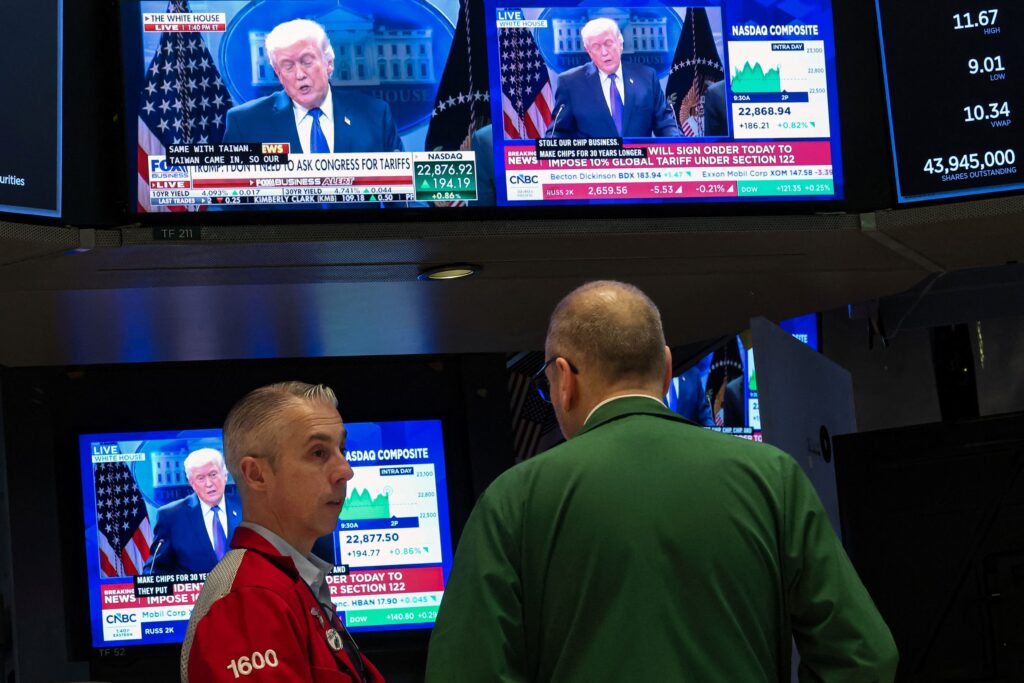
The administration will certainly try to restore many tariffs under those other laws. Trump announced Friday a new 10 percent global tariff under a law that allows such a levy for up to 150 days. But the court’s decision came down on the same day that the quarterly growth rate came in at just 1.4 percent, below expectations. The decision might be an opportunity for Trump to take his finger off the tariff trigger ahead of the midterms.
The dissenting opinion, authored by Justice Brett M. Kavanaugh and joined by Justices Samuel A. Alito Jr. and Clarence Thomas, is more than twice as long as the majority’s. It has to be, because it reaches for an array of justifications and principles to try to get around the majority’s straightforward logic.
One justification offered is that the court shouldn’t apply so much scrutiny to tariffs because they involve “foreign affairs.” In several past cases where the president claimed broad economic powers based on vague or general language in an old statute, the Supreme Court has been skeptical. The idea behind this skepticism — known as the “major questions doctrine” — is to prevent the president from usurping Congress’s role.
But Kavanaugh argues that this doctrine only applies in cases involving purely domestic affairs, such as the student loan case of 2023. In that decision, the Supreme Court said President Joe Biden couldn’t unilaterally cancel $430 billion of student loan debt.
The problem is that tariffs are paid by companies in the United States, making Kavanaugh’s foreign affairs distinction questionable. Moreover, the Constitution gives Congress and only Congress the power to tax, whether the tax is domestic or on imported goods. And as Justice Neil M. Gorsuch points out in a separate opinion, the Supreme Court has applied major questions scrutiny in cases involving climate regulation and the pandemic. Those subjects could be said to implicate foreign affairs.
One narrative about this Supreme Court is that it is subservient to Trump. Now the court has frustrated his signature initiative. Last year it also blocked his deportations without due process to El Salvador and ruled against his deployment of the National Guard in Illinois.
This decision was too close, but it underscores that the Supreme Court remains independent. The separation of powers held. If only Congress would also fulfill its role as forcefully.
The post Trump’s tariffs fall to a principled Supreme Court appeared first on Washington Post.