Friday’s Supreme Court ruling may eliminate President Trump’s preferred tool for imposing tariffs, but that does not mean he can no longer slap steep duties on foreign imports. In fact, he still has at his disposal a range of additional authorities that the administration is expected to use imminently to continue its trade war.
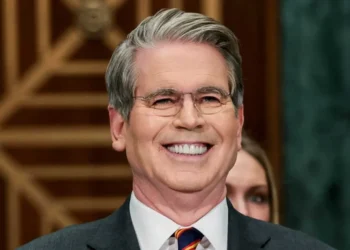
In an interview before the ruling, Jamieson Greer, the United States Trade Representative, said that Mr. Trump could quickly find other avenues to tax imports.
“Congress appropriately has delegated a lot of tariff authority to the President of the United States,” Mr. Greer said.
And Justice Brett M. Kavanaugh, in his dissent, included a list of the other trade authorities that the president could use and noted “the Court’s decision is not likely to greatly restrict Presidential tariff authority going forward.”
Here’s a look at some of the other tools at the president’s disposal:
Section 232
One powerful option in Mr. Trump’s toolbox is Section 232 of the Trade Expansion Act, which allows the president to impose tariffs on foreign products in the interest of national security. Mr. Trump has already used this authority to tax imports of autos, steel and copper, along with other goods.
But unlike the International Emergency Economic Powers Act, which the president had used until Friday to impose tariffs immediately, Section 232 requires a Commerce Department investigation into whether an import poses a national security risk. By law, the commerce secretary has 270 days to present findings from the investigation to the president.
Section 122
The administration could also use Section 122 of the 1974 Trade Act to put in place a global tariff up to 15 percent, but only for 150 days. That law says a president can impose duties to deal with “large and serious” balance-of-payments deficits — an issue related to trade deficits, which some of the president’s IEEPA tariffs purport to address.
At least temporarily, it would not be dissimilar from the baseline 10 percent tariff that Mr. Trump had imposed globally, or the 15 percent tariff that he had clinched in deals with other countries over the past year.
Section 301
Section 301 of the 1974 Trade Act allows Mr. Trump to impose duties after conducting an investigation and finding that a country engaged in trade practices that were unfair, unreasonable or violations of previously signed trade deals.
Mr. Trump has repeatedly invoked this power since his first term in office, primarily to impose steep tariffs on China, whose leader, President Xi Jinping, he is set to meet in the coming weeks.
Last year, Mr. Trump also opened an investigation into Brazil using Section 301, as part of a series of actions he took in response to that country’s treatment of its former president Jair Bolsonaro, his political ally.
Section 338
Another provision, Section 338, which was established under the 1930 Trade Act, allows the government to impose tariffs if other countries “uniquely discriminate” against the U.S. Trade experts say that means it might be used against other countries if they end up retaliating against the United States.
Tony Romm is a reporter covering economic policy and the Trump administration for The Times, based in Washington.
The post Trump Has Other Options to Impose Tariffs appeared first on New York Times.