President Trump is considering committing the United States to another military campaign against Iran, a decision that carries the risk of igniting a conflict that could prove to be longer, deadlier and far more dangerous than last year’s 12-day war.
Last June, the United States joined a campaign against Iran that Israel had begun, and Mr. Trump gave the military a specific goal: to bomb Iranian nuclear facilities and set back Tehran’s ability to one day make a nuclear weapon. Within days of the U.S. strikes, all sides agreed to a cease-fire. There were no American casualties.
Now, the Pentagon is in the midst of the largest military buildup in the Middle East in two decades, and Mr. Trump is considering a far more expansive operation — this time led by U.S. forces — without saying publicly what he hopes to achieve. Would a campaign once again be focused on Iran’s nuclear sites? Would there be additional strikes to eviscerate Iran’s ballistic missile arsenal, which Iran has insisted it would not give up through negotiation?
Or, could Mr. Trump’s goal be something he has often said was dangerous folly: using the military to remove a government in the Middle East from power? A war for regime change could lead to untold civilian deaths in Iran and a wider conflict across the region.
The ambiguity around Mr. Trump’s aims could, according to some U.S. officials and Middle East experts, be particularly dangerous, as it may lead Iran’s government to see an American-led offensive as an existential threat. As a result, Iran could escalate the conflict against the United States and Israel in ways it did not during the attacks last June, or after the U.S. military assassinated Gen. Qassim Suleimani, the head of Iran’s Islamic Revolutionary Guard Corps, in 2020.
Vali Nasr, an Iran expert at the Johns Hopkins School of Advanced International Studies, said there was a risk that Iran could calculate that its muted response to previous American military operations had only invited more threats from the United States, “and that it must escalate the cost of war for the U.S.”
In a letter on Thursday to the United Nations secretary general, the head of Iran’s U.N. mission said that if Iran was attacked, then “all bases, facilities, and assets of the hostile force in the region would constitute legitimate targets,” and that the “United States would bear full and direct responsibility for any unpredictable and uncontrolled consequences.”
That could put the 30,000 to 40,000 U.S. troops currently stationed at 13 military bases across the Middle East at particular risk. Pentagon officials have been scrambling to move more air defense batteries to the region to protect the bases. Last June, Iran launched a volley of missiles against American troops at Al Udeid Air Base in Qatar, but Iranian officials privately warned U.S. and Qatari officials in advance.
This time could be different, as a senior Pentagon official acknowledged earlier this week. U.S. troops could be at much greater risk, he said, if the United States — not Israel — initiates this round of strikes.
Israel, of course, could still take on the brunt of any Iranian retaliation. During the conflict last June, Iran launched hundreds of long-range missiles at government, military and civilian targets in Israel. Israeli military officials said they succeeded in intercepting more than 80 percent of the missiles, and yet the barrage still did extensive damage and killed several dozen Israeli civilians.
The Iranian missile attacks forced Israel to begin conserving its supply of interceptors, and some Israeli officials in recent weeks have warned that a much longer conflict could strain the country’s ability to defend cities in Israel.
Iran faces its own risky calculus if it considers a full-scale retaliation against U.S. troops or Israeli cities, something that would be an “enormous gamble for a regime whose paramount goal is survival,” said Karim Sadjadpour, a senior fellow at the Carnegie Endowment for International Peace. It could lead Mr. Trump and Prime Minister Benjamin Netanyahu of Israel to escalate further than originally planned — to make the ultimate goal of the war to bring down Iran’s government.
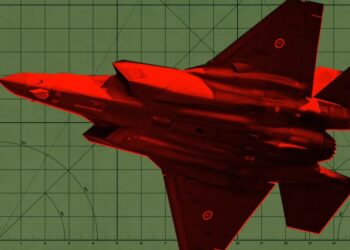
The formidable array of American ships, jets, bombers, drones, surveillance aircraft and air defense units headed to the Middle East is the most tangible evidence that the Pentagon sees the prospect of war lasting beyond 12 days.
“This looks like positioning for a much longer conflict,” said Katherine Thompson of the Cato Institute, who was a senior policy official at the Defense Department during the first year of the Trump administration. The Pentagon appears to be “anticipating an Iranian response that could be a significant risk to American bases in the region,” she said.
But even with advanced planning, Ms. Thompson said, the Pentagon is always aware that it has a finite supply of missile interceptors to protect its bases or Israeli cities — and that a protracted conflict could force difficult decisions. “The ability of the United States to sustain a prolonged defense of its forces and basing in the region, while also supporting Israel’s defense, is a major concern,” she said.
A second American military official said that U.S. Central Command is keeping two aircraft carriers deployed in the Middle East at a considerable distance from Iran, to protect them from becoming a target. Officials also noted that it was difficult to hit an aircraft carrier traveling at speed with a ballistic missile. In addition, the carriers are escorted by destroyers, which have the ability to shoot down ballistic missiles.
Hundreds of troops have now been evacuated from Al Udeid base in Qatar, Pentagon officials said, and there have been evacuations at the cluster of U.S. bases in Bahrain that house the Navy’s 5th Fleet. There are also American troops at bases in Iraq, Syria, Kuwait, Saudi Arabia, Jordan and the United Arab Emirates.
At least publicly, Trump administration officials insist that they remain committed to seeing if there is a diplomatic end to the standoff, one that could see Iran agreeing to new restrictions on its nuclear program. Privately, however, they say it is difficult to see what Iran may offer in the near term that could dissuade Mr. Trump from committing to another military campaign.
During his first 13 months in office, Mr. Trump has ordered seven military attacks in other countries, and he has been emboldened by the successful outcome of the military’s most recent operation — the commando mission in Venezuela in early January that captured President Nicolás Maduro and his wife and brought them to the United States.
Mr. Trump’s confidence is reflected in his blustery rhetoric aimed at Iran, pledging in one social media post in late January that “the next attack will be far worse! Don’t make that happen again.”
That day, Iran’s mission to the U.N. responded with a warning of its own.
“If pushed,” it said in a statement, Iran “will defend itself and respond like never before!”
Mark Mazzetti is an investigative reporter based in Washington, D.C., focusing on national security, intelligence, and foreign affairs. He has written a book about the C.I.A.
The post As Trump Considers Second Iran War, It Could Be Deadlier Than the First appeared first on New York Times.