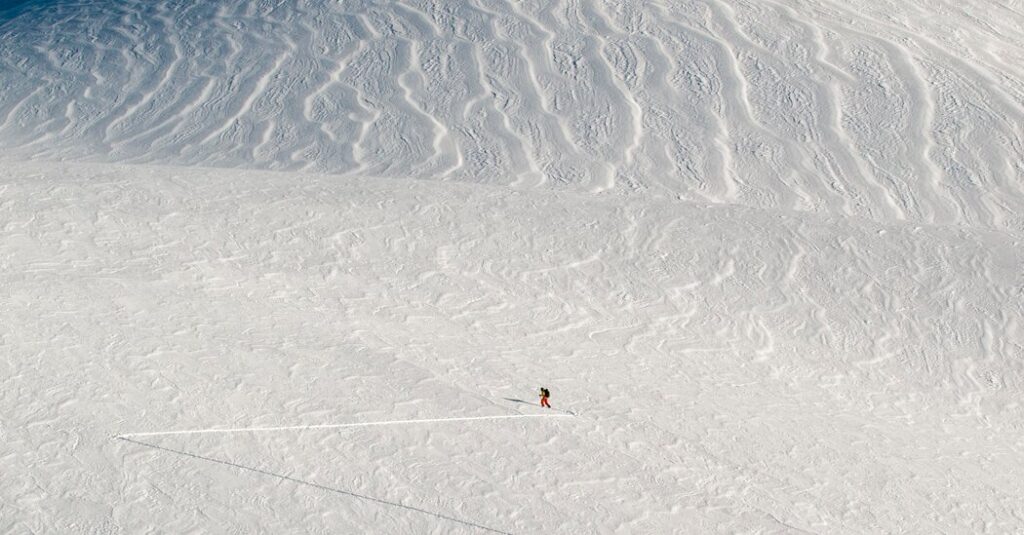
The Western United States has been desperate for rain and snow this winter, with many ski resorts patchy with dirt and grass; some have even been forced to close for a stretch. Then, six weeks of high pressure in the atmosphere yielded to a series of big storms that dropped at least three feet of powder in California’s Sierra Nevada this week.
A group of 15 skiers on a ski trip including four professional guides spent two nights at the Frog Lake Backcountry Huts — accessible in the winter only by skis or snowshoes — and were on their way back to the trailhead when disaster stuck. An avalanche nearly a football field in length broke loose. Six skiers survived, huddling together and communicating with emergency responders through satellite technology. Eight others were found dead, and one is still missing.
I have skied around the world, log an average of 80 days of skiing annually and have volunteered as a mountain rescue doctor for 27 years with the oldest mountain rescue team in the country, the Hood River Crag Rats. We lend aid to skiers, climbers, hikers and trail runners on what is likely the most climbed glaciated peak in North America, the lethal Mount Hood. I’ve seen my share of triumphs with rescue missions as well as death, with two climbing fatalities this season on Mount Hood already. It’s never easy to process when kindred spirits fall in the mountains.
Nonetheless, the backcountry remains an essential place to visit — to find solace, recharge, sweat, laugh, cry, unplug from the ills of the world and chase the flow state, the mental feeling of being so totally absorbed in a single activity that all other thoughts vacate the mind. Amid the dangers, there’s a reason so many of us are drawn to ski there.
The search for backcountry snow is old. Skiing probably started in prehistoric times in Russia as a means of travel. Skiing for sport became popular in Europe in the 1800s, with people hiking or using mohair skins on skis to go uphill. Rope tows to pull people up mountains began popping up in the early 1900s, and in 1936, the first chairlift was erected in Sun Valley, Idaho. In the last decade, as ski resorts have become more crowded and expensive, backcountry skiing, mostly on public lands, has flourished.
For me, there’s a great thrill in gliding down the mountain far from urban noise and steel and concrete buildings. On the surface, it appears purely hedonistic, and we are indeed chasing euphoria from being in motion, dopamine from achievement and the serotonin good mood from being outside with friends. We savor the sense of well-being from exercise, the laughs and high-fives, the escape from the stress of finances, politics and people.
But a deeper, more all-encompassing benefit exists, too. We get to appreciate the beauty of wild lands: the unadulterated sky; the smooth blanket of snow that will melt to become part of our drinking water; the trees, streams, rocks and dirt that make up our planet; the animals that make homes in the forest. I wonder sometimes, if politicians could spend three days in a backcountry hut, skiing power snow with good friends, eating tasty but rudimentary food, wearing the same stinky clothes and curling up in a sleeping bag with exhausted muscles, would it change their perspective of the world and themselves?
Around 10 million Americans ski or snowboard at U.S. resorts every year, but we don’t know how many people backcountry ski, so determining how risky it is compared to other sports is difficult. Avalanches are the biggest threat in the backcountry, killing an average of 25 people per year in the United States, with the pandemic season of 2020-21 the highest recorded at 37.
To stay safe, backcountry skiers need to both reduce the probability of getting caught in an avalanche and accept that the consequence of getting caught in one can be enormous. It’s the same kind of calculation that people who do even higher-risk sports such as wingsuit flying or high-altitude mountaineering make, in which even the smallest of mishaps can have catastrophic consequences.
If we wait for the absolute guarantee of safety, we’d never set foot into the backcountry. But we can mitigate risk by traveling in safe snow conditions, and choosing to ski in safe weather and on safe terrain. The terrain is important because avalanches rarely occur below 25 degrees steepness.
When I go into the backcountry, I bring an airbag, helmet, transceiver, probe, shovel, first aid kit, warm clothing, spare food and water. But no equipment is foolproof. And little in this world is risk free. Driving while texting, while switching a Spotify playlist, for example, puts you at relatively high risk of injury or death. So does something as simple as standing on a ladder cleaning out house gutters or putting up holiday lights.
For those of us hooked on this sport, the experience of moving fast outside in the high alpine — taking a risk that requires appropriate mitigation — is something we must do, even if we recognize the mountains can take as easily as they can give.
Christopher Van Tilburg is a doctor and rescue mountaineer with Hood River Crag Rats, and the author, most recently, of “Crisis on Mt. Hood: Stories from 100 Years of Mountain Rescue.”
The Times is committed to publishing a diversity of letters to the editor. We’d like to hear what you think about this or any of our articles. Here are some tips. And here’s our email: [email protected].
Follow the New York Times Opinion section on Facebook, Instagram, TikTok, Bluesky, WhatsApp and Threads.
The post It’s Dangerous. Sometimes Deadly. I Won’t Stop. appeared first on New York Times.