Times Insider explains who we are and what we do and delivers behind-the-scenes insights into how our journalism comes together.
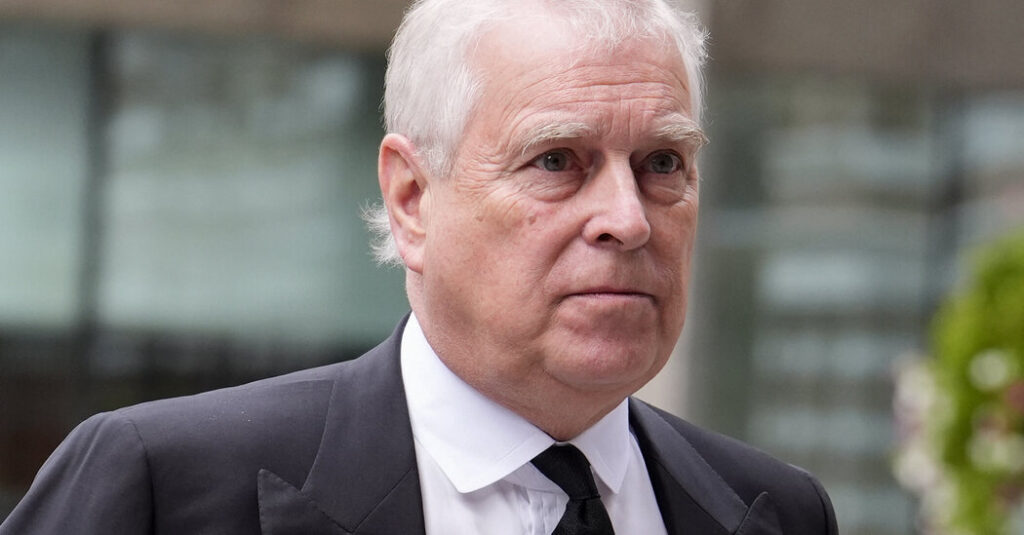
After British police arrested and then released Andrew Mountbatten-Windsor on Thursday, New York Times reporters in London had to make a series of swift decisions in their coverage — some based on how the legal system in Britain works, and some based on what we knew, didn’t know or were still confirming.
Two of those reporters, Megan Specia and Michael D. Shear, walked me through how The Times was covering Andrew, the former prince, who was arrested on suspicions of misconduct in public office. The arrest came amid reports that he had shared confidential information with Jeffrey Epstein during his time as a British trade envoy.
Their responses have been edited and condensed for length and clarity.
The arrest of the brother of the sitting monarch has no precedent in modern Britain, as you reported, Megan. That means reporting on such a moment has no guidebook. How are we approaching coverage?
MEGAN SPECIA: Initially, we couldn’t directly report that Mr. Mountbatten-Windsor had been arrested without pointing to the BBC’s report, as the police had yet to confirm an arrest, and we did not have enough information to confirm it was the former prince.
In Britain, it is policy for the police to not release the names of people arrested in an investigation like this.
As soon as there were reports of police at the royal estate where Mr. Mountbatten-Windsor is now living, Sandringham, I called the Thames Valley Police, who we knew were investigating a complaint of misconduct in public office after the latest Epstein files were released.
They were able to confirm an arrest but did not mention Mr. Mountbatten-Windsor by name, but we were able to cross-verify some of the information that the BBC had reported. A short time later, King Charles III confirmed that his brother had been arrested.
We also have to be clear that we don’t know exactly the specifics of the investigation. The authorities have said they are looking into allegations of “misconduct in public office” but did not provide details. There have been complaints that he may have shared confidential information with Mr. Epstein. The police have not referred to the allegations of sexual offenses that have haunted the former prince for years. One of Mr. Epstein’s victims, Virginia Giuffre, said she was trafficked to Mr. Mountbatten-Windsor for sex when she was a teenager. He has denied those allegations.
Hours after he was arrested, he was released. What happens next? What will you be looking for?
SPECIA: Mr. Mountbatten-Windsor’s release on Thursday night does not necessarily mean that this saga is over for him. Oftentimes, cases like these could take weeks or months for charges to formally be filed, so we will be watching to see if that happens.
Interestingly, if he is eventually criminally charged, the case will formally be brought in the king’s name. Rex v. Mountbatten-Windsor, or the King vs. his brother, is how it would most likely be rendered in legal documents.
We will also continue to chart the longer-term implications this could have for Britain’s royal family, for a one-time senior member to have suffered such a spectacularly public fall from grace.
Mike, you reported that the response from the authorities in Britain to the Epstein files has been more aggressive than it has been in the United States. How is covering the royal family similar or different to covering other government institutions?
MICHAEL D. SHEAR: In many ways, covering the royal family is not unlike covering the White House, which I did for 16 years before moving to London. Both are institutions which jealously guard information and seek to shape the way they are perceived by the public. And in both places, there are internal divisions and disagreements that sometimes end up revealing themselves through public reporting in places like The Times. (Think Prince Harry versus the king in Britain; White House versus Congress in the United States.)
But there are also differences. The White House has a much more robust system of public communication in place, including a (mostly) daily press briefing and arrangements for the press to travel with the president wherever he goes. The king has a spokesman and a small public relations team in Buckingham Palace. And there are opportunities for reporters who cover the royals, known as the Rota, to cover public events involving the king or other members of the family. But there are no regular briefings and much less sense of obligation to respond to news on a daily basis.
You’re probably seeing a lot of the tabloid coverage in Britain, which can tend to lean toward the salacious and palace intrigue. What’s the role of The Times?
SHEAR: The British press is fierce, especially when they smell blood in the water during a scandal involving a public official. Part of that is driven by the presence of several very aggressive tabloid newspapers. But it’s also baked into the press culture here for news reporters to keep pushing on every little aspect of a story, even when it looks like there’s nothing more to get. Sometimes, that produces results.
Our role in London at The Times is a bit different. We compete on the news, for sure. But we often sit out the daily back-and-forth of the British news cycle so that we can take the time to step back and take stock of the bigger picture.
The post How The Times Made Judgment Calls on Covering the Arrest appeared first on New York Times.