In retrospect, the boos proved prescient.
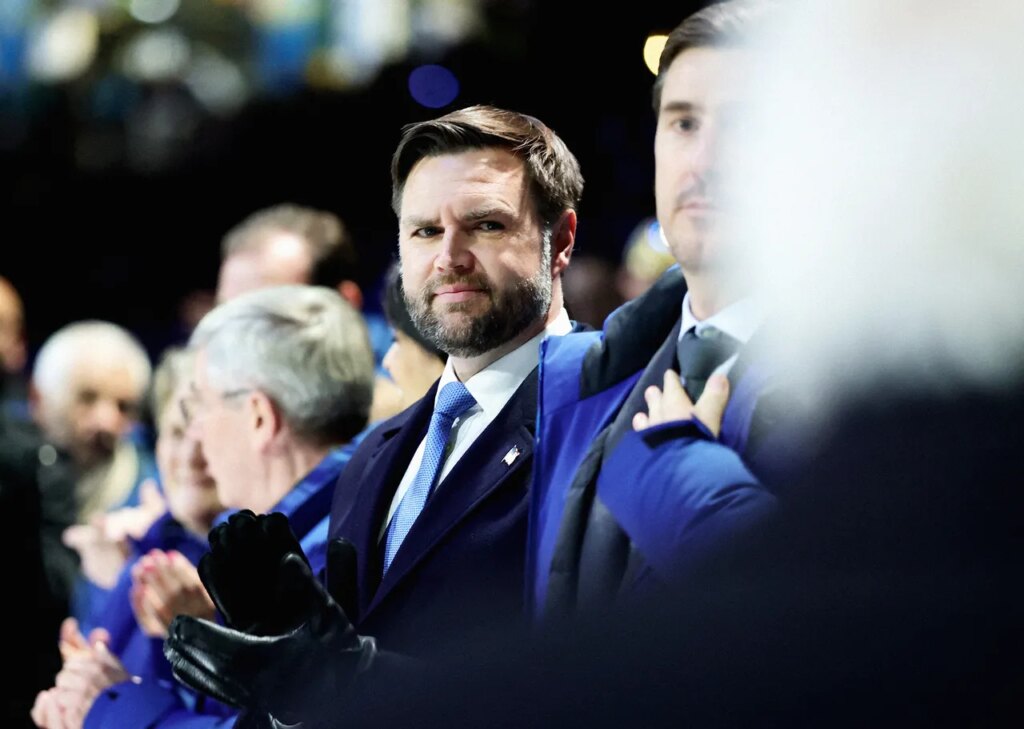
During the opening ceremony of the 2026 Winter Olympic Games in Milano Cortina, the crowd at San Siro stadium cheered when the US team entered during the parade of nations. When the camera cut to Vice President JD Vance and second lady Usha Vance, the jeers began. A few days prior, protesters had gathered in Milan following reports that US Immigration and Customs Enforcement agents would be coming to the Italian city for the Games. Coupled with the Vances’ chilly reception, it foretold a Winter Olympics more fraught than any in recent memory.
Going into the Winter Games, several US athletes expressed discomfort at representing a country currently in turmoil over ICE’s actions in Minnesota and the Trump administration’s attacks on immigrants and the LGBTQ+ community.
“Just ’cause I’m wearing the flag doesn’t mean I represent everything that’s going on in the US,” freestyle skier Hunter Hess said during a press conference at the beginning of the Games when asked how it felt to be on Team USA during Trump’s immigration crackdown. Figure skater Amber Glenn, who came out as pansexual in 2019, told reporters the current political climate in the US is an opportunity for the queer community to support other groups also facing threats to their human rights. “It’s made us a lot stronger,” she said.
For better or worse, the Olympics are typically a place of unabashed, corny nationalism. No one is better at that than Americans. (Cue the chants of “USA! USA!”) During an event focused on athletic marvels, it becomes easy to shrug off politics and the baggage of any team’s home country. While not unheard of, it’s rare for athletes to even question the idea of wearing the flag or admit they struggled with it. But that sentiment has crept up more than once during the Milano Cortina Games. And maybe that’s a good thing.
After Hess’ comments made the rounds online, President Donald Trump took to Truth Social to call him “a real Loser,” while Glenn says she has received “a scary amount of hate/threats,” prompting her to take a social media break.
Athletes like snowboarder Chloe Kim and freestyle skier Eileen Gu found themselves defending Hess during Olympics press conferences. Kim, who competes for the US and whose parents are South Korean immigrants, said the question of representing America hit “pretty close to home,” adding “I think in moments like these it is important for us to unite and stand up for one another.” Gu, who was born in the US but competes for China, lamented that the “headline that is eclipsing the Olympics has to be something so … unrelated to the spirit of the Games.”
In response to Gu’s comments, Vance said he hoped someone “who grew up in the United States of America, who benefited from our education system, from the freedoms and liberties that make this country a great place” would want to compete with the US team, adding, “I’m going to root for American athletes, and I think part of that is people who identify themselves as Americans.” Earlier in the Games, he told reporters that the athletes are not at the Olympics to “pop off about politics,” adding that they should expect some “pushback” if they do.
But the Olympics have always provided a platform for athletes to demonstrate that not every competitor’s views align with their leaders’. Even if they don’t intend their statements to be political, they’re right to remind everyone that wearing the flag does not equate to supporting Trump. Often, their statements get politicized anyway, and as Glenn pointed out on Instagram, speaking your mind is—or should be—a very American thing to do. Referencing the threats she’d received, she noted they came after she “chose to utilize one of the amazing things about the United States of America (freedom of speech) to convey how I feel.”
Back in 2018, figure skater Adam Rippon objected to then vice president Mike Pence leading the US delegation to the Olympics in Pyeongchang, citing Pence’s track record on LGBTQ+ rights. At the time, Rippon, who came out as gay in 2015, said Pence doesn’t “stand for anything that I really believe in.”
Reflecting on it eight years later, Rippon says athletes speaking out about the Trump administration’s policies during the 2026 Games takes a lot more bravery than it did less than a decade ago.
The echo chamber is “a hundred times louder than it was during the first Trump administration,” Rippon says. Now, he says, athletes could face real repercussions for speaking out about ICE’s activities or anything else the administration is doing. But by speaking up, they’re giving the world a different view of how Americans feel about the country’s policies.
Theoretically, he adds, the Olympics are “supposed to be this apolitical event, where everything gets put to the side and we can come together” to celebrate athletes from everywhere. “Well, it’s not, right?” Rippon says. “I think that as an American right now, it’s impossible to believe that politics aren’t intertwined into everything that we do.”
Those messages—and the volleys between athletes and armchair pundits—are amplified by social media.
What’s been happening during the 2026 Winter Games feels of a piece with what happened at the Paris 2024 Summer Games, when gold-medal-winning Algerian boxer Imane Khelif got thrust into a culture war over trans people in sports, even though Khelif is not trans. Going further back, it’s reminiscent of the Mexico City Summer Games in 1968, during which Black US athletes Tommie Smith and John Carlos raised their fists in the air during their medal ceremony to draw attention to the civil rights struggles in America.
For Simone Driessen, this is part of a natural progression. An assistant professor of media and popular culture at Erasmus University Rotterdam, she says athletes speaking up about their beliefs is to be expected. As folks like Taylor Swift have become political figures, so too have athletes who enjoy similar levels of celebrity during the Games. “It reminds me a lot of how the Super Bowl halftime show was already perceived as political before we even knew what Bad Bunny wanted to do,” Driessen says.
The Bad Bunny comparison is apt. Much like Glenn or former San Francisco 49ers quarterback Colin Kaepernick, who began kneeling during the National Anthem to protest police brutality, he’s offered his views freely. They’ve mostly become “controversial” because they stand in opposition to the Trump administration and the MAGA agenda.
In their view, to be a great American athlete, or great entertainer, means compliance. When athletes reject that view, it feels like a win.
The post The Olympics and Politics Are More Intertwined Than Ever. Maybe That’s a Good Thing appeared first on Wired.