At first glance, the Chinese director Lou Ye’s newest film looks like a departure from form.
It does not touch on the taboo subjects, like China’s coronavirus lockdowns or the Tiananmen Square massacre, that earned him the moniker “the king of banned films.” It does not examine how ordinary Chinese respond to a changing society, the animating question of Mr. Lou’s oeuvre. There isn’t even dialogue, only music.
It is a concert film about a Chinese rock band, ReTROS — Mr. Lou’s first foray into nonfiction after decades of feature films.
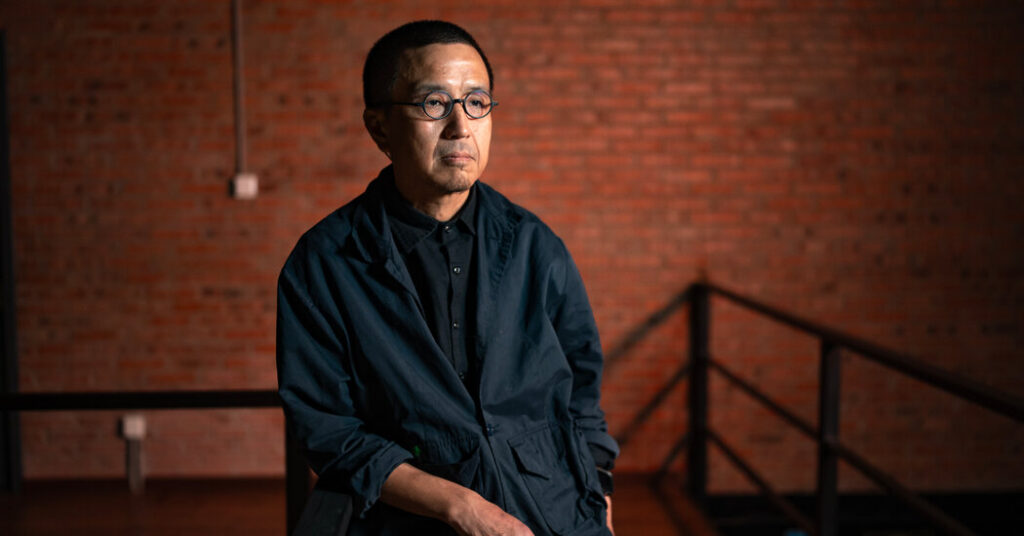
For Mr. Lou, these differences are mostly semantic. “The distinction we draw between feature films and documentaries is a mistake,” Mr. Lou, 60, said in an interview at his studio in Beijing, not long after the film, “Re-TROS ‘After the Applause,’” made its premiere in the city last fall.
“As long as there’s a camera pointed at you, reality has already subtly changed,” he said.
A resistance to clear lines or categories runs through Mr. Lou’s work — and his life.
His shaky, hand-held camerawork evokes realism, but the stories are often dreamlike or fantastical. The films start with real moments in Chinese history but feature mysterious look-alikes and stories within stories.
He is best known for his clashes with Chinese censors, who have barred about half of his films from screening in the country. (He is sometimes compared to Jafar Panahi, the Iranian director who has been jailed for his films.) But Mr. Lou has also made movies released widely in Chinese theaters, featuring big budgets and even bigger stars, sometimes while battling censors on another film at the same time.
Some Chinese filmmakers defy censorship early in their careers, then shift solidly into the mainstream; others remain on the fringes. Few have moved so continuously between the two.
“Is that a good thing or a bad thing?” Mr. Lou said, when asked about that feat.
While his films have been honored at Cannes and Venice, he said he wanted most to reach a Chinese audience, who would be most likely to understand them. He has accepted significant cuts to some films to see them released domestically. (The concert film is awaiting approval for wider release.)
Mr. Lou’s wife and frequent screenwriter, Ma Yingli, said in an interview that they tried not to think about censorship until submitting a movie for review. “If you do that, you’ll never be able to make a film,” she said. “If problems arise later, you can try to find solutions,” she added, such as cuts or edits.
But some topics felt so urgent, Mr. Lou said, that he would not have been able to continue making films if he had not addressed them. That was true of “Summer Palace,” his 2006 film about disillusioned lovers after the Tiananmen massacre, because of his experience as a student during the demonstrations. It was also true of “An Unfinished Film,” a metafictional look at filmmaking under lockdown, because he felt the pandemic had redefined the relationship between people, screens and reality.
“Generally speaking, if you don’t violate an artist’s basic expression, I think restrictions and obstacles are quite normal,” he said. “But if you push past that point, the artist may push back.”
He described this reaction as reflexive, out of his control. “That’s not about cinema anymore,” he said.
Mr. Lou was born in Shanghai, to an actor and an acting teacher. At age 20, in 1985, he enrolled at the Beijing Film Academy to study directing.
It was a time of heady experimentation, as China’s leaders loosened their grip on the economy and, cautiously, culture. The graduates from the academy in those years later became known as the pioneers of Chinese underground cinema. They made low-budget films documenting the unglamorous side of China’s boom and did not submit them to the state film administration, meaning they could not enter theaters.
Mr. Lou’s breakout film was “Suzhou River” in 2000, a noirish tale of a man searching for his lost lover in a seedy, industrial Shanghai. It was Mr. Lou’s first encounter with international acclaim, winning a prize at the Rotterdam film festival, but also his first major run-in with the authorities. Because he had not obtained officials’ permission to submit the film to the festival, they banned him from making movies for two years.
“Summer Palace,” the 2006 Tiananmen movie, earned him another five-year ban on filmmaking. He shot his next film, “Spring Fever,” in secret. A gay romance, it was released in 2009.
In recent years, Mr. Lou has also made films marketed more at mass audiences, such as “Saturday Fiction,” a World War II spy story starring the Chinese superstar Gong Li. But even those films deploy techniques that may put off casual moviegoers, like jump cuts and subtle social commentary, said Sheldon Lu, a scholar of Chinese cinema at the University of California, Davis.
Many of Mr. Lou’s classmates at the Beijing Film Academy are now among China’s most successful directors, in part because they have embraced mainstream or even nationalistic filmmaking, such as odes to the Chinese military, Professor Lu said. But Mr. Lou “holds onto his principles, his aesthetics.”
Indeed, after “Saturday Fiction” was widely promoted in Chinese state media, Mr. Lou again broached a Chinese government taboo: pandemic lockdowns, in “An Unfinished Film.” Released abroad in 2024, it is unavailable in China.
Despite his maverick image, Mr. Lou is a restrained presence. A self-proclaimed introvert, he has worked with the same actors for many of his films, in part, he joked, because he is uncomfortable meeting new people.
But he sometimes shows flashes of childlike delight — or defiance. While Mr. Lou was making “The Shadow Play,” a film about corruption during China’s economic opening, Ms. Ma shot a behind-the-scenes documentary. In one scene, Mr. Lou grins widely after capturing a shot he likes and mimics the sound of an explosion.
But later in the documentary, when censors demand extensive cuts to “The Shadow Play,” Mr. Lou declares that he would rather it never be released.
A member of his team fires back, “Do the rest of us eat?”
After two years of negotiations with officials, the movie was released in China in 2019. At the premiere, Mr. Lou tersely told the audience that he had left in signs of deletions and changes, as proof of the censors’ interference: “These are all things I want the audience to be aware of.”
Mr. Lou said “The Shadow Play” was probably the film on which he had made the most compromises. Still, he said it was worthwhile to give Chinese moviegoers a record of their collective experience, even if it could be only a “second-rate” version, as Mr. Lou once described it, because of censorship.
His willingness to negotiate may also speak to his desire for audiences, both at home and overseas, to talk about something other than censorship.
“Everything gets simplified into political or nonpolitical,” he said. “It completely destroys the dialogue between the film and the public,” the right of audiences to interpret a film as they like.
“It strips away the film’s value as entertainment,” he said, “or as a cinematic language.”
Mr. Lou’s new concert documentary is, essentially, all cinematic language. He said he had sought to let the band’s music, of which he is a longtime fan, speak for itself.
After the premiere in Beijing, Mr. Lou briefly took the stage. He urged the audience to be open to the diversity of movies that a director could make.
“There are many different types of movies,” he said. “So I hope people will pay attention.”
Siyi Zhao contributed research.
Vivian Wang is a China correspondent based in Beijing, where she writes about how the country’s global rise and ambitions are shaping the daily lives of its people.
The post China’s ‘King of Banned Films’ Wants to Change the Subject appeared first on New York Times.