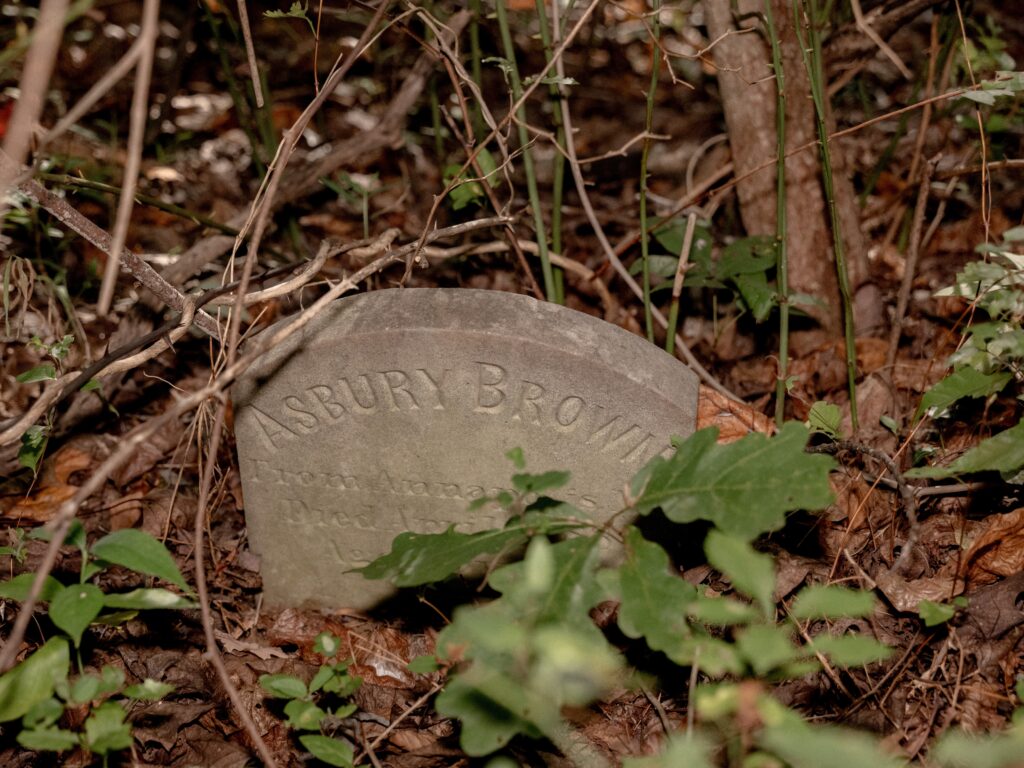
Six months have passed since lawmakers visited a neglected cemetery at the House of Reformation and Instruction for Colored Children — a now-defunct, segregated juvenile detention center in Maryland where hundreds of Black boys died in the late 19th and early 20th centuries — and they still have questions.
“How did so many children die in state custody? What were the conditions that led to their deaths? Were signs ignored?” Del. Jeffrie E. Long Jr. (D-Calvert) asked during a hearing before the House Government, Labor and Elections Committee on Thursday.
As the lead sponsor of a new bill, he’s hoping it will provide some answers.
The legislation establishes the formation of a commission helmed by the Maryland attorney general and tasked with investigating what happened inside the facility on state-owned land in Prince George’s County. Members of the commission will include relatives of the boys who were incarcerated at the House of Reformation and appointees chosen by state and local officials, including the Maryland General Assembly and Prince George’s County Executive Aisha Braveboy.
The appointees will work with experts “to conduct archaeological surveys, forensic analysis, historical research and meaningful descendant engagement,” while also coordinating with state agencies to assess the policies that led to the boys’ deaths under the state’s watch, Long said.
“Let’s be very clear. These weren’t just any graves. They were neglected children by the state of Maryland,” said Long, who represents Prince George’s County. If passed, he said, the bill would allow the commission to facilitate memorialization efforts, reburials and educational initiatives, and ensure that the treatment and deaths of the boys at the facility become “a part of shared understanding and accountability.”
The Washington Post first reported on the existence of the abandoned cemetery last summer after current and former state leaders visited the site and pledged action.
Staff at the Maryland Department of Juvenile Services rediscovered more than 100 abandoned graves in recent years, most marked only by cinder blocks, of boys who had died at the school in the decades after the end of the Civil War.
Tedious work from a hobbyist researcher uncovered contemporary newspaper stories about the facility and more than 100 death certificates for those boys, archival documents that revealed some of their names, ages and causes of death — and indicated that they probably suffered abuse and neglect.
A subsequent Post investigation this fall found that the death count at the facility between 1870 and 1939 was at least 230 children, according to a comprehensive review of death certificates and other state records, far exceeding previously documented estimates.
After a visit to the cemetery by Maryland’s Legislative Black Caucus in September, state lawmakers — including Long — vowed to propose legislation related to an investigation into the boys’ deaths.
An earlier version of the bill, which was discussed at the hearing on Thursday, called for an independent investigation, after some Black Caucus members expressed doubt that the state could thoroughly investigate itself.
But the shift was made because of the Maryland Office of the Attorney General’s track record in similar kinds of commissions, Long said in an interview Thursday with The Post. He noted the change would also ensure the project stays fiscally on track.
Though not reflected in the House version of the bill, the intent for the attorney general to lead the investigation is articulated in a similar bill introduced in the Senate. A vote on that bill is scheduled for Wednesday.
He acknowledged that some might disagree — though, no one testified against the bill Thursday — and believes only Maryland can hold itself accountable.
Long said he felt confident that all of the stakeholders working together could “have a meaningful impact on the community” and expects the group to publish a report at the end of 2029.
Last year, the Department of Juvenile Services applied for $31,000 in grant funding from the state to begin restoration efforts. Gov. Wes Moore (D) also pledged to allocate an additional $250,000 toward those efforts in this year’s budget.
In January, former DJS deputy secretary Marc Schindler, who was instrumental in the initial advocacy over the cemetery, launched the Forgotten Children Initiative at Georgetown University, a research hub tasked with investigating the deaths of children at the House of Reformation and similar facilities nationwide.
Already, the initiative is working to provide a definitive accounting of those who died and were buried at the site and are conducting extensive genealogical research to find and contact potential living family members.
Betsy Fox Tolentino, acting secretary of the Maryland Department of Juvenile Services, spoke in support of the bill Thursday, noting that the department has received grant funding to help with the commission’s work.
“The institution operated during a deeply segregationist period and investigating its conditions, practices and deaths is a moral and civic responsibility,” Tolentino said. “Proper memorialization, education and respectful treatment of the burial sites are essential steps toward accountability and community healing.”
Michael Brice-Saddler and Joy Sung contributed to this report.
The post A new bill aims to bring justice to Black boys buried in hidden graveyard appeared first on Washington Post.