One of Jeffrey Epstein’s greatest skills was building and exploiting connections with those who had the power to help or hinder him. In the U.S. Virgin Islands, that included the federal Customs and Border Protection officers who inspected the people and goods that were going to and from his private hideaway.
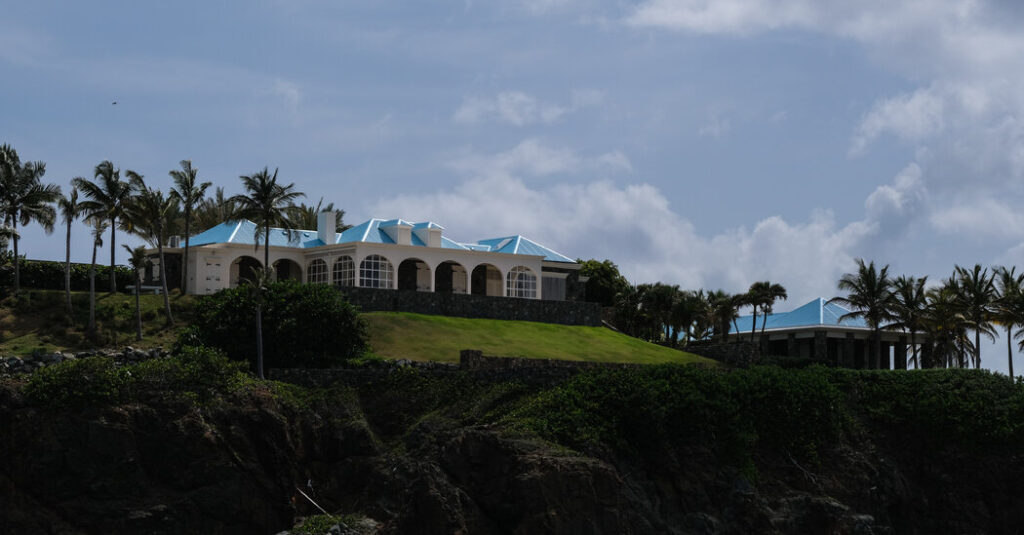
Mr. Epstein dispensed food, helicopter rides, financial advice and even musical gigs to a handful of C.B.P. officers stationed on St. Thomas, the American port of entry that was near Little St. James, an island that Mr. Epstein owned.
At the same time, Mr. Epstein enjoyed concierge services from some of the customs officers in St. Thomas, according to emails and other records recently released by the Justice Department. They whisked him through inspections. And they helped him troubleshoot when he encountered problems at airports on the mainland.
Starting in 2019, those chummy relationships became the subject of a criminal investigation, the records show.
Agents from the Federal Bureau of Investigation and the Department of Homeland Security, as well as federal prosecutors, spent more than a year looking into whether C.B.P. officers in St. Thomas allowed Mr. Epstein and his guests to avoid scrutiny as they entered the country.
The outcome of the investigation, which focused on at least four C.B.P. officers, including a supervisor, is unclear. There is no record of the officers’ having been charged with crimes in connection to Mr. Epstein. Spokesmen for the F.B.I. and C.B.P. had no immediate comment.
The emails and other records show how Mr. Epstein — a master networker who traded favors with presidents, billionaires, superlawyers and Hollywood celebrities — also set out to woo usually anonymous customs officials in the Caribbean. The charm offensive took place from at least 2008 to 2016, a period during which authorities in the U.S. Virgin Islands have said he was sexually abusing girls and young women on his island. (The criminal charges filed against Mr. Epstein in 2019 covered an earlier time period and conduct in New York and Florida, not the Caribbean.)
It appeared to be part of a broader effort to build alliances across the U.S. territory, which granted his business lucrative tax breaks. He donated generously to local politicians. He employed a governor’s wife.
The C.B.P. agents in St. Thomas had the power to interfere with the luxurious, under-the-radar life that Mr. Epstein had built for himself in the U.S. Virgin Islands — including his importation of young women from foreign countries.
After Mr. Epstein pleaded guilty to soliciting prostitution from a minor in 2008 and became a registered sex offender, C.B.P. officers elsewhere sometimes pulled him aside for questioning at airports. They sometimes took note of his female companions. In 2011, for example, a C.B.P. officer at Newark Liberty International Airport described intercepting Mr. Epstein, who was returning from Paris. The passenger “stated that he was ‘looking for a date’ and believed that the girl was of legal age,” the officer wrote in a report, which was previously reported by Bloomberg News. The report, which is partly redacted, did not indicate the age or nationality of Mr. Epstein’s companion or whether she was allowed into the country. Mr. Epstein was “released w/o further incident,” the report said.
Mr. Epstein and his associates also appeared jittery about what C.B.P. officers might find if they showed up unannounced at Little St. James. In 2016, an employee alerted Mr. Epstein that C.B.P. officers were circling the island, according to an email released by the Justice Department. The employee instructed a colleague “to hide everything until further notice.” It wasn’t clear what she was referring to.
By the time of his 2008 incarceration, Mr. Epstein had a friendly relationship with at least one C.B.P. officer, the emails show.
The officer, Carol Montgomery, repeatedly sought Mr. Epstein’s advice and financial assistance, including a $200,000 loan after she transferred to a C.B.P. office on the mainland. It is unclear from the emails whether Mr. Epstein provided her with money or if she was part of the federal investigation.
“Welcome home Jeff,” Ms. Montgomery wrote on the day he was released from jail in 2009. At another point, when she worked for the C.B.P. in Washington State, she invited Mr. Epstein to visit her and noted that she had read “a bunch of foolishness” about him in the media. “Keep your chin up and know that I care a lot for you,” she wrote.
In June 2010, as his period of house arrest was coming to an end, Mr. Epstein emailed Cecile de Jongh, who was his office manager in the U.S. Virgin Islands and was the territory’s first lady. He asked who was in charge of customs, noting that an official at the St. Thomas airport “has been difficult lately.” Ms. de Jongh said she would look into the matter. It is unclear what came of the conversation.
Two years later, in November 2012, Mr. Epstein planned to give a Thanksgiving turkey to each of the 78 C.B.P. employees stationed in St. Thomas. But an agency supervisor nixed the idea, citing a ban on personal gifts. “They can only accept gifts that will benefit the entire community overall,” one of Mr. Epstein’s employees relayed to him. On another occasion, Mr. Epstein said he wanted to buy the agents new computers.
He took agents on whale-watching excursions aboard his helicopter. He invited them to visit his island for lunch. (One officer later told investigators that the lunch, which took place in a gazebo, consisted of sandwiches and wine.)
Mr. Epstein hired another C.B.P. officer to play the steel drums for guests on his island. The officer waived his fee because “he considers you a friend,” an employee told Mr. Epstein, though “if you wish to give him something, he is appreciative.” The officer performed at least twice and offered to provide lessons to one of Mr. Epstein’s guests, emails show.
Mr. Epstein appears to have struck up an especially close relationship with a customs officer named Timothy Routch, who worked on St. Thomas as an agricultural specialist from 2009 through 2014. Mr. Routch later described Mr. Epstein to F.B.I. agents as “a wonderful person,” even as he noted his criminal conviction and the procession of Eastern European women who were arriving on St. Thomas, apparently on their way to Little St. James, according to the F.B.I.’s summary of the interview. Mr. Routch said he turned to Mr. Epstein for financial advice and thought “Epstein would be a good person to know” if Mr. Routch “ever decided to run for public office there.”
Mr. Routch told the F.B.I. that he would check with Mr. Epstein “to make sure he was being treated with fairness and respect” by other C.B.P. agents and “would empathize with Epstein if Epstein encountered a rude U.S. C.B.P. official.”
Mr. Routch, who retired from the C.B.P. in 2021, said in an interview with The New York Times that his relationship with Mr. Epstein had been strictly professional and that he’d had no knowledge of his sex-trafficking operation. Mr. Routch previously spoke to The Post and Courier in South Carolina.
Mr. Epstein collected the personal contact information for other C.B.P. officers, including James Heil, who was a supervisor in St. Thomas, according to a federal prosecutor’s summary of a conversation with a lawyer for Mr. Epstein’s pilot. While “some inspectors would delay J.E. for a while,” Mr. Heil and another friendly officer “wouldn’t give him a hard time,” the pilot’s lawyer said.
Mr. Heil was in regular communication with Mr. Epstein and his aides, including when they encountered inconveniences with C.B.P. officers at other airports, emails show.
Mr. Heil, who is retired, told The Times that he’d interacted with Mr. Epstein in his capacity as a “professionalism service manager” at the agency, whose responsibilities included helping travelers understand C.B.P. procedures and regulations.
By the time Mr. Epstein died in a Manhattan jail in August 2019, Mr. Routch had transferred to the border protection agency’s offices in South Carolina — and feared that his relationship with Mr. Epstein could come back to haunt him.
On Aug. 30, 2019, Mr. Routch walked into his supervisor’s office and shut the door, appearing shaken, according to a memo that the supervisor wrote afterward.
He told the supervisor that a female acquaintance had filed complaints with the Justice Department alleging that while working in St. Thomas, Mr. Routch had assisted Mr. Epstein in “conducting human trafficking of underage females.” When the supervisor asked how the woman would know about his relationship with Mr. Epstein, Mr. Routch responded that “everyone knew I was friends with Jeffrey Epstein,” according to the memo.
After the meeting, the supervisor alerted his superiors in South Carolina that “Mr. Routch pal’d around with Mr. Epstein, clearing his aircraft; and spending personal time with the convict after befriending him, entering into that friendship through carrying out C.B.P. official duty.”
By October 2019, the F.B.I. and the Department of Homeland Security’s Office of Inspector General had opened investigations into the matter, emails show.
The precise contours of the investigations aren’t clear. But in May 2020, a federal grand jury issued subpoenas to a number of credit-reporting companies for financial information about Mr. Routch. The subpoena was “in connection with an official criminal investigation of a suspected felony,” according to a letter that Geoffrey Berman, the U.S. attorney for the Southern District of New York at the time, wrote to TransUnion, one of the companies that got a subpoena.
A few months later, a similar subpoena was issued for financial information about Mr. Heil and two other C.B.P. officers who had been stationed in St. Thomas. Google also responded to a grand jury subpoena for information about Mr. Routch.
In November 2020, F.B.I. agents and a federal prosecutor interviewed Mr. Epstein’s pilot, Larry Visoski, who recalled how a couple of C.B.P. officers had been friendly with Mr. Epstein, according to a summary of the videoconference interview. He said he had sometimes flown officers on Mr. Epstein’s helicopters and occasionally requested that the C.B.P. office on St. Thomas remain open after hours to accommodate Mr. Epstein’s plane.
Mr. Visoski told the investigators that he “had no knowledge of any C.B.P. officer assisting Epstein in trafficking underage passengers.”
About five months later, in April 2021, F.B.I. and Homeland Security agents interviewed Mr. Routch. The Times did not find any subsequent records related to the investigation.
In the interview, according to the F.B.I.’s summary, Mr. Routch said he “was aware of Epstein’s conviction involving the abuse of minors but supported Epstein because he was a good guy” to Mr. Routch. He added that he “thought it was a good idea to maintain contact with Epstein because of his status, wealth and influence.”
Mr. Routch said he often boasted about his connection to Mr. Epstein, including after his death. “It was an ego boost,” the summary noted. “Not everyone can say they know a billionaire.”
Debra Kamin contributed reporting. Julie Tate contributed research.
David Enrich is a deputy investigations editor for The Times. He writes about law and business.
The post Epstein Built Ties to U.S. Customs Officers, Sparking Criminal Investigation appeared first on New York Times.