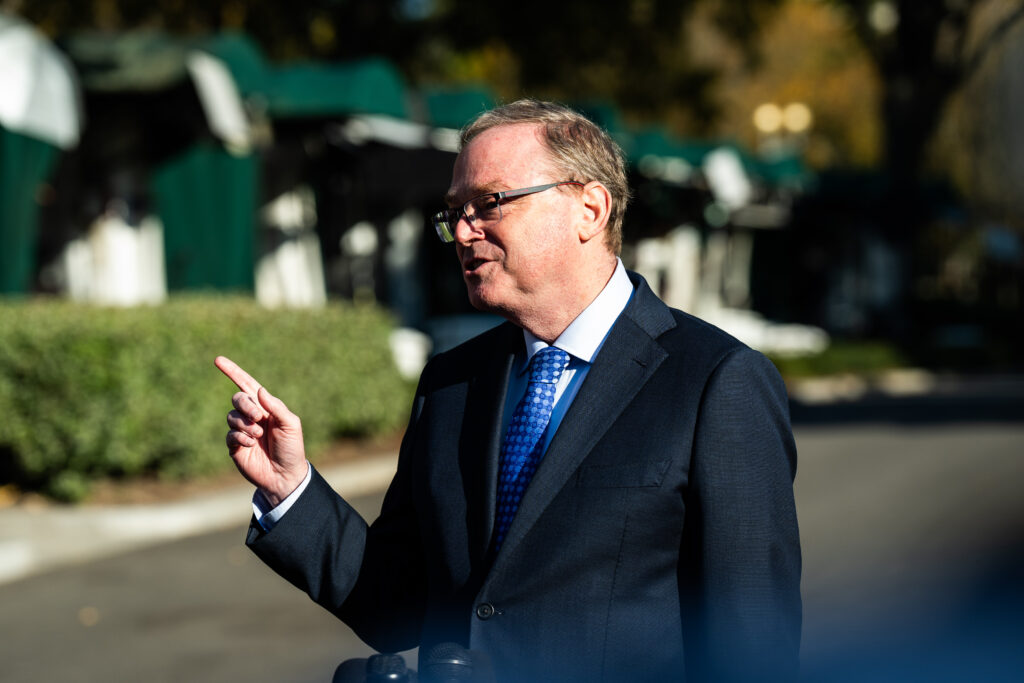
Having access to more information is a good thing — especially if you’re the National Economic Council director whose ability to do the job relies on data. But White House economic advisor Kevin Hassett would prefer to “discipline” researchers whose calculations are inconvenient for the Trump administration’s defense of tariffs.
Last week the Federal Reserve Bank of New York posted an analysis of how Trump’s tariff hikes affected prices in 2025. U.S. border taxes stood at 2.6 percent at the beginning of the year and 13 percent at the end. Who pays them? According to the study, the bulk of the tariff cost — 86 percent in November — was borne by U.S. importers. Foreign exporters adjusted their prices only modestly.
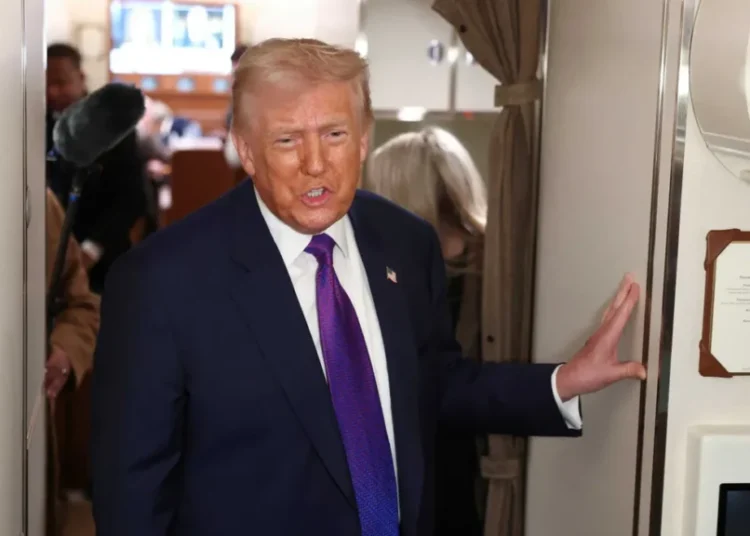
Hassett wasn’t pleased with the analysis, which was authored by Federal Reserve staff and a Columbia University economics professor. “It’s, I think, the worst paper I’ve ever seen in the history of the Federal Reserve system,” he said on CNBC Wednesday. “The people associated with this paper should presumably be disciplined, because what they’ve done is they’ve put out a conclusion which has created a lot of news that’s highly partisan based on analysis that wouldn’t be accepted in a first-semester econ class.”
In fact, the finding — that taxing something raises its cost — is consistent with not only Econ 101 but other professional research on how tariffs affect prices. Isn’t the point of tariffs, after all, to raise the price of foreign goods so Americans will buy domestic goods instead?
The Trump administration sometimes shows flashes of candor about how tariffs affect business. Just this week U.S. Trade Representative Jamieson Greer admitted to the same news channel that tariffs burden U.S. companies. “We’ve heard stories of companies that have had to hire extra people for compliance,” he said. “We’re not trying to have people do so much bean counting they’re not running their company correctly.”
Trump passed over Hassett for Federal Reserve chair, and that’s looking like a wise choice. The economist’s outburst underscores the importance of Fed independence, which the Trump administration has tried to curtail. White House control of the Fed would not only allow the president to manipulate interest rates but also suppress politically inconvenient economic research.
Tariffs are taxes on U.S. businesses and consumers. It’s telling that instead of defending the taxes as necessary and worthwhile, the White House tries to shoot the messenger.
The post Another White House tariff tantrum appeared first on Washington Post.