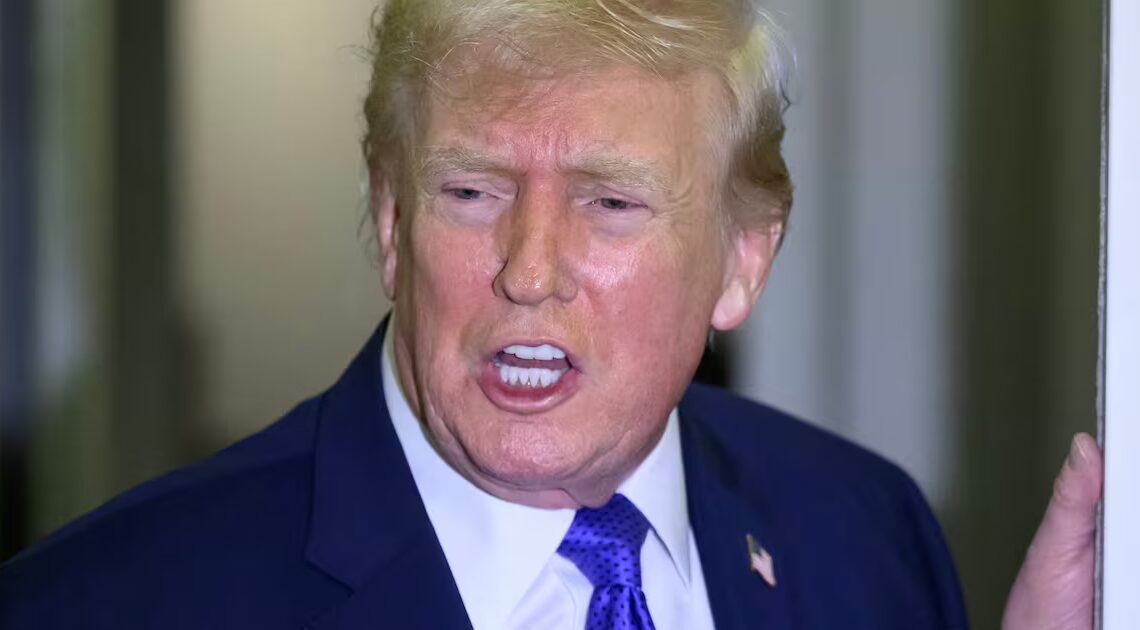
The Trump administration is fighting a court order demanding that it restore a slavery exhibit to a popular museum, setting up a new legal battle over America’s past during Black History Month.
On Monday, a Bush-appointed judge ordered the administration to restore the exhibit, invoking the dystopian world of George Orwell’s novel “1984”—which deals with themes of oppression and government control—as part of her rebuke.
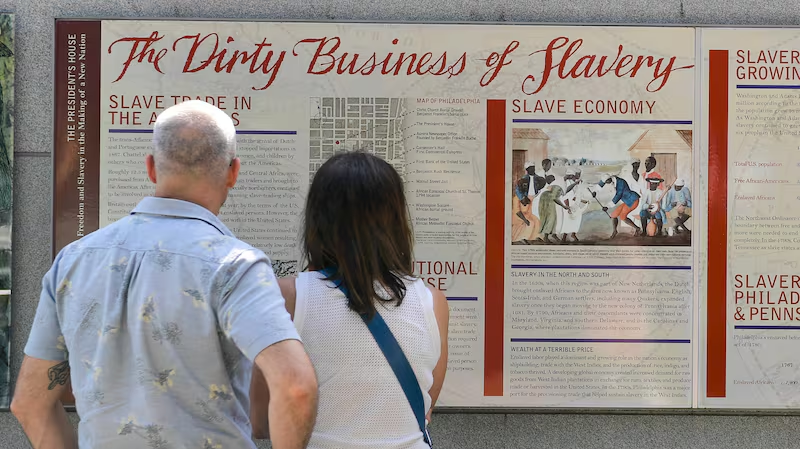
The exhibit had been removed from the Independence National Historical Park as part of a broader review of federally supported historical programming.
But critics were outraged by the move, including Democratic Pennsylvania Gov. Josh Shapiro, who accused the White House of “whitewashing history.”
Now, two days after the judge’s ruling, the administration has lodged an appeal, just as Trump was preparing to host a White House event to talk up his achievements with black voters.
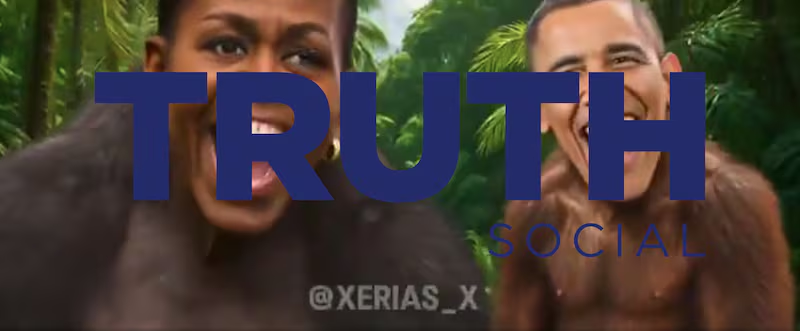
The event comes about a week after Trump faced a furious backlash over a racist meme he posted depicting former president Barack Obama and former first lady Michelle Obama as apes.
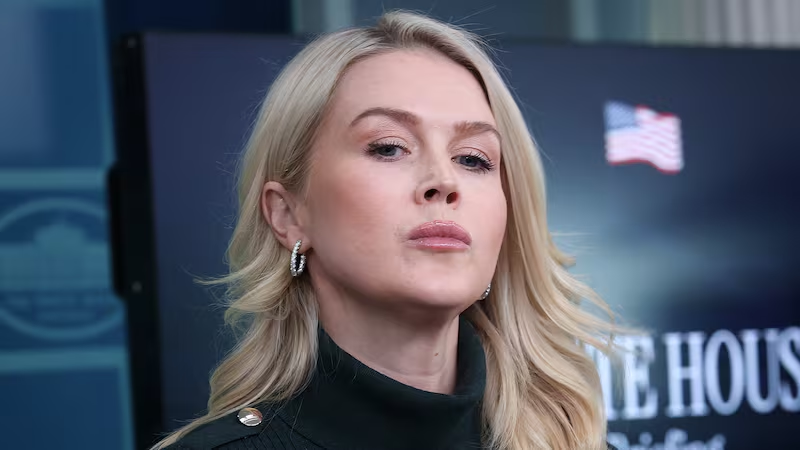
Speaking to reporters on Wednesday, White House press secretary Karoline Leavitt hit out at suggestions the president was racist.
As for the event, she said it was a chance to “celebrate Black History Month, and to talk about how his policies are advancing opportunity and prosperity for all Americans.”
But critics say the administration’s decision to appeal this week’s ruling effectively attempts to rewrite a significant part of that very history.
The National Park Service removed the slavery exhibit in response to a Trump executive order aimed at “restoring truth and sanity to American history” at the nation’s museums, parks, and landmarks.
The order directed the Interior Department to ensure those sites do not display elements that “inappropriately disparage Americans past or living.”
As such, the National Park Service removed explanatory panels and biographical details from Independence National Historical Park, the site where George and Martha Washington lived with nine of their slaves in the 1790s, when Philadelphia was briefly the nation’s capital.
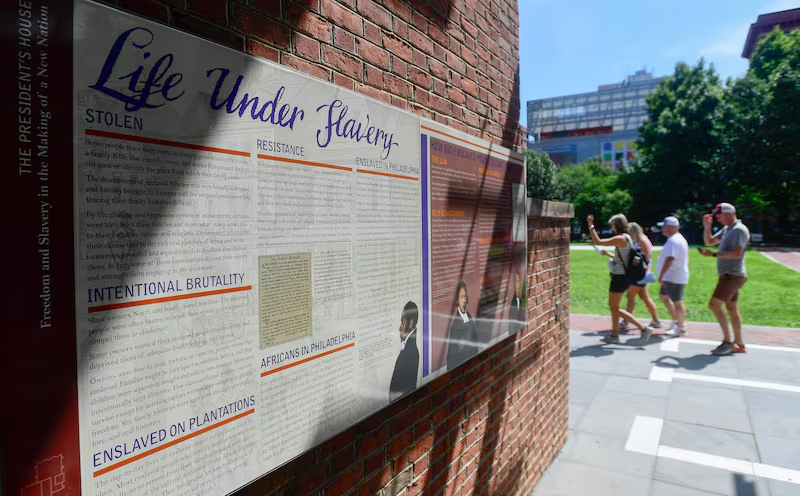
However, U.S. District Judge Cynthia Rufe ruled Monday that all materials must be restored to their original condition while a lawsuit challenging the removal’s legality proceeds.
She also prohibited Trump officials from installing replacements that present a different history.
Citing George Orwell’s 1984, Rufe, who was appointed by Republican President George W. Bush, wrote: “As if the Ministry of Truth in George Orwell’s 1984 now existed, with its motto ‘Ignorance is Strength,’ this Court is now asked to determine whether the federal government has the power it claims—to dissemble and disassemble historical truths when it has some domain over historical facts.”
“It does not,” she said.
In a statement after the ruling, the National Park Service said that it “routinely updates exhibits across the park system to ensure historical accuracy and completeness.”
“If not for this unnecessary judicial intervention, updated interpretive materials providing a fuller account of the history of slavery at Independence Hall would have been installed in the coming days,” the statement said.
But this is one of several times where the administration has quietly removed content about the history of enslaved people, LGBTQ+ people, or Native Americans.
Last week, for instance, a rainbow flag was removed from the Stonewall National Monument in New York, a site marking the time in which LGBTQ bar patrons rebelled against a police raid, sparking the modern gay rights movement.
The post Trump Marks Black History Month With Slave Demand appeared first on The Daily Beast.