U.S.-mediated talks between Moscow and Kyiv in Geneva broke off on Wednesday without any significant progress or indication that Russia was ready to step back from its maximalist demands for subjugating Ukraine.
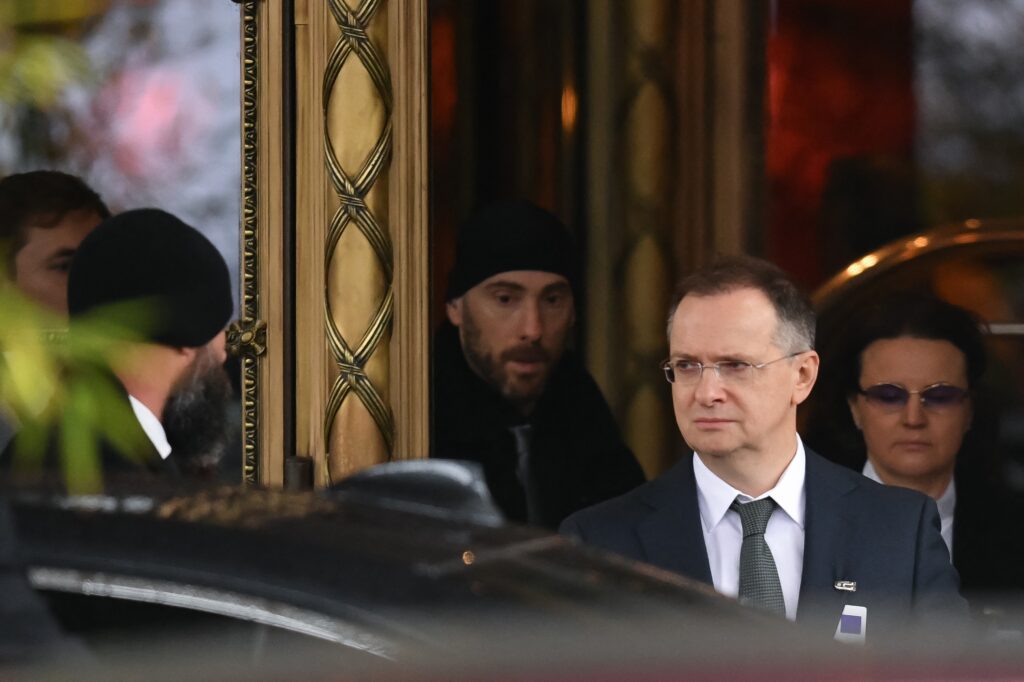
The head of the Russian delegation, Vladimir Medinsky, tersely said the talks had been “difficult but businesslike” and had ended after just two hours of discussions on Wednesday following longer conversations the previous day.
The reappearance of Medinsky, known to be a hard-line aide to Russian President Vladimir Putin, as head of the Kremlin’s delegation had signified that Russia was digging in its heels on core demands — including significant cuts to the Ukrainian military, the dismantling of Ukrainian President Volodymyr Zelensky’s government and guarantees for Ukraine’s neutrality, analysts said.
Moscow has insisted that these steps are required to address what it describes as the “root causes” of the war. Ukraine’s position is that Russia’s invasion was unprovoked and that Moscow should end its illegal war of aggression and remove its troops that are occupying Ukrainian territory.
Russian analysts said Moscow’s demands encompassed a far wider spectrum of issues than the territorial swaps proposed by President Donald Trump’s administration as a path to end the war.
“As long as there is an armed anti-Russia on Ukrainian territory, there can be no peace,” said Sergei Markov, a pro-Kremlin political analyst. “I don’t think anyone had any big hopes that the talks would end in success. The positions are very, very far from each other.”
“The idea of territorial swaps for peace is not Russia’s idea,” Markov added. “It is Trump’s.”
Proponents of territorial exchanges envision that Russia would withdraw from some areas it occupies in Ukraine in exchange for Ukraine withdrawing its military from parts of the heavily fortified Donbas area, which Putin has failed to capture during four years of full-scale war.
Zelensky’s administration has previously said it could agree to withdraw troops from the Donbas area. But Kyiv has said it would agree to a pullback only if the region becomes a demilitarized zone and if the United States first provides legally watertight security guarantees.
Zelensky told reporters on Wednesday that the talks on “political” issues such as Russian demands for Ukraine to withdraw its forces from “the east” were “not easy” and that differences remain. But Zelensky also sought to put a positive spin on some of the trilateral discussions between Russia, the United States and Ukraine in Geneva, saying they had been “constructive” on ways to monitor any potential ceasefire.
Zelensky appealed again at the Munich Security Conference over the weekend for U.S.-backed guarantees before he signs on to any deal with Russia to end the war. “Those guarantees answer the main question: how long there will be no war again,” he said then.
The direct talks between Russia and Ukraine have stalled for weeks over core differences, namely territorial concessions, control of Europe’s largest nuclear power plant, which is occupied by Russia in Ukraine’s Zaporizhzhia region, and questions about Western guarantees for Kyiv, according to two European diplomats who spoke on the condition of anonymity to discuss sensitive diplomacy.
“So far the Russian position is no boots on the ground from NATO allies, so there are outstanding points: territory, security guarantees and the future of the Zaporizhzhia plant,” one of those diplomats said. “Those are the big sticking points, so we need to see if it really happens.”
In meetings with U.S. officials late last year, Ukraine’s chief European backers were encouraged by the U.S. interest in playing a role in securing a settlement to the war. France and Britain have led a coalition of allies planning ways to provide Ukraine with a U.S.-backed bulwark against future attack, including with some European troops and air or sea power.
Still, the Trump administration appeared to want to sign a deal before fully committing, while Kyiv has maintained it needs the Western protection baked into any settlement, the diplomats said. Russia, meanwhile, has ruled out any presence of Western soldiers in Ukraine.
Zelensky, who met with Secretary of State Marco Rubio over the weekend, has stressed Kyiv’s refusal to cede territory in the east that Russia does not militarily control and said Ukraine could only hold elections if there is a ceasefire.
Analysts said it was clear the Kremlin had no intention of making any concessions.
“As long as Putin is in power, Russia isn’t paralyzed by widespread protests, and there is at least some money left in the budget for weapons, the war will continue,” said Tatiana Stanovaya, a senior fellow at Carnegie Russia Eurasia Center, in a post on X. “The Kremlin will not make significant concessions even if faced with a protracted financial and economic crisis.”
“That means there will be no final settlement either now or in the foreseeable future,” Stanovaya added. “Negotiations may intensify, a short-term ceasefire is possible, and documents may even be signed. But overall, this simulation of negotiations can only lead to the simulation of a ceasefire and the simulation of a settlement.”
Russia has been facing increasing economic pressure after the U.S. administration imposed tough new sanctions on Russia’s two biggest oil companies, Rosneft and Lukoil, in October.
The measures caused Russian oil revenue to plummet as Moscow was forced to accept discounts of more than $20 per barrel on its exports. Economists have warned of a nonpayment crisis as the economy grinds to a halt amid high inflation and high interest rates of 15.5 percent imposed by the Central Bank.
Analysts say there are concerns in the Kremlin that Moscow could face a narrowing window to reach an advantageous deal because the Trump administration could grow distracted as midterm elections near — and then potentially could be weakened by the results.
Serhii Korolchuk and David L. Stern in Kyiv contributed to this report.
The post Talks break in Geneva with no end to Russia’s war or hard-line demands appeared first on Washington Post.