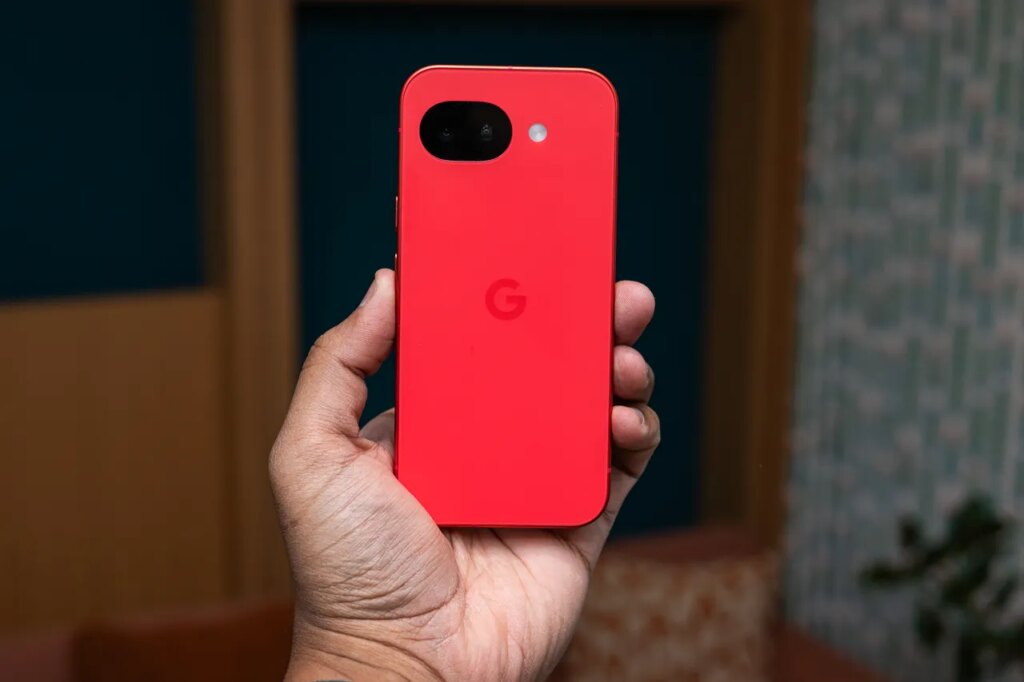
Smartphones don’t change dramatically year after year, and that’s never been truer than with the Pixel 10a.
Breaking tradition with its prior A-series phones, Google’s new midrange handset is nearly identical to last year’s Pixel 9a, even sharing the same Tensor G4 chipset in the older phone instead of using the Tensor G5 that debuted in last fall’s Pixel 10.
What gives? Google’s official answer is that it had to “make trade-offs to maintain the $499 price,” without providing specifics. The lack of the newer chipset and notable upgrades may be due to the skyrocketing cost of memory (RAM), which has been driving up prices for consumer tech across the industry. However, Google declined to cite a specific source.
Still, the Pixel 10a is likely to remain one of the best smartphones under $500, especially in the US, where there aren’t many options. The Pixel 10a is available for preorder now, and sales officially kick off on March 5. Alongside the phone, Google also announced new “Berry” and “Fog” colors for its Pixel Buds 2a wireless earbuds. Here’s what you need to know.
Old Is New
Spot the differences. That’s the game you’ll be playing when comparing the Pixel 9a with the Pixel 10a. There are two minor visual changes. Gone is the little plastic ring that surrounded the rear camera module on the Pixel 9a, meaning this year’s model is even more flush. Google says the lack of a noticeable camera bump proved popular with the Pixel 9a, so it’s doubling down here. On the front, the black bezel surrounding the 6.3-inch display is slightly thinner and more uniform, for a more cohesive look.
Those are the kinds of refinements Google has made on the Pixel 10a. The pOLED display is nearly identical, except it can now reach 3,000 nits of peak brightness versus 2,700 nits on the 9a. The glass covering the display uses Corning’s Gorilla Glass 7i instead of the aging Gorilla Glass 3, for better scratch resistance.
The battery capacity remains 5,100 mAh, but Google has upped charging speeds to 30 watts when plugging in, and 10 watts for wireless charging. Google skipped the Pixelsnap magnetic Qi2 charging here, a feature the company debuted on its flagship Pixel 10 series. Apple is expected to launch its midrange handset in a few weeks—the iPhone 17e—and rumors suggest it will support MagSafe/Qi2, unlike the iPhone 16e, giving it a leg up over Google’s phone, even if it is pricier.
Speaking of the battery, Google says it uses the newer “pull jacket” mechanism to more easily remove the adhesive on the battery, a system it introduced on the Pixel 10 series. Like the Pixel 9a, this phone also has a mandatory Battery Health Assistance tool that lowers the max voltage the battery can reach after a certain number of charge cycles to increase the battery’s lifespan. Google developed this system after it found overheating issues in earlier Pixel A-series models.
While the Pixel 10a still only supports Wi-Fi 6E like its predecessor, instead of the newer Wi-Fi 7 standard, Google did add a new modem to support Satellite SOS, allowing the phone to connect with emergency services when there’s no Wi-Fi or cell signal.
Google says the Pixel 10a is made with “the most recycled material of any A-series Pixel yet,” including using recycled cobalt, copper, gold, and tungsten for the first time. (Apple has been using these recycled materials for several years already.) The aluminum frame is 100 percent recycled, and the back is 81 percent recycled plastic.
That’s about it for hardware changes. The phone comes in fresh colors—Obsidian, Fog, Lavender, and Berry—the latter of which is a nod to the Berry color in new Nest products Google introduced late in 2025.
Software Upgrade
Google knows the Pixel 10a upgrades are thin, which is why it’s bringing over a few Pixel 10 software features like Camera Coach and Auto Best Take. The company isn’t porting these capabilities to the Pixel 9a despite the two smartphones sharing the same Tensor G4 chip and 8 GB of RAM—at least not yet. Google often gatekeeps a few software features for a few months on its new devices, then ports them back to older Pixels via Pixel Drop software updates. However, Google did not confirm if this will indeed be the case.
Camera Coach analyzes a scene in the camera app and suggests ways to improve your photography game. Auto Best Take is for group photos—it snaps multiple images when you press the shutter button; the camera picks and merges the best frames so no one’s eyes are closed, and everyone’s smiling. You’ll also be able to utilize the conversational photo editor in Google Photos. Unsurprisingly, there are no hardware changes to the camera over the Pixel 9a.
Like the Pixel 10, the Pixel 10a supports Apple’s AirDrop via Google’s Quick Share tool, allowing you to easily send photos and files to your iPhone-wielding friends. Many of the Gemini capabilities are present as well, along with Google’s pledge that it will update the phone’s software for a full seven years.
The A-series has long been where Google impresses the most, delivering a suite of helpful software smarts, with reliably powerful hardware, at a competitive price. This year’s entry is one of the weakest so far, though it’s still likely one of the best options for anyone looking for a good phone that doesn’t cost $1,000. (We’ll have to put it through its paces; stay tuned for a full review.) It may even be a sign of things to come with the memory crisis, where companies compromise on upgrades to maintain pricing.
The good news is that Google says it will continue to sell the Pixel 9a, though its price will depend on which retailer you go to. While there likely won’t be an immediate discount at the Google Store, expect the Pixel 9a to drop steeply in the coming months at third-party retailers, which will make it an even better value over its near-identical successor.
The post The Google Pixel 10a Is Barely Different From the Pixel 9a appeared first on Wired.