Good morning. It’s Wednesday. James Barron is taking a few days off. Today we’ll look at how Mayor Zohran Mamdani sees the largest landlord of all — the New York City Housing Authority, which he now controls.
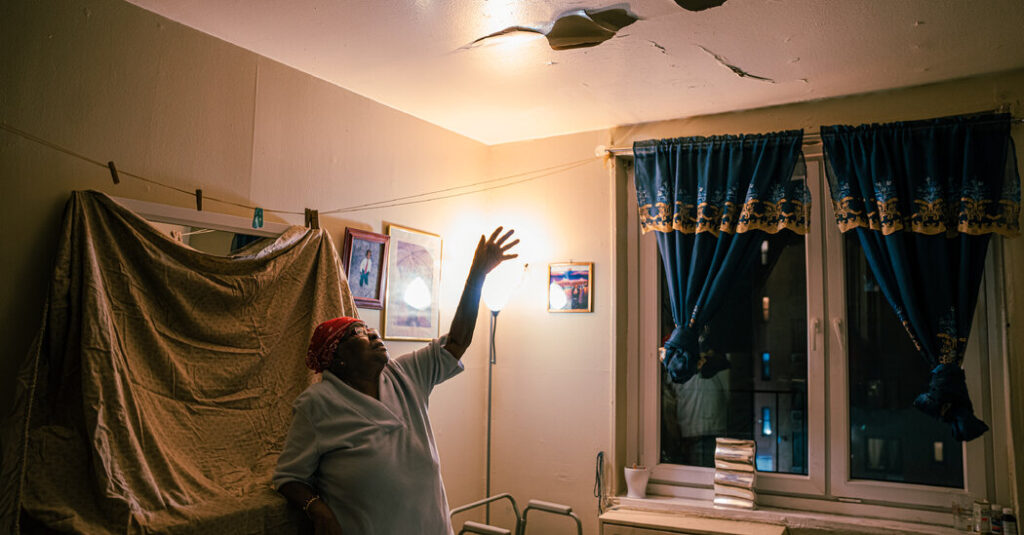
Mayor Zohran Mamdani has promised to hold landlords accountable. But the largest landlord in the city now answers to him — the New York City Housing Authority, which operates the sprawling public housing system. More than 300,000 people in NYCHA housing deal with frigid apartments, persistent leaks, broken elevators and spreading mold.
The mayor has said little about how he will fix a system in crisis. I spoke with Leila Bozorg, his deputy mayor for housing, about the administration’s vision for NYCHA as it prepares a comprehensive housing plan for the city. Our conversation has been lightly condensed.
It feels as if NYCHA is at a crossroads. You have new tools like PACT, which allows buildings to work with private companies to make renovations and to get access to additional federal funding, and the Public Housing Preservation Trust, which has the same goals. I heard skepticism from residents who said they didn’t trust these options. Where does the administration stand on them?
We have to take — and I know the mayor is aligned on this — an all-hands approach to addressing NYCHA’s challenges. We also want to do that by taking a very close look at these tools and ensuring that the public interest and NYCHA’s interests are really protected when we enter into these public-private partnerships.
Where does the administration stand on the contentious Fulton and Elliott-Chelsea Houses redevelopment in Manhattan? The project would demolish NYCHA buildings and build new public housing units, along with affordable and market-rate units.
We would like to see the project move forward so that residents can actually receive brand- new apartments. It is an important project that both provides brand-new homes for residents and allows us to rebuild over 2,000 public housing units, while also in future phases building additional housing that the city needs, all without any capital subsidy.
But we want to make sure that residents are feeling heard, that their issues and questions are actually being addressed.
When I met with residents there, one of the things that struck me was the level of misinformation that has been out there. One of the residents told me she still thought that the public housing replacement unit she would get would ultimately turn into market-rate housing. That’s patently not true.
Has NYCHA been making improvements under the federal monitors who have overseen it since 2019?
NYCHA has actually made significant progress in recent years.
For example, 100 percent of heat outages have been resolved within 24 hours over the last year. NYCHA now has the strongest lead abatement program of any public housing authority in the country.
That being said, we still hear from residents every day that it’s not enough.
I visited a NYCHA development on Watson Avenue in the Bronx where residents showed me the ancient-looking boiler in the basement. I talked to one couple who said it was really cold in their bedroom. There was a giant leak in another apartment.
I think you’re really speaking to the severity of what the lived experience of a $78 billion capital backlog looks and feels like.
This is also why we have to be really cleareyed and focused on how do we actually get to the top of what I call the cost curve and then get to the other side of it.
The work that’s happened through PACT to date will address close to $13 billion of the backlog. We have a number of projects now that are gearing up for the trust, which will do comprehensive renovations as well. That’s where you really get all the systems-level work that has to be addressed, whether it’s boilers or updating electricity and all the heating and potential cooling systems.
It’s really extensive work that has to happen to be able to kind of turn the tide.
Weather
Rain is expected today, accompanied by calm winds and cloudy skies. Today’s high will near 42 before dropping to around 36 in the night. Rainy conditions persist.
ALTERNATE-SIDE PARKING
Suspended (Ash Wednesday).
QUOTE OF THE DAY
“It’s going to take a lot more than a handshake to make up for a month of inconvenience.” — Michelle Salerno, a commuter, on Kris Kolluri, the chief executive of NJ Transit, who greeted riders on the Maplewood platform amid disruptions caused by work on the Portal Bridge.
The latest New York news
-
Ramadan in City Hall: Mayor Zohran Mamdani will observe Ramadan while he leads the nation’s largest city, blending his faith into his public life.
-
Mamdani’s latest attempt to close the budget gap: Mayor Zohran Mamdani proposed raising property taxes by nearly 10 percent, a “last resort” if he cannot persuade Gov. Kathy Hochul to raise income taxes on the wealthy.
-
An encouraging sign for an immigration trap: A traffic circle at the Peace Bridge in Buffalo has confused drivers into crossing the border and later being detained. Gov. Kathy Hochul authorized placing temporary electronic signs at the circle’s entrance to warn drivers that they are heading to another country.
-
Dispute among union leaders: The recent nurses’ strike revealed a rift inside the New York State Nurses Association. While most nurses are returning to work, thousands have decided to persist with the strike while accusing the union’s leadership of undermining their efforts.
Lawsuit argues that removal of Stonewall flag was illegal
The small triangular park that is part of the Stonewall National Monument in Greenwich Village is widely considered the gay rights movement’s symbolic heart.
So when the National Park Service, acting under apparent cover of darkness on a Trump administration directive, removed the official Pride flag that flew there, it was nearly inevitable that legal action would follow.
On Tuesday, it did, with several groups filing a federal lawsuit in which they argue that the flag’s removal violates a law that lets the Confederate flag fly at national parks and monuments.
The suit, my colleague Christopher Maag reports, is led by a foundation honoring Gilbert Baker, the artist who created the Pride flag. The plaintiffs seek to officially restore the flag, which was apparently removed the night of Feb. 8.
Asked about the removal, the Park Service referred to a recent federal memo that says that, with some exceptions, only the U.S. flag and other flags authorized by Congress or the service can be flown on flagpoles the agency manages.
Days after the removal, a crowd gathered at the Christopher Street park to raise a replacement, and a Pride flag was still flying there Tuesday morning. But only the official flag that was removed is sanctioned by the Park Service, meaning that any replacement can be taken down at any time, Alexander Kristofcak, a lawyer for the Baker Foundation, says in the suit.
The foundation and other plaintiffs argue that the Pride flag falls under an approved exception: to provide historical context at national monuments. This is what allows Confederate flags to fly at Park Service sites, including Gettysburg National Military Park.
Rather than following the law, the suit argues, the decision to remove the flag was part of an effort by the Trump administration to discriminate against the L.G.B.T.Q. community.
Opponents of the removal note that it follows the Park Service’s scrubbing of references to transgender people from sections of the Stonewall monument’s website last year; the stripping during Pride Month of Harvey Milk’s name from a U.S. Navy ship; and the firing by Kash Patel, the F.B.I. director, of an agent in training who hung a Pride flag near his desk.
The Trump administration has broad powers to interpret federal rules, Mr. Kristofcak said. It must, however, follow federal law when doing so, and any changes “can’t be motivated by animus toward a particular group,” he said.
The Park Service did not respond to an email seeking comment. The Interior Department responded with a statement that did not address the flag’s removal or the lawsuit but criticized New York officials for their handling of the recent cold spell. — Ed Shanahan
METROPOLITAN diary
Good lunch
Dear Diary:
I was visiting my uncle for the first time in 15 years. I took the Q to Brooklyn, and we went to lunch at a diner on Kings Highway.
He ordered a hamburger. I had a turkey club. We discussed our relatives and the complications of getting older. He had stopped riding his bicycle only six months before, at 79.
There was a small commotion at the back of the restaurant. A steady drip of water was leaking from the ceiling. Two customers changed tables. The drip soon became a stream.
We watched for a few minutes as we ate and speculated as to the cause. Then the sprinkler came to full life. The kitchen staff tried vainly to capture the flow with a five-gallon bucket.
We rose from our table and left the room. Before long, the floor was covered with two inches of water.
My uncle asked the manager whether he could retrieve the rest of his lunch, but we were told to stay out of the flooded room.
He dashed in anyway to save his half-eaten burger.
— Patrick Prior
Illustrated by Agnes Lee. Tell us your New York story here and read more Metropolitan Diary here.
Glad we could get together here. — E.F.
Davaughnia Wilson contributed to New York Today. You can reach the team at [email protected].
Sign up here to get this newsletter in your inbox.
Emma G. Fitzsimmons is a public policy correspondent for The Times, covering New York City.
The post How Mamdani Plans to Try to Fix NYCHA appeared first on New York Times.