Times Insider explains who we are and what we do and delivers behind-the-scenes insights into how our journalism comes together.
Since the Trump administration unfurled some of the deepest cuts to U.S. science funding in decades, thousands of jobs have been terminated or frozen at federal agencies including the Centers for Disease Control and Prevention, the National Park Service and the Environmental Protection Agency. Proposed budgets for this year include major cuts to organizations like NASA and the National Science Foundation.
These cuts, some of them seemingly indiscriminate, have led to chaos and demoralization across the scientific community.
“For whatever the stated reason by the Trump administration, this is having a huge negative impact on the American scientific enterprise, which is one of the signature accomplishments of the United States in the last 60 or 70 years,” said Alan Burdick, an editor on the Health and Science desk. “The nation has been a paragon of excellence in research, and as a supporter of research. And that landscape is changing drastically.”
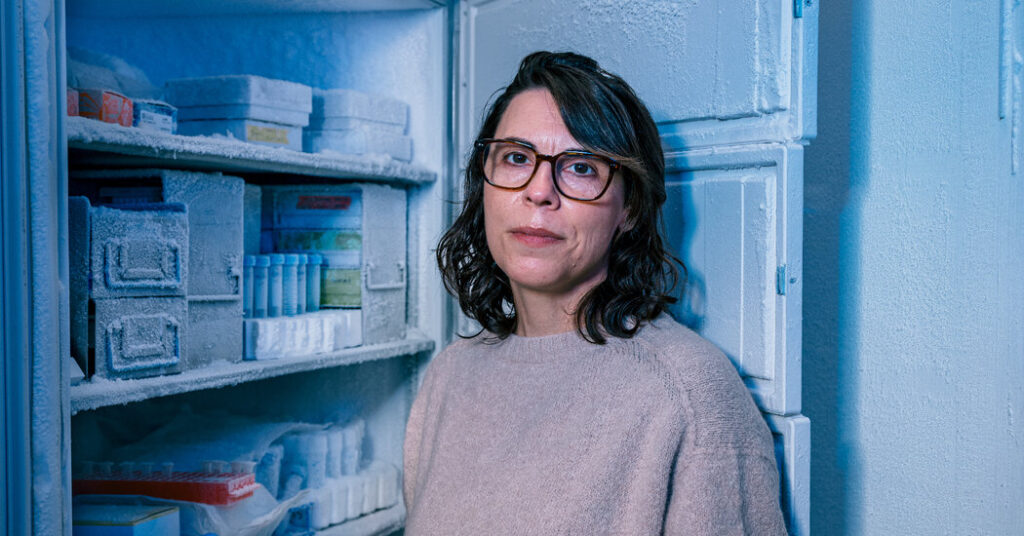
That reality inspired the Lost Science series, which spotlights researchers across numerous areas of science who have either lost their jobs or funding as a result of the cuts. Their stories are reported as first-person accounts and feature a range of fields, including research into wildfires and elephant behavior.
“We’re not here to express opinions per se, but because we are a science desk, it felt like we needed to do something to highlight what was at stake,” Mr. Burdick said, adding that reporters and editors on the Climate desk have also collaborated on the series.
In a recent interview with Times Insider, Mr. Burdick talked about why The Times launched the series, and its effect on readers. This interview has been condensed and edited.
How did the Lost Science series begin?
We wanted to do a series that helped readers understand what was disappearing. Some of that might be big, cutting-edge applied science or it might be smaller, more basic research. I felt we had a duty to document the wide range of research that’s falling by the wayside, and hearing directly from the scientists themselves seemed like the most powerful approach.
Our readers love science and math and physics, in addition to climate science and biology and medicine. They love the degree to which science taps into a sense of awe and wonder and discovery about the world. It all adds up to a sense of human progress.
How did you find your subjects?
We began by canvassing our reporters and asking, “Who do you know?” We also posted a callout to readers; many have written back to describe their own situations or those of scientists they know, and we try to follow up.
You have stories about tsunami warnings and research that is directly climate-related. But then you have things like hummingbird behavior, fields that are a bit off the beaten path. How did you choose those fields?
A lot of science is targeted in purpose; it’s what you might call applied science, research that’s being done to try to solve specific problems. Climate researchers often fall into that category, especially when it involves disasters like tsunamis or wildfires. But the vast portion of science that gets done in the United States, and which is falling under the ax of the Trump administration, is basic science. It can be easy to make fun of basic science: “Oh, ecologists are studying this weird species of ant in the Amazon. Who cares?” That’s a fair question, and one that’s on us to answer.
A simple answer is that basic science is just applied science that hasn’t been applied yet. Nobody could have anticipated that a certain tiny slice of research in quantum physics could end up, decades later, being important in building the internet. The aim of science is to learn about the world and understand why things work the way they do. It’s smart people asking questions and interrogating nature in the most rigorous ways that they can. And in time, that knowledge adds up in ways we often couldn’t have predicted.
That’s one of the great virtues of science: that we invest in learning, we invest in understanding, and we trust that this understanding will improve us. So our series includes a wide range of research areas, from spacecraft engineering to dog cognition.
What challenges have come with this project?
One criteria is that researchers need to feel comfortable speaking on the record and having their photos taken. The researchers we’ve spoken to are, for the most part, well established; maybe they’ve lost a big project but have another project that keeps them going. It’s been harder to hear from younger researchers or researchers of color, because they feel more vulnerable putting their names out there. It’s understandable. We’re working really hard to make sure we’re hearing from those voices.
What kind of response has Lost Science had from readers?
We’ve heard from readers and scientists saying, “We’re so glad you’re doing this series. It’s important. Keep going.” That’s been really encouraging. It helps us feel like we’re doing the right thing and in the right way. Some other stories we do are super flashy, and we know a lot of people will read them. These are pretty small. This was us feeling like we needed, for the sake of history, to serve as witnesses.
The post Documenting a ‘Drastically Changing’ Scientific Landscape appeared first on New York Times.