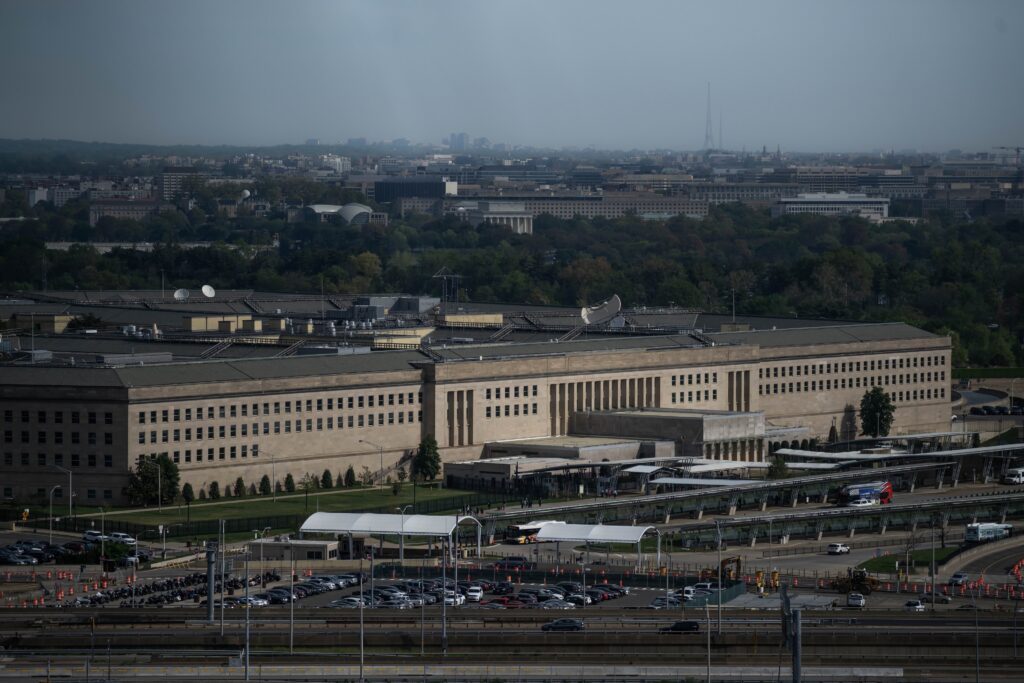
The Pentagon announced Tuesday it struck three more alleged drug boats in separate attacks that killed 11 men, marking an uptick in strikes on the small vessels as the military redirects the vast number of warships it had focused on Venezuela and sends them toward the Middle East.
Since September, the United States has focused its military strategy and arsenal on the Western Hemisphere and seaborne cartel drug trade. The Pentagon and White House have identified the flow of narcotics as a national security threat and sent more than a dozen warships, including the aircraft carrier USS Gerald R. Ford, to the region to surround Venezuela and choke off illicit oil trade. The massive operation, called Southern Spear, culminated in the capture of former Venezuelan president Nicolás Maduro.
But many of those ships have now departed and are sailing toward the Middle East, as President Donald Trump threatens Iran with another round of military strikes if it does not come to an agreement with Washington over its nuclear weapons program.
As of Tuesday, the Ford and the three destroyers accompanying it had crossed from U.S. Southern Command and into the Atlantic Ocean waters that are overseen by U.S. European Command. Two additional destroyers that had been in the Caribbean were also now in the Atlantic, a U.S. official said, speaking on the condition of anonymity to describe sensitive military movements.
Since the U.S. began striking the fast boats in September, it has hit 43 vessels, killing at least 133 people. Another 11 men who survived initial strikes are presumed dead.
The Pentagon shifted its approach to survivors after a controversial decision made in the midst of the first attack on Sept. 2, which left two men clinging to the wreckage following a guided bomb strike that killed nine fellow crew members. The strike commander, Navy Adm. Frank M. Bradley, ordered a second attack on the survivors, a decision that some lawmakers and international law efforts decried as a war crime.
Protocols were later changed to emphasize rescuing suspected smugglers if they survived strikes, though it remains unclear who directed the change in protocol and when exactly it took shape, The Post previously reported.
The Trump administration has said the people operating the vessels are “narco terrorists” without providing evidence they are tied to the cartels that the U.S. is targeting, or identifying the men killed.
In a statement posted to social media Tuesday, U.S. Southern Command said the three vessels were “operated by Designated Terrorist Organizations” and that it had intelligence to confirm “the vessels were transiting along known narco-trafficking routes and were engaged in narco-trafficking operations.”
One of the three strikes announced by Southern Command was in the Caribbean, which has seen few targets of late, despite the White House and Pentagon efforts to tie the scourge of drug trafficking to Venezuela and Maduro. Two of the strikes were in the Eastern Pacific, which officials have said is by far the most common maritime smuggling corridor — beginning in Colombia and Ecuador.
Monday’s strike, and one other on Feb. 13, were the first announced strikes in the Caribbean since November.
The uptick in strikes has also coincided with the arrival of Marine Gen. Francis Donovan as the new head of U.S. Southern Command, following the departure of Rear Adm. Alvin Holsey, who left the typically three-year post after just a year in part due to differences with Defense Secretary Pete Hegseth over the boat strike campaign.
The post Pentagon conducts strikes on three more alleged drug boats, killing 11 appeared first on Washington Post.