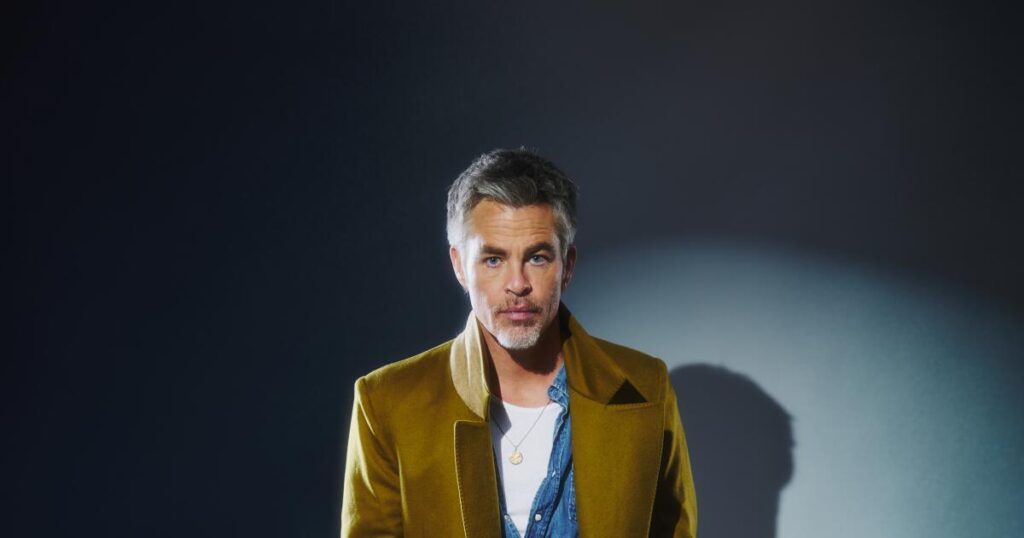
Actor Chris Pine was just 13 when his family’s finances took a turn and his parents lost their home.
So when the “Star Trek” actor read the Pulitzer Prize-winning book “Evicted: Poverty and Profit in the American City” from author Matthew Desmond, about eight families who fight to stay housed in Milwaukee, he knew he had to make a film out of it.
“The power of what we do as filmmakers … is really to remind people that we are not alone, that our experiences are transcendent,” Pine recently told an audience at the Sundance Film Festival. “This is one of those stories.”
Pine is producing a documentary based on the book and it’s among several projects backed by Harbor Fund, an emerging Utah-based nonprofit investment group that leverages the donations of high-net-worth individuals and other investors to support films, television shows and documentaries that have a positive social message.
“Good stories can change how people feel,” Lindsay Hadley, Harbor Fund’s co-founder and chief executive, said in an interview. “We just really believe in the power of film and the entertainment world to harness a society of compassion.”
Since it began about a year and a half ago, the fund has raised $15 million from 82 donors with an average contribution of $250,000. Already, Hadley said, $10 million has been deployed across 22 projects, including “Evicted.”
“It’s rooted in housing policy and economics, but at its core, it’s about people — and stories like this aren’t always easy to back in an industry built to minimize risk,” Pine said in a statement.
“Harbor Fund immediately understood the moral center of the film and why it needed to be told honestly. Their mission goes beyond financing films. They care about what happens after a premiere — about bringing films into communities that initiate civic conversation and making sure the conversation continues beyond the screen.”
Finding a consensus on what constitutes a social good can be tricky, especially in the current fraught and deeply partisan political climate.
Hadley said she gets extensive advice on pitches from the fund’s advisory board, which includes filmmakers like Patty Jenkins, David Oyelowo, Amy Redford and Mark Burnett. The projects seek to home in on shared values and avoid works that dehumanize other people, she said.
Harbor Fund wants to reach $100 million in the next two years, said Hadley, who previously served as chief development officer for advocacy organization Global Citizen and has produced its annual festival in New York’s Central Park that supports social issues.
Efforts to finance socially conscious films aren’t new. Culver City-based production company Participant built its reputation around projects that prioritized social commentary, including Al Gore’s 2006 environmental documentary “An Inconvenient Truth” as well as Oscar-winning feature films such as 2015’s “Spotlight” and 2018’s “Green Book.” But the company closed in 2024 as the market for independent films changed drastically.
The traditional business model for indie films has broken down as audiences still have not shown up to theaters with the same enthusiasm as before the pandemic. Add to that a shrinking number of distributors — though some new ones recently emerged — and the inherent risk of funding a movie, and it’s no surprise investors have shied away.
“Theatrical windows used to be the lifeblood of independent film, and now it’s basically gone,” said David Offenberg, an associate professor of finance at Loyola Marymount University and author of the book “Independent Film Finance.”
Harbor Fund’s model for financing is rare, he said, though it taps into one of the big motivations for investors to fund movies and TV — social impact.
“A lot of investors are putting money into film because they want to make a change in the world and they want the movie to help make that change,” Offenberg said.
With a nonprofit venture capital-type structure, no costly production arm and a diversified portfolio, Harbor Fund aims to be sustainable, Hadley said. The fund also has invite-only forums, such as last year’s in Montana that featured actor Kevin Costner, where investors can hear about potential projects directly from those involved, which can include A-list stars.
Donors engage with the fund knowing they will not see a return on their investment. They choose projects they want to support, Harbor Fund takes an equity position in it, and any money it makes is invested back into the fund for future films and TV series.
“If it’s successful, it’s a gift that keeps giving,” Hadley said.
Investor Shauna Ockey of West Point, Utah chose to contribute to the documentary “Orphan Myth,” which details the plight of children separated from family members in poverty, because she sees it as a social return rather than a financial one.
“Reuniting children with families so they don’t grow up in institutions is an important part of me and my husband’s value systems,” said Ockey, who has contributed $350,000 to Harbor Fund with her husband. “When you invest philanthropically in a film, of course you want to have the best outcome, but … not all films are going to be box office hits. But if it just impacts a few people, that’s a good enough return.”
The fund’s projects span a wide range of subjects, from “Hershey,” a film set for release this year about the philanthropic legacy of eponymous chocolate-maker Milton Hershey and his wife, Catherine, to “Flash Before the Bang,” a movie about a deaf track team.
The investments help pay the overhead costs for these films in part because of the belief that big-name stars will attract a larger audience and, hopefully, create more change, Hadley said.
For Calgary-based investor Lloyd Roberts, the 2006 Will Smith drama “The Pursuit of Happyness,” about a father and son who struggle to find housing, changed his thinking about the role of perspective in feelings of fulfillment.
“You can have someone stand onstage and tell you these ideas, but you put it in a feature film like ‘The Pursuit of Happyness,’ and you feel like you have a firsthand view of how putting it into practice can help you,” said Roberts, who has invested a little more than $1 million in the fund and believes audiences will reap the benefits.
“One of the best mechanisms for an idea is not just documentaries but motion pictures that have an underlying message that pulls on their heartstrings,” he said.
The post Filming with a mission: Why actor Chris Pine turned to this nonprofit film fund appeared first on Los Angeles Times.