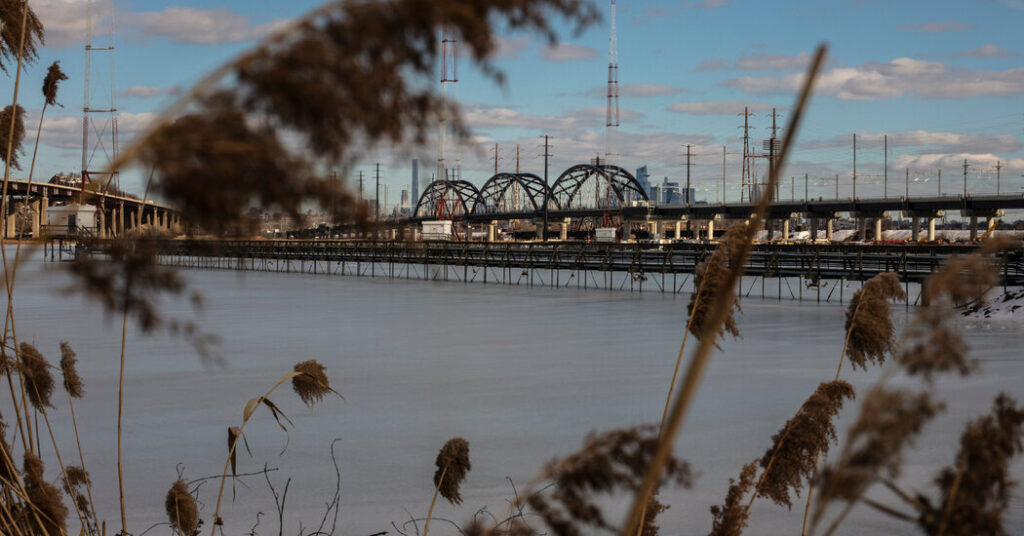
A 116-year-old steel bridge in New Jersey has been the cause of many headaches for millions of commuters traveling in and out of Manhattan for decades.
Some days it’s fires, others it’s malfunctions that have slowed traffic on the Portal Bridge, a two-mile span that crosses the Hackensack River. It ferries as many as 200,000 people a day, mostly NJ Transit passengers, along the Northeast Corridor of rail lines in the United States, the busiest in the Western Hemisphere
The rail tracks run across the bridge. But both the tracks and bridge are outdated, and Amtrak, which owns and operates the bridge, is replacing it with the new Portal North Bridge, a process that will lead to large-scale disruptions through March 15.
The new span, a two-track replacement bridge, will rise 50 feet over the river and will not have to open and close for river traffic. That will eliminate the movable components and risk of malfunction, which for decades have led to delays, fires and many other inconveniences for passengers.
Moving one rail line to the new bridge means there will be limited service to Pennsylvania Station in New York, and Midtown Direct trains will be diverted to Hoboken.
Officials say transit is expected to improve after the process is complete, as the new Portal North Bridge will increase reliability and capacity improvements for commuters along the Northeast Corridor.
Davaughnia Wilson is a news assistant at The Times who helps to cover the New York City region.
The post What Is the Portal Bridge? appeared first on New York Times.