Neha Sabharwal is a physical therapist and rehabilitation director.
As a physical therapist and rehabilitation director who oversees Medicare-funded nursing home care for patients recovering from serious illness or injury, I know what happens when an older adult enters a nursing home after a stroke or a hip fracture. The family expects recovery. The facility promises rehabilitation. Medicare pays for skilled care.
And far too often, the patient leaves weaker than when they arrived.
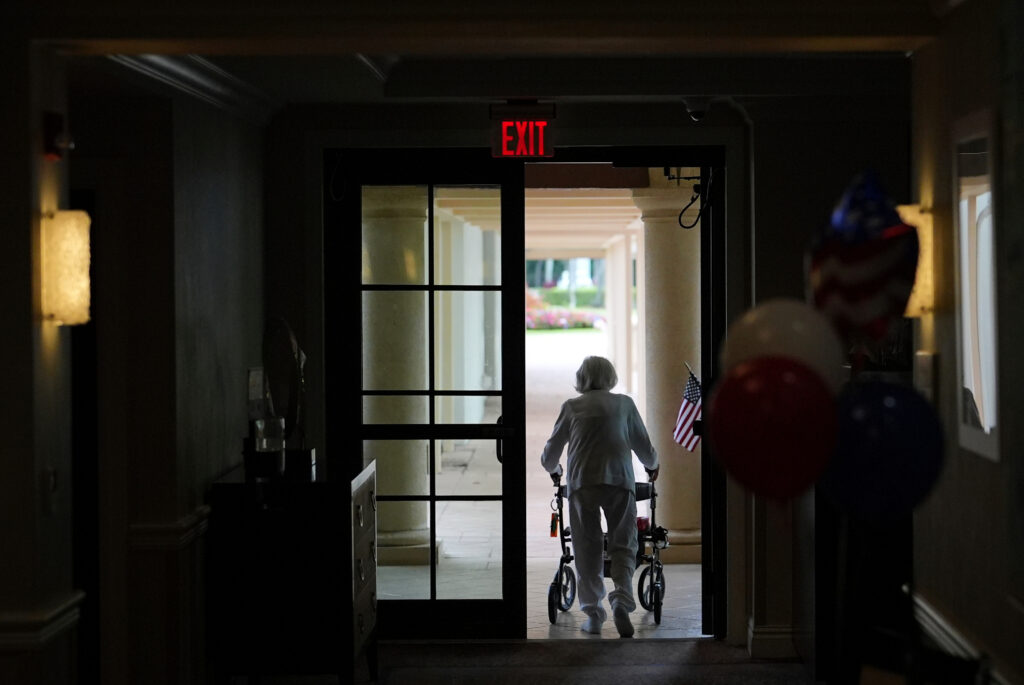
This is not an anecdote. It is a consistent pattern. Across thousands of facilities, countless seniors who walk in with assistance leave in wheelchairs. Patients who could previously stand up from a chair, move to a bed or walk short distances with help now require mechanical lifts and two staff members. The decline happens quietly, without alarm, in a system that measures almost everything but fails to make mobility measures consequential.
The U.S. health care industry is failing at the most fundamental measure of recovery, and federal oversight has built a regulatory apparatus that makes this failure invisible.
The problem begins with what Medicare chooses to measure. Medicare’s nursing home quality system tracks falls, infections, pressure ulcers and staffing ratios. These metrics matter. But when federal oversight prioritizes these measures above all else, it creates perverse incentives for nursing home operators and administrators. A facility can receive high marks for preventing falls while presiding over widespread mobility loss. Safety becomes defined as keeping people still.
This dynamic plays out daily in nursing homes nationwide. Therapy schedules get cut when Medicare coverage runs out. Walking programs end because staffing is tight. Residents spend long hours in wheelchairs not because they cannot walk, but because walking takes time and assistance that overstretched staff cannot provide. The result is predictable: Muscles weaken, balance deteriorates and temporary impairment becomes permanent disability.
What makes this failure especially clear is that the necessary data is already being collected. Every Medicare-certified nursing home documents residents’ functional status at admission and discharge through standardized assessments measuring walking distance, transfer ability and independence in self-care. Medicare mandates assessment of whether residents can walk 50 feet, stand from a chair, move from bed to bathroom independently. These measures are publicly reported, but they rarely trigger the kind of investigation, corrective action or enforcement that follows a fall or an infection.
The data exists to answer the question every family asks: Did my loved one get better? Yet current policy frameworks do not require nursing homes or regulators to act on the answer.
This lack of accountability has consequences beyond individual disappointment. Mobility loss is expensive. Residents who cannot walk require more intensive care and face higher hospitalization rates. They are far more likely to need permanent institutional placement rather than returning home.
The mechanics of measurement are not the barrier. The Centers for Medicare and Medicaid Services has developed functional outcome measures that compare expected versus observed mobility at discharge. These measures are part of the Skilled Nursing Facility Quality Reporting Program and are publicly reported through Medicare’s Care Compare. These tools work. But they carry minimal weight in federal nursing home ratings and almost no consequence for Medicare reimbursement. As long as mobility remains peripheral to quality measurement, facilities will optimize for what carries consequences: avoiding incidents rather than building strength.
To be clear: Fall prevention matters. Infection control matters. Adequate staffing matters. These are not competing priorities. But safety defined solely as the absence of adverse events is insufficient. True safety includes the ability to move, to stand, to walk with appropriate support. Keeping vulnerable seniors immobile in the name of preventing falls often creates the weakness that makes falls more dangerous when they inevitably occur.
Federal policymakers and Medicare regulators could address this directly. Mobility outcomes should be weighted meaningfully in federal nursing home star ratings, in which functional recovery measures carry far less influence than inspection findings and staffing measures. Admission-to-discharge functional change should be publicly reported in plain language. Medicare payment should reward improvement, not just the absence of visible harm. Functional decline should no longer be treated as an unfortunate and unmeasured side effect of nursing home care.
The elderly U.S. population is growing rapidly. By 2040, more than one in five Americans will be older than 65, according to the Administration for Community Living. If nursing homes continue to measure process but ignore outcomes, to document function without demanding improvement, the result will be a generation that is warehoused rather than restored.
This is not about perfection. Some residents will not improve regardless of care quality. Cognitive impairment, advanced illness and end-stage conditions all limit recovery potential. But no one is served by pretending there is no distinction between unavoidable decline and preventable loss of function.
Families discover too late that their father can no longer stand, that their mother has lost the ability to walk to the bathroom, that rehabilitation meant maintenance at best. They ask why no one warned them, why no one tried harder.
Seniors entering nursing homes deserve better than the current standards. They deserve a system that measures whether they leave stronger than they arrived. That is not a radical demand. It is the bare minimum a recovery system should provide.
The post The vital measure of senior health that Medicare ignores appeared first on Washington Post.