Nuclear talks between the United States and Iran were scheduled to resume on Tuesday in Switzerland, as the Middle East remained on alert over the possibility of an American attack should the negotiations collapse.
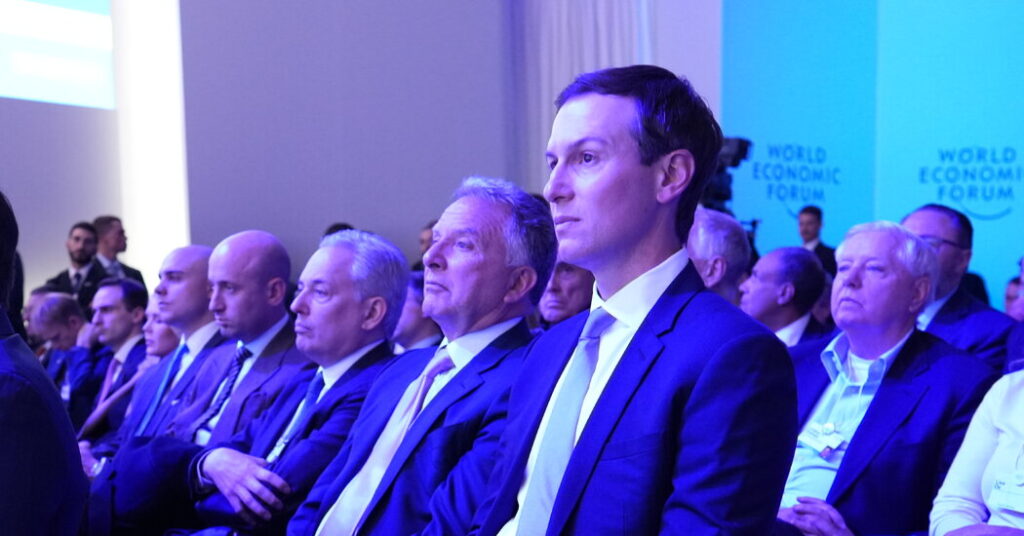
Steve Witkoff, the Middle East envoy, and Jared Kushner, President Trump’s son-in-law, are expected to attend the negotiations on Tuesday in Geneva, according to two U.S. officials, who spoke on condition of anonymity to discuss sensitive diplomacy. Both men have helped lead Mr. Trump’s diplomatic efforts, particularly in the Middle East.
Mr. Trump, speaking Monday on Air Force One, said he would be involved in the talks “indirectly” and that they’d be “very important.” He emphasized that Iran wanted to make a deal because they would not want the consequences of not making a deal.
Mr. Trump has ordered a buildup of U.S. forces in the region — including two aircraft carriers — after vowing last month to aid antigovernment demonstrators in Iran. The Iranian government subsequently quelled those protests in a bloody crackdown that killed thousands, according to rights groups.
Now, Mr. Trump is calling on Iran to reach an immediate accord or else face the threat of a possible attack. Last week, Mr. Trump wrote on social media that he preferred a deal with Iran, but if one could not be brokered, “we will just have to see what the outcome will be.”
Regional countries worry that a potential American strike, and Iranian retaliation that could draw in Israel, could destabilize the Middle East and endanger U.S. allies in the Arab world that host American soldiers.
It is far from clear whether Iran and the United States will be able to reach a compromise that would stave off military escalation. U.S. officials have said the talks with Iran must also deal with the country’s ballistic missile program and support for proxy militias across the Middle East.
But while Iran’s leaders say they are willing to talk about their nuclear program, they have shown little interest in budging on the other issues.
Abbas Araghchi, Iran’s foreign minister, was already in Switzerland on Monday to meet the foreign minister of Oman, which hosted a first round of negotiations between Tehran and the United States earlier this month. Mr. Araghchi said on social media that he was in Geneva “with real ideas to achieve a fair and equitable deal.”
“What is not on the table: submission before threats,” he added.
On Monday, the Islamic Revolutionary Guard Corps — a powerful branch of Iran’s security forces — held a naval “war game” in the Strait of Hormuz, according to the semiofficial Tasnim news agency.
Nonetheless, the Iranian government is under considerable pressure to agree to a deal. Iran’s economy has struggled under crippling international sanctions, which helped ignite the latest wave of protests against the country’s authoritarian government.
Last year, U.S. and Iranian officials tried to negotiate a deal that would end the sanctions in exchange for an end to Iranian nuclear enrichment. The talks were ultimately unsuccessful. Instead, Israel launched a military campaign against the Iranian nuclear program, leading to a 12-day-war between the two countries.
U.S. stealth bombers later joined the Israeli assault, attacking three Iranian nuclear sites. Mr. Trump initially said that the U.S. bombing had obliterated Iran’s nuclear program, but American intelligence later found that it had been badly damaged, not destroyed.
Mr. Trump now believes that Iran “must surely understand that they missed out last time” by not showing greater flexibility in the 2025 talks, said Benjamin Netanyahu, the Israeli prime minister, who met with the American president last week in Washington.
“He thinks there is a serious probability that they won’t miss out this time,” Mr. Netanyahu said on Sunday evening in Jerusalem while addressing a group of American Jewish leaders.
But Mr. Netanyahu said he was far more skeptical of “any deal with Iran.” He added that Israel was demanding any agreement include a ban on nuclear enrichment, tight restrictions on ballistic missiles, and an end to Iranian backing for militias like Hamas and Hezbollah.
Aaron Boxerman is a Times reporter covering Israel and Gaza. He is based in Jerusalem.
The post U.S. and Iran Gear Up for Nuclear Talks Amid Rising Tensions appeared first on New York Times.