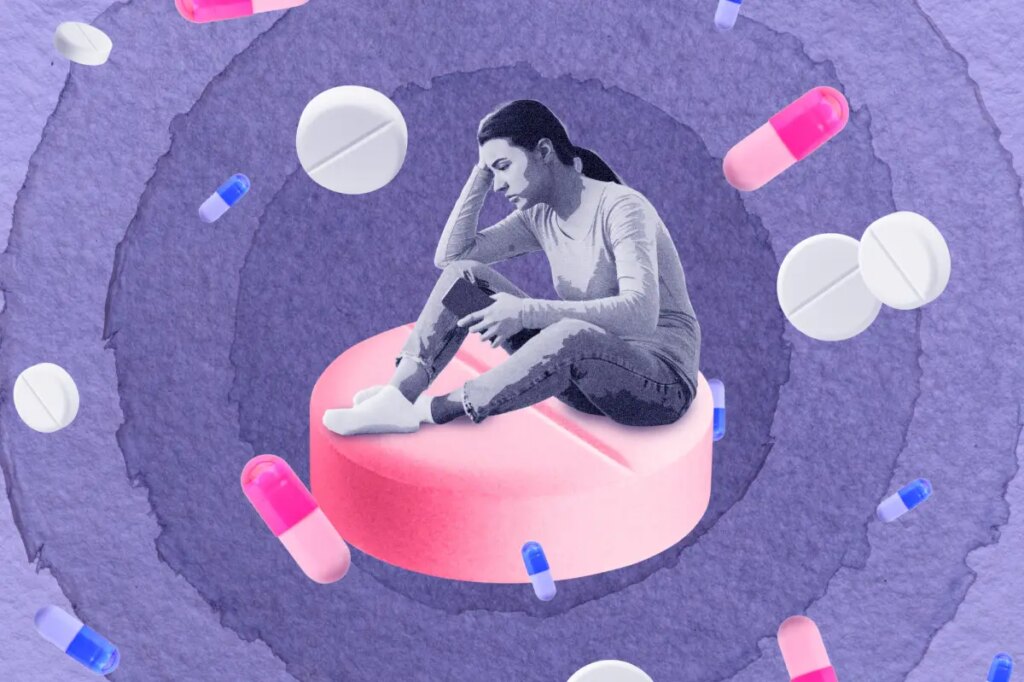
It’s become common to talk about and SSRIs (short for selective serotonin reuptake inhibitors, a class of antidepressants) the way people talk about supplements: a passing mention, a joke in a group chat, a “same” under a TikTok about Lexapro, even a line tucked into a dating profile bio.
For many young women, the cultural shift has been palpable, with less shame, more openness about anxiety and depression, and more willingness to treat it.
But as antidepressants have moved from taboo to everyday conversation, another question has followed: Does talking about them casually mean people are taking them casually too?
And as prescriptions rise, particularly among young women, has the pendulum swung too far from stigma to overuse?
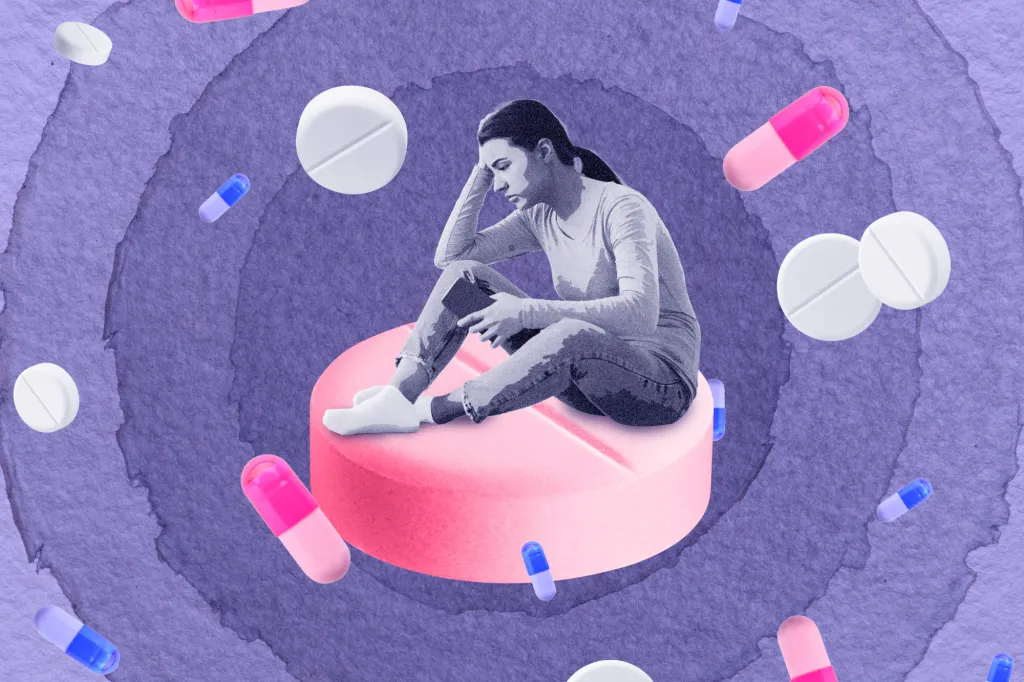
Psychiatrists say the answer is more nuanced than the hand-wringing suggests.
Yes, more women are taking antidepressants. And yes, the pandemic accelerated that trend.
But doctors interviewed by The Post largely reject the idea that the US has entered a reckless era of SSRI overprescribing. Instead, they point to long-suppressed demand finally meeting access, paired with a system still struggling to deliver consistent care.
“I don’t think it’s overprescribing,” Dr. Danielle Hairston, a psychiatrist and residency training director at Howard University Hospital, told The Post. “I think it’s people being more willing to talk about their mental health needs and actually seek help.”
So is everyone just more depressed now?
The data does show a clear increase. According to the CDC, women are roughly twice as likely as men to take prescription medication for depression, and antidepressant use among women has steadily increased over the past decade.
Among young people, the acceleration has been especially pronounced since COVID.
A study published in Pediatrics found that antidepressant dispensing for adolescents and young adults was already rising before March 2020, but rose 63.5% faster afterward, driven largely by girls and young women.
But psychiatrists caution against reading those numbers too literally.
“Having more people use a therapist doesn’t imply that everyone’s all of a sudden depressed,” says Dr. Jessi Gold, a psychiatrist and the chief wellness officer for the University of Tennessee System. “It might mean they know [that care] exists. It might mean that the stigma is less and they’re more comfortable using it. Or it could just mean that there’s more going on in their lives.”
She also notes that antidepressants aren’t only prescribed for depression, explaining “these medications are used for PTSD and other diagnoses like anxiety where they’ve shown efficacy, even if that’s not their original FDA approval.”
Stigma begone — and new complications arise
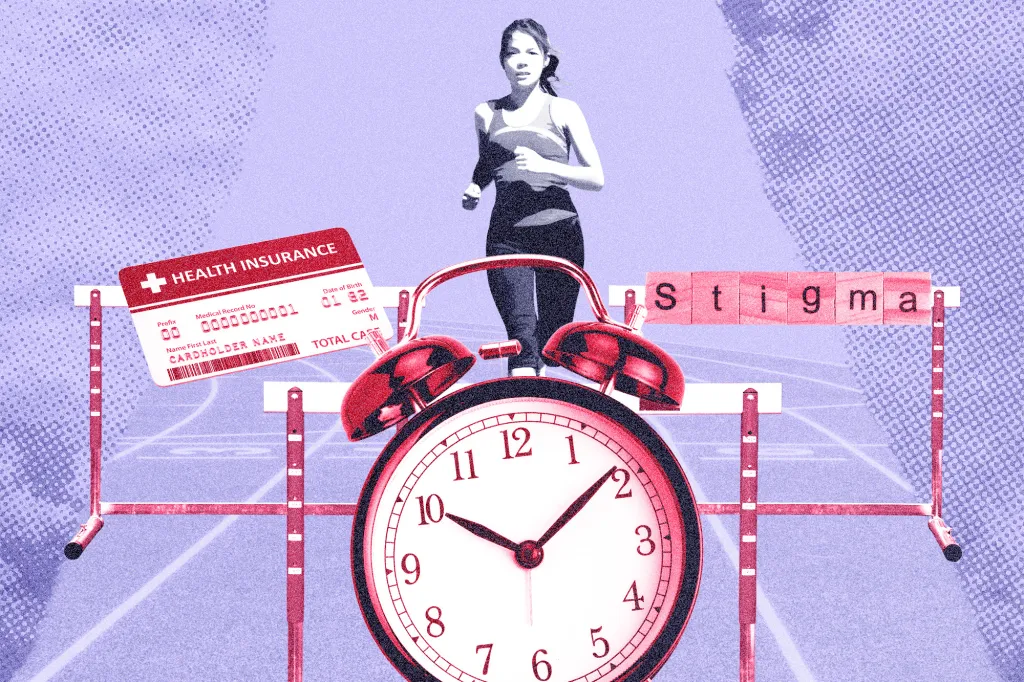
What has changed is the cultural context surrounding medication and how readily people talk about it.
Social media has accelerated that shift. Gold points to the way psychiatric medication now appears in pop culture — in songs (like Hayley Williams’s “Mirtazapine” and Kelsea Ballerini’s “I Sit in Parks”), memes and TikToks — as evidence of how the conversation has moved into the open.
That openness comes with complications, like patients self-diagnosing and requesting specific medication they learned about online.
Still, the experts say, rising prescriptions don’t necessarily point to excess so much as to more people reaching out for help.
Fewer hurdles, more help — but not unnecessary treatment
Antidepressants have been part of Sophie Levine’s life for years.
The New Yorker began experiencing persistent anxiety in her early 20s and went on SSRIs when her symptoms didn’t resolve on their own. She describes her decision to stay on them as practical, less about chasing happiness than regaining basic functionality.
Before meds, anxiety showed up as a constant stream of intrusive thoughts and worst-case scenarios that bled into everyday life, making it difficult to concentrate, make decisions or trust her own judgment.
“I’m just not living my life in spirals anymore,” she says.
During the pandemic, Levine turned to telehealth service and was prescribed medication after a virtual visit that lasted around 10 to 15 minutes.
The speed felt like relief. No commute. No waiting room. No monthslong search for care. But looking back, she understands why that can make people uneasy — and may feel like medication is being handed out without much oversight.
“It was honestly sink or swim. I needed to either get medication to keep my job and stay afloat, or I was going to lose everything.”
Isha Sharma
Hairston points out that during COVID, when all of her appointments switched to telehealth, “my no-show rate dropped to zero because of the access, which I think is good.”
That tension between access and assessment sits at the center of the overprescribing debate.
Gold believes a proper first psychiatric appointment — which, for her, lasts 60 minutes — should involve a complete medical and psychiatric history, a review of prior medications, and a walkthrough of the risks and benefits of new medications.
“With psychiatry, a patient’s social history really matters in a way that maybe isn’t the case for every speciality,” Gold says. She routinely recommends therapy as well, describing SSRIs as one piece of a broader care plan rather than a stand-alone solution.

That’s another factor complicating the overprescribing narrative: therapy access.
Even when clinicians recommend therapy alongside medication, many patients struggle to find a therapist who accepts their insurance, has availability or is nearby.
“Combining medication and therapy tends to yield the most robust and lasting improvements,” says Dr. Pooja Sarkar, an outpatient psychiatrist at Beth Israel Deaconess Medical Center in Boston, Mass.
Who’s prescribing these antidepressants? Not always who you think
Then there’s where people are getting SSRIs: Most antidepressants in the US aren’t prescribed by psychiatrists, with research finding that more than 60% of psychotropic prescriptions are written by non-psych providers, such as primary care doctors, nurse practitioners and physician assistants.
Hairston says that these are essential points of access, particularly in underserved areas. But she draws a firm line around evaluation practices and thoroughness, pointing out that she trained specifically for this arena of medicine.
“With the differences in training and experience, it might lead to a lot of medication being prescribed differently, maybe even too much,” Hairston says.
Many patients, she explains, first receive antidepressants through primary care visits, ERs, urgent care or telehealth platforms.
In crisis settings, the focus is often on short-term stabilization. In primary care and some telehealth models, antidepressants may be prescribed as ongoing treatment even when there is limited opportunity for extended psychiatric evaluation or follow-up. As a result, she sometimes sees patients on confusing medication regimens.
“They’ll be on multiple SSRIs, none of them at fully therapeutic levels.” When she asks what the reasoning behind the medications was, “they can’t really explain.”
Decisions not taken lightly
For Isha Sharma, a 31-year-old New Yorker, those system gaps collided with cultural pressure in ways that delayed her decision to start medication.
Growing up in a South Asian household, she says, mental health simply was not discussed, and medication carried a heavy stigma.
“It felt like something I should be able to handle on my own,” Sharma says. Even as she cycled through therapy throughout her 20s, antidepressants felt like a line she was not ready to cross.
That changed in 2023 after a traumatic breakup triggered a mental health crisis that made it difficult to function at work.
“It felt like, ‘You sound crazy, so we’re going to put you on an antidepressant.’”
Corina Kinnear
“It was honestly sink or swim,” she says. “I needed to either get medication to keep my job and stay afloat, or I was going to lose everything and that would have made things worse.”
Sharma tried several drugs — paired with different types of therapy — before finding the right fit in Zoloft.
“The highs aren’t as high, the lows aren’t as low,” she says. “But I’m more equipped to handle hard things. This is the most stable I’ve ever been.”
Stories like Sharma’s complicate the idea that SSRIs are being embraced casually. Cultural stigma — particularly in immigrant families and communities of color — still delays treatment for many women.
National CDC data shows antidepressant use is lower among non-Hispanic black, Hispanic and Asian adults than among white adults, which researchers attribute to barriers in access, stigma and distrust of medical systems, rather than lower rates of depression.
A little more listening
On the other end of the spectrum, though, there are some women who say an eagerness to explain away symptoms as depression and prescribe antidepressants is stopping them from getting real answers to their health problems.
LA-based dancer Corina Kinnear says she was experiencing issues she later understood as long COVID, including fatigue and dizziness that disrupted her ability to work, when antidepressants were recommended to her.
What unsettled her was not the suggestion of mental health treatment itself, but how quickly her symptoms were reframed as psychological, despite no history of anxiety or depression.
Long COVID has been met with particular skepticism, and she felt that her complaints were treated less as medical puzzles to be solved than as signs of emotional distress.
She describes being steered toward psychiatric explanations by doctors who, she felt, had not fully reviewed her medical history.
“It felt like, ‘You sound crazy, so we’re going to put you on an antidepressant,’” she says.
Rather than being part of a carefully considered treatment plan, SSRIs felt like a way to resolve diagnostic uncertainty.
“It felt like a shortcut,” she says.
Kinnear’s experience doesn’t argue against antidepressants themselves, but illustrates why context, listening and thorough care matter just as much as access.
As SSRIs have become more visible and more widely discussed, the challenge is no longer only about encouraging people to seek help, but about how thoughtfully that help is delivered once they do.
The post More and more women are popping pills for depression — but are SSRIs being overprescribed? appeared first on New York Post.