EVIL GENIUS, by Claire Oshetsky
Today’s liberals idealize the groovy 1970s, when feminists and racial minorities pushed into the mainstream. Bras were burned. Huey Newton posters adorned bedroom walls. Earth Day was a televised event.
But it was also a dangerous decade: waves of hijackings and serial killers on the prowl, a nation demoralized by the drip-drip-drip of Watergate leaks. Most famously, an abducted San Francisco heiress named Patty Hearst, assaulted and brainwashed by the self-styled militants of the Symbionese Liberation Army, posed with a machine gun, a muse of leftists coast to coast. Revolution was in the air, and to be young was very heaven.
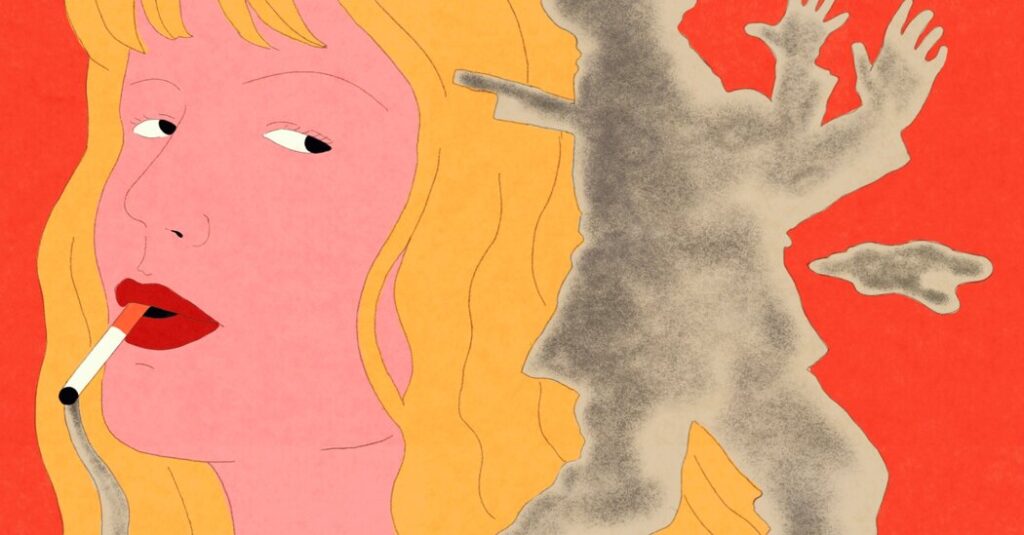
Or very hell, according to 19-year-old Celia Dent, the narrator of “Evil Genius,” Claire Oshetsky’s noir delight of a novel. Set in the Bay Area in 1974, “Evil Genius” alludes to Hearst, Watergate and other flashpoints of the era as Celia seeks freedom beyond the narrow cage of her life. Now older, she peers back some 50 years to a moment of transformation.
By 18, Celia is already married to Drew, a controlling and chronically underemployed man 11 years her senior who never misses an opportunity to criticize her. She works for a phone company in San Francisco, commuting from Redwood City, where she was raised by a single mother who has succumbed to a mysterious illness.
This Celia hears voices, literal and figurative. Every weekday from 8 a.m. to 5 p.m. she sits in the Resident Billing Office, headset in place, taking complaints from customers. But the call operators, in turn, get to be “like cold harsh gods. If you didn’t pay on time, or if we didn’t like your tone, or if you disrespected us, then we could disconnect your phone as fast as a fingersnap and you’d be dead to the world. We called it ripping your lips.”
A people pleaser, Celia manages all kinds. (“We had Jesus Christs calling in all the time.”) She teeters between boredom and fear, ambivalent sexuality and a fearsome imaginary avatar she dubs the Crab Queen. Dogs “maybe” bark in her mind. A complex woman stirs beneath Celia’s simple facade, and Oshetsky revels in revealing her to us.
A murder tips the plot into motion: The husband of a woman named Vivienne Bianco — Celia’s “boss’s boss’s boss’s boss” — catches her in bed with a colleague, Randall Smiley, and shoots her. (Smiley, the titular “evil genius,” escapes detection but loses his job, a scandal that only elevates his celebrity.)
Oshetsky (“Chouette”) threads Vivienne’s fate throughout the book, an episode that haunts Celia while also inspiring her to fend off Drew’s cruelties. The narrative tracks her desire to fit in, her recognition of true, false and hybrid selves: “I wanted to be a good person but sometimes a feeling would come over me and I’d rip lips all the livelong day. Then I’d be ashamed of myself. … I was probably a terrible person. Even my husband said so.”
Celia’s own actions mystify her. She keeps a box of childhood items, tokens of an impoverished past — her Barbie collection, a photo of a man who might be her father. She insists that she adores the man she calls “my Drew” again and again, a mantra, yet dreams of stabbing him in the ear.
At a pawnshop, she buys two knives, one small enough to tuck inside her shoe. (She’ll put both blades to good use.) Despite Drew’s demands that Celia come directly home, she goes out for drinks with the phone ladies, including the perceptive Helen, whose warmth attracts her. After frozen margaritas and two botched seductions, she stumbles back to Redwood City and straight into a scene from a horror movie: a locked door, an enraged husband, a cocked .38 Special.
Love and death, that Freudian duet, call to Celia: thoughts about how the former “could be a land mine buried in a shimmering field of wheat, or a pistol shot, or a sticky trap set in a corner, or a noose, or an insidious addiction — and so could death be all these things.”
For a slim novel, “Evil Genius” is deceptively light on its feet, skittering across the page to deliver its scorpion sting. Oshetsky balances the older, wiser Celia with her crime-soaked coming-of-age: “I wasn’t a normal girl. I was supernatural. I was uncanny. I was magnificent.”
“Evil Genius” is uncanny as well; a pulp fiction can flip form on its head, much as Celia does to men. We cheer her on as she goes full outlaw. Oshetsky reminds us that “I” is always “we,” containing multitudes, ever contradictory.
After a sensational trial and a stint in prison, Hearst put her “urban guerrilla” spree behind her, turning to noblesse-oblige philanthropy and bit roles in John Waters films. Celia, too, finds that private revolutions are often more enduring — love lifts us higher than a clenched fist.
EVIL GENIUS | By Claire Oshetsky | Ecco | 240 pp. | $28.99
The post In 1970s San Francisco, a Groovy Tale of Sex and Menace appeared first on New York Times.