The coffee corner at Hotel Bayerischer Hof in Munich is so mobbed with diplomats and executives exchanging business cards and guzzling caffeine that it’s easy to miss even the most recognizable faces. And Jens-Frederik Nielsen is not one of those.
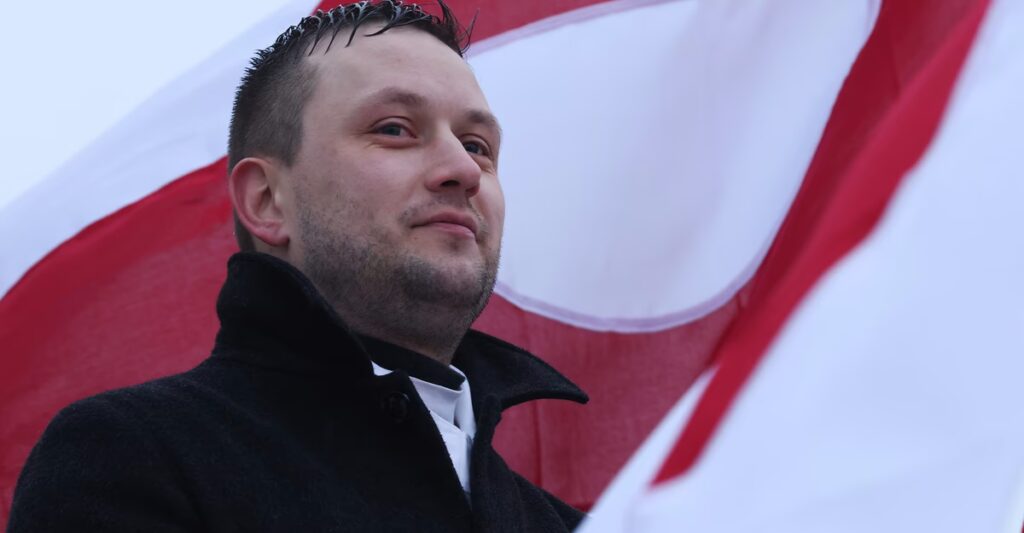
Still, the baby-faced prime minister of Greenland was surrounded by throngs of people looking to shake his hand, pass him their card, or take a selfie with him at the annual Munich Security Conference, the first major get-together of European defense and security officials since his country became the center of a geopolitical melee. Nielsen, who is 34 years old, assumed office less than a year ago but has spent much of his term facing an assault on Greenland’s sovereignty by President Trump, who wants to acquire or annex the autonomous Danish territory—whether its citizens want it or not.
Over the thrumming of cappuccino machines and the clinking of coffee mugs, Nielsen told me he was having none of it. “That’s a red line,” he said. “We will not give away territory and compromise our integrity.”
Greenland has been the unlikely belle of the Munich ball as U.S., European, NATO, and other leaders try to hash out just how serious Trump’s threats are. Trump says he has ruled out taking Greenland by force. But given that he also earlier this year ordered a military raid, without Congressional approval, on Venezuela to remove its president, no one here views the crisis as over, especially not Nielsen. As I spoke with the prime minister, the White House released a series of satirical Valentine’s Day cards—among them, one with the map of Greenland inside a heart. The caption reads: “It’s time we define our situationship.”
Nielsen, with Scandinavian restraint, acknowledged that his country has faced “tense periods” of late. It will almost certainly face more soon. White House officials tell me the president remains fixated on Greenland and is unlikely to back down, even though there are now high-level talks underway about boosting the U.S. military presence there. At this month’s annual black-tie dinner at the Alfalfa Club (a Washington, D.C. society for muckety-mucks from politics and business), attendees told me that President Trump, in private conversations, reinforced his desire to “buy” Greenland, not invade it. (The White House didn’t immediately respond to a request for comment.)
When I shared that with Nielsen, he looked frustrated, but not surprised. “That is not acceptable,” he said. “We will not give it away. But in terms of more military personnel, and in terms of more cooperation and so on, let’s talk. Let’s have a conversation about it. We can figure things out.”
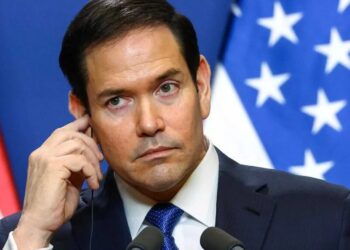
Secretary of State Marco Rubio, who headlined the conference today, didn’t mention Greenland or the Arctic in his keynote speech. He didn’t mention China or Russia by name, either, though Trump has claimed their intrusion into the Arctic underpins his desire for Greenland. Instead, Rubio offered a more conciliatory tone than allies have grown used to. At last year’s conference, Vice President J. D. Vance was met with stony silence after he suggested the “greatest threat looming over Europe comes not from China or Russia” but rather the “internal threat” within the continent. The Trump administration’s rhetoric and policies toward its European allies since then have largely echoed that sentiment.
Rubio drew applause from the crowd when he declared that the U.S. “will always be a child of Europe.” Still, he stressed the need to revitalize the alliance. “We in America have no interest in being polite and orderly caretakers of the West’s managed decline,” he said, describing the decline as a “conscious policy choice.”
[Read: Does America really want to pick a fight with Greenland?]
Revitalization, to the Trump administration, hinges on American dominance in the Western Hemisphere—which includes Greenland despite its historic ties to Europe. Trump’s description of the dynamic blends the lingo of real-estate advice with the imperatives of national security. “You defend ownership, you don’t defend leases,” he told reporters at the White House last month.
Nielsen, who worked as a real-estate agent before entering politics in 2020, sees it differently. “It’s a matter of international law and sovereignty,” he told me. The son of a Danish father and a Greenlandic mother (and, as it happens, a national badminton champion), he talks of deep nationalism and pride that cannot be bought, but stressed that his citizens are open to cooperation.
Since Trump first expressed interest in Greenland in 2019, the country of 55,000 has seen throngs of companies looking to invest in the island’s abundant natural resources, which Nielsen welcomes as long as the approaches are coordinated with his government. Tourism has spiked. Once an economy that relied heavily on fishing, Greenland has embraced its unanticipated turn in the geopolitical spotlight by building infrastructure, including a new airport, which opened in the capital, Nuuk, in 2024. A bigger diplomatic presence also has arrived: The U.S. opened a consulate in Nuuk in 2020, its first since 1953; the European Union, Canada, and France have opened consulates since, the latter two in response to Trump’s renewed threats. Nielsen said he welcomes it all and more but added, “We want cooperation with mutual respect.”
Trump backed down, for now, on his threat to forcibly annex the country in large part because of how poorly his plans were received domestically. A new AP/NORC poll this week found that about seven in 10 U.S. adults disapprove of how Trump is handling the issue of Greenland. That included about half of Republicans polled.
Nielsen has never met Trump, nor has he spoken with him, though Nielsen met yesterday with Rubio for a conversation that Nielsen described as “constructive.” Most of the discussions about Greenland’s sovereignty, Nielsen told me, have been conducted either through direct talks with the Danish government or through NATO—a process he believes is more productive. He repeatedly emphasized the progress being made by the working group formed after the foreign ministers of Denmark and Greenland met in Washington last month with Vance and Rubio.
Nielsen worries about Greenland’s future being defined by anyone other than Greenland and Denmark, including by well-intentioned allies. But he was keen to offer an olive branch to Trump. “We are willing to talk also about the concerns he has about security,” Nielsen said. “We want to talk.” And with that, he turned to the next in line.
The post The Most Sought-After Head of Government in Europe appeared first on The Atlantic.