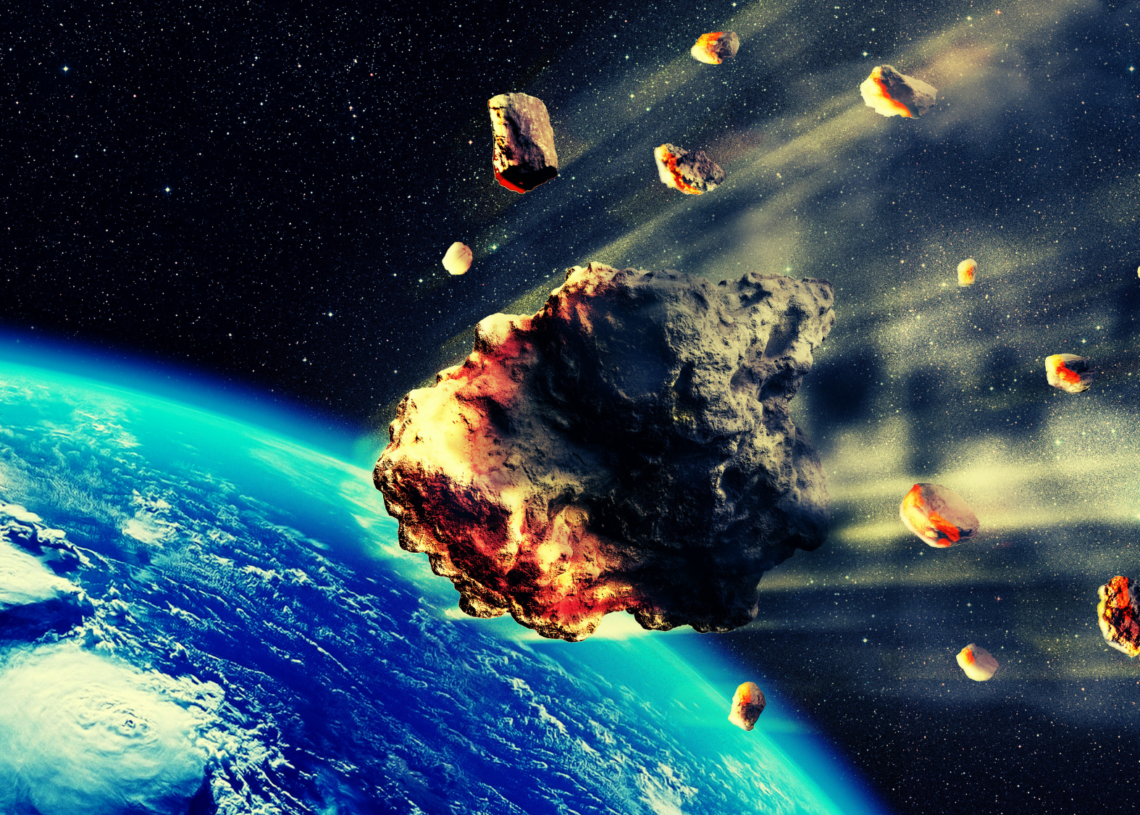
Earth is constantly getting hit with space debris. Most of it burns up and becomes a nice little streak for someone’s camera roll. Every so often, though, something bigger comes along, and it could eventually mean real bad news for all of us.
The good news is, astronomers have gotten better at spotting danger, but “better” still leaves room for close calls and late notices. Here are some of the scariest near-misses Earth has had with giant space rocks.
1. The Tunguska Impactor
In 1908, there was a “meteor air burst” over Siberia that flattened more than 2,000 square kilometers (830 square miles) of forest. Estimates vary, but U.S. government and NASA-linked work puts the blast in the megaton range. That’s hundreds of times stronger than the earliest nuclear weapons. A repeat event over a major city would live in the history books in a very tragic way.
2. The Chelyabinsk Meteor
Chelyabinsk was smaller than Tunguska and still caused devastating harm. In 2013, the airburst sent a shockwave through buildings and shattered windows across the region, injuring more than a thousand people, mostly from flying glass. “Small” in space terms can still kill you.
3. 2020 QG, the One That Slipped Past Alarmingly Close
In August 2020, a tiny asteroid passed within a few thousand miles of Earth, inside the distance of many satellites. It was spotted after it flew by, which is the least comforting detail in the whole thing. Size saved us, not because we were prepared.
4. Apophis
Apophis is a near-Earth asteroid that got famous because early calculations couldn’t fully rule out a future impact. Later measurements cleared that up, thank goodness, but the close approach is still real. It’s set to make a very close pass on April 13, 2029, coming closer than many satellites and potentially visible to the naked eye from parts of the world.
5. Bennu
NASA didn’t send OSIRIS-REx on a sample-return mission for fun. The target was Bennu, a near-Earth asteroid with an orbit close enough to stay on scientists’ radar. Bringing back samples helped refine the forecasts for where it goes next. The impact odds are low, but projections still leave a slim possibility late in the 2100s.
6. 1950 DA
Asteroid (29075) 1950 DA is one that scientists are watching like a hawk because one long-range orbit study flagged a roughly 20-minute window in March 2880 (nothing we have to worry about) when a collision with Earth couldn’t be ruled out for this ~1-kilometer object. The uncertainty comes from a heat “push” that changes based on how it rotates and what it’s made of.
7. Comet Swift-Tuttle
Swift-Tuttle is the parent of the Perseid meteor shower, which people love because it’s pretty and free. The comet itself is the opposite. Long-period comets can be harder to deal with because they can arrive from far out with less lead time, and they’re usually enormous by impact standards.
Space doesn’t need to “target” us for the risk to be serious. One unlucky day and one unlucky object can do the job. The only comfort is that close calls happen without catastrophe far more often than catastrophe does, and we’ve gotten a lot better at seeing what’s coming.
The post 7 Space Objects That Could Wipe Us Out and How Close They’ve Come to Earth appeared first on VICE.