Some financial crises sneak up on you, leaving people so perplexed that they become paralyzed, unsure of what to do.
That’s what happened during the 2008 housing crisis. Everything was good for the economy, until it wasn’t.
When the crash came, we got an insider look at the carnage: millions of homeowners lured into mortgages they couldn’t sustain over the long term lost their homes. Between 2007 and 2010, approximately 3.8 million foreclosures occurred, according to the Federal Reserve Bank of Chicago.
During the Great Recession, the federal government eventually stepped in with programs and guidance that standardized assistance. Many private lenders copied the government’s relief efforts. The result was a menu of foreclosure alternatives that could be implemented on a massive scale.
More than a decade passed, and then came a global health crisis. The coronavirus pandemic hit and, again, homeowners struggled to pay their mortgages after being laid off from businesses forced to close to prevent the spread of covid-19. Congress stepped in to provide relief, making mortgage lenders do the right thing and help people save their homes from foreclosure.
This week, there was yet another warning that many homeowners might be headed for trouble.
The mortgage delinquency rates for lower-income households are surging, according to the Federal Reserve Bank of New York’s Center for Microeconomic Data, which recently released its Household Debt and Credit report for the fourth quarter of 2025.
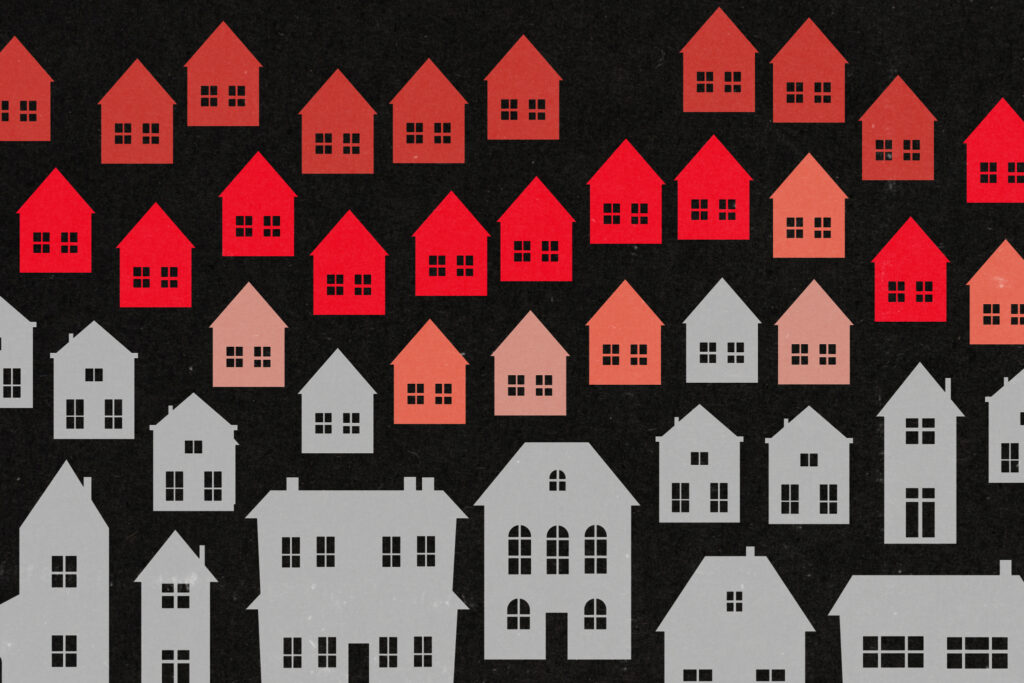
According to New York Fed data, the 90-plus-day mortgage delinquency rate for families in the lowest-income bracket jumped from 0.5 percent in 2021 to nearly 3 percent by the end of 2025. Meanwhile, folks in the highest-income areas are doing just fine, maintaining “historically lower delinquency rates.”
It’s another reminder that the U.S. economy is largely benefiting people with means, while financial storm clouds are gathering over those who can least afford a rainy day. As the New York Fed points out, “financial distress appears to be deepening for households in lower-income areas.”
When the Fed examined what might account for the disparities in mortgage performance, it concluded the job market could be a major contributor.
Although the latest jobs report from the Labor Department shows some gains in January, the rebound was limited to just a few sectors, such as health care.
Nationwide, unemployment is relatively low, but “worsening” regional labor markets are making it hard for people to keep up with their mortgage payments.
“Two-thirds of counties have seen their local unemployment rates rise, and 5 percent of the population lives in counties where unemployment rates have risen by more than 1.6 percentage points,” according to the New York Fed.
The number of job openings has trended down to 6.5 million, a decrease of nearly 1 million openings over the last year, the Bureau of Labor Statistics reported earlier this month. If you’re unemployed or looking to take on a second job, this data indicates there are fewer positions to apply for than there were a year ago, likely leading to more competition for the roles that remain.
The data on lower-income delinquency rates could very well be the canary in the coal mine for a potential broader economic slowdown. If you can’t find work or a stable job that keeps up with the cost of living, you can’t keep up with your mortgage payments.
I’ve worked with enough people to know that missing a mortgage payment can send you into silent mode. You get scared and shut down. But one of the first things you should do is contact your mortgage servicer as soon as you know you can’t make a payment.
“Many people avoid the call out of fear,” said Ross Levin, executive director of Roots Of Mankind, a Maryland-based housing and financial education nonprofit. “Avoiding calls, letters or emails from your lender will only make the situation worse. Communication is crucial.”
Levin has worked with numerous homeowners to work out options to avoid foreclosure.
Levin says the second step is to honestly assess whether your hardship is short-term, such as a temporary job loss or medical leave, or long-term.
“That distinction matters because it determines whether a temporary solution like forbearance makes sense, or whether a more permanent solution like a loan modification or even a sale should be considered,” he said.
It may be the case that you can’t afford to stay in your home even if your lender modifies your loan terms and is willing to set up a repayment plan. Either you don’t have enough income to support the mortgage, or your expenses are still too high, or both.
Look for a housing counseling agency approved by the Department of Housing and Urban Development, which can provide free or low-cost assistance in organizing your paperwork, explaining your options and communicating with your servicer, Levin said. To find a local agency, go to hud.gov/findacounselor.
You can also contact a nonprofit credit counselor at the National Foundation for Credit Counseling (nfcc.org) or by calling 855-794-8525.
And please avoid companies that charge up-front fees and promise quick-fix foreclosure prevention services. They may try to get you to sign over the deed to your home or counsel you to stop communicating with your lender.
Levin assisted a Maryland couple who were manipulated into giving $25,000 to an overseas foreclosure rescue scam operation. The fraudsters told the couple they could reduce their monthly mortgage payment and directed them to send the payments to them. The scammers mine public data to look for desperate homeowners.
Although the couple didn’t get their money back, Levin helped them obtain a loan modification to keep their home.
Here are some options if you’re having trouble paying your mortgage.
Forbearance. The lender allows you to pause or reduce payments for a set period, often three to six months. Please note that this doesn’t erase the debt; you’ll need a plan to repay the amount you missed later.
Repayment plan. If your financial setback was temporary, the lender may let you spread out your past-due payments. A portion of the past-due amounts will be added to your current mortgage balance. But be realistic about your ability to make the larger payments, even for a few months. If you can’t do it, say so. Then explore other options.
Loan modification. This option would change the terms of your loan, perhaps even lowering your monthly payment. Or your loan could be recalculated, and the arrears added to the loan balance, which might increase your monthly payments.
Loan extension. Your delinquent balance would be added to the back end of your loan. Past-due payments would effectively extend your loan term.
Fear will tell you to hide, and scammers will try to profit from your panic. Watch out for both.
The post A new mortgage crisis is quietly hitting those who can least afford it appeared first on Washington Post.