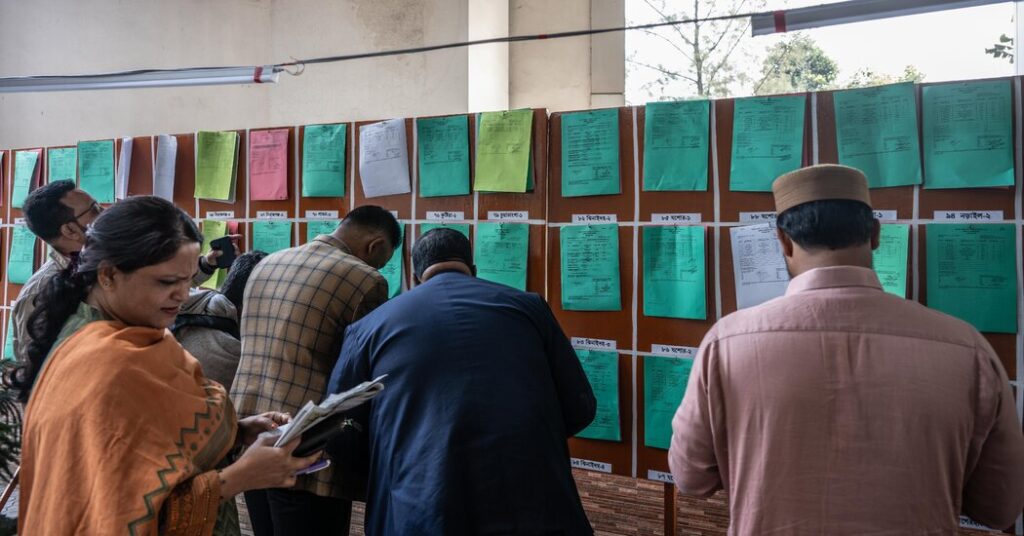
Bangladeshis voted overwhelmingly to usher in a new political era.
Eight out of 10 people said yes in a referendum requiring its new government to implement constitutional reforms intended to safeguard democracy and strengthen the country’s system of governance. They include introducing a bicameral legislature, setting term limits for prime ministers and measures intended to increase women’s participation in politics.
The yes vote was a victory for the students who led the 2024 revolution and have since fought for an inclusive democracy with better governance, a system of checks and balances on political power and more economic opportunities.
But some students expressed concern about how amenable the Bangladesh Nationalist Party, which won the election in a landslide, will be to implementing changes, even though the referendum is supposed to be binding.
While only six of the 30 candidates put up by the National Citizen Party, which was formed by student leaders last year, won seats, the public support for the referendum could give them more thrust to act as a pressure group on the B.N.P.
Students had criticized the N.C.P. for forming an alliance with Jamaat-e-Islami, a political party that seeks to run society under Islamic law and to restrict freedoms for women. But Saleh Uddin Sifat, a senior N.C.P. leader, defended his party’s choice, saying that it was a practical alliance that would help them be better able to achieve some of their goals.
Mr. Sifat said his party didn’t choose the B.N.P. because that party was “not aligning with the reformation process that we thought of.”
The proposed changes are based on the provisions of the July Charter, a consensus document that the interim government of Bangladesh led by Dr. Muhammad Yunus, the Nobel Peace Prize laureate, and Bangladesh’s numerous political parties arrived at after months of painstaking negotiations. The various parties and alliances agreed that Bangladesh needed “structural, legal and institutional reforms to the current system of governance,” including the Constitution, the electoral system and other public institutions.
It is a broader victory for students, many of whom said that getting the referendum passed was their only hope of securing some of the changes that they had envisioned after overthrowing the government of Sheikh Hasina, the autocratic former prime minister.
But some say the July Charter is a watered-down version of the reforms originally proposed by commissions created by Dr. Yunus, who advised the interim government on how to build a better Bangladesh.
Anupreeta Das covers India and South Asia for The Times. She is based in New Delhi.
The post Bangladeshis Vote in Droves for Constitutional Change appeared first on New York Times.