In the Deep South, family and community ties run deep. The southern Jewish community is no exception.
We are bound by ties of faith as a small minority in a mostly Christian part of the country. There are only around 2,900 Jews living in Mississippi. Louisiana’s Jewish population is nearly 20,000, less than one-half of 1% of the state’s total population. We are bound by ties of family, sharing roots going back generations. And we are bound by ties of community, having attended the same summer camps, showed up at each other’s family celebrations, and felt each other’s pain.
[time-brightcove not-tgx=”true”]
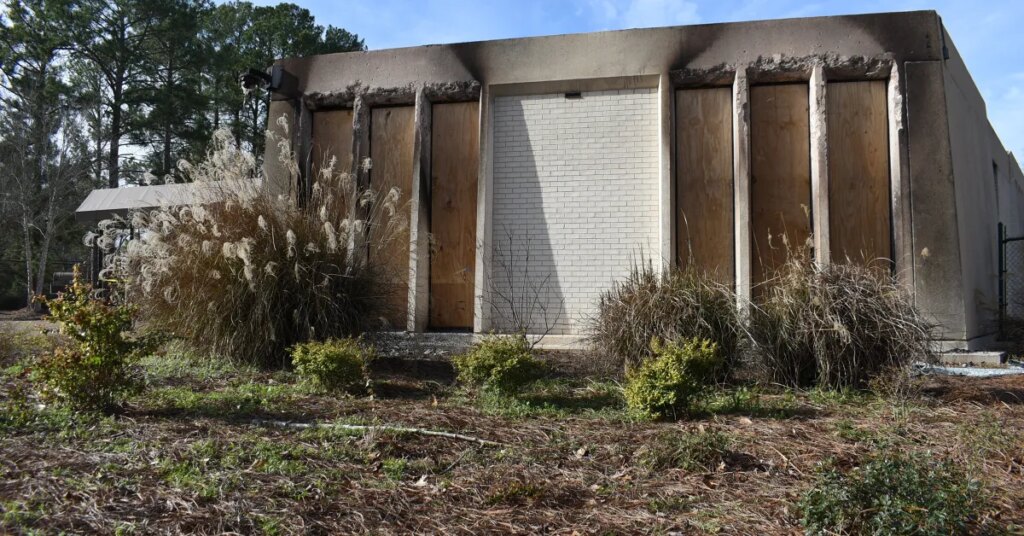
On Jan. 10, a 19-year-old man poisoned with antisemitic beliefs broke into the Beth Israel synagogue, the oldest synagogue in Mississippi, and used gasoline to set fire to the building’s interior. In an interview with law officers, the arsonist characterized this building as a “synagogue of Satan” and admitted to targeting the building because of its “Jewish ties.”
Jewish ties have held this community together for generations, and Jewish ties are what are motivating us to stay the course and to rebuild. This community isn’t going anywhere.
Our two communities of New Orleans and Jackson, Miss. share many common bonds and a history of helping one another in times of trial. In Aug. 2005, when Hurricane Katrina devastated New Orleans, members of the Jewish community of Jackson welcomed members of the New Orleans community into their homes as they waited for the city to rebuild. For many, Beth Israel Congregation became their second spiritual home.
When the New Orleans community heard about the arson attack in Mississippi, everyone sprang into action. Word spread quickly, and one of us—Lindsay Baach Friedmann—immediately swung into action, jumping into her car to make the three-hour drive up to Jackson. It was one of several visits Lindsay made over the next few weeks.
On Lindsay’s second trip to Jackson, she was invited to attend the first Shabbat service after the fire, which was being hosted in a local Baptist church. Word about this trip went out in her temple bulletin, and her rabbi insisted that she should not go empty-handed.
The community started cooking (this, after all, is New Orleans). By the time Lindsay was ready for the road trip, her car was loaded to the roof with king cakes, cookies, brownies, cupcakes, and a Praline king cake challah.
Her car smelling like a bakery, Lindsay drove the entire 190 miles without once turning on the heat to ensure the delicacies arrived in perfect condition for the Oneg Shabbat service.
Lindsay unloaded the car and met several of the pastors, who shared the story of the church’s founding and its connective roots to the synagogue. It turned out that when this Baptist church was founded some 50 years ago, they needed a home, and the synagogue offered them a place to pray until their church was built. Now, they were returning that favor by taking in the Jewish congregation and lending them an indefinite home.
That night, the community celebrated Shabbat together marking the resilience of this historic Jewish community and their commitment to their future. Following services, the remaining king cakes were taken to the local firehouse and shared with the first responders who battled the fire.
This week, we took Beth Israel’s story to Washington, D.C. One of us, Beth Israel’s president Zach Shemper, joined Anti-Defamation League team members in meetings with legislators to urge Congress to protect funding for enhanced security for synagogues and other houses of worship, starting with increased funding for the Nonprofit Security Grant Program and support for the Pray Safe Act, which would create a central database of security resources for institutions.
No community should have to endure a tragedy like this alone. And with the right action, we can make meaningful progress toward ensuring it never happens again.
We envision a country where people of different faiths pray together. A country where people still watch out for each other, not because of mistrust, but because they genuinely care for each other. A country where people can make something better after a tragedy.
In the weeks since the arson attack, Beth Israel has been supported by neighbors and people of different backgrounds and beliefs who have stood together with compassion and resolve. That is the America we believe in.
The post Finding Strength After a Synagogue Fire in Mississippi appeared first on TIME.