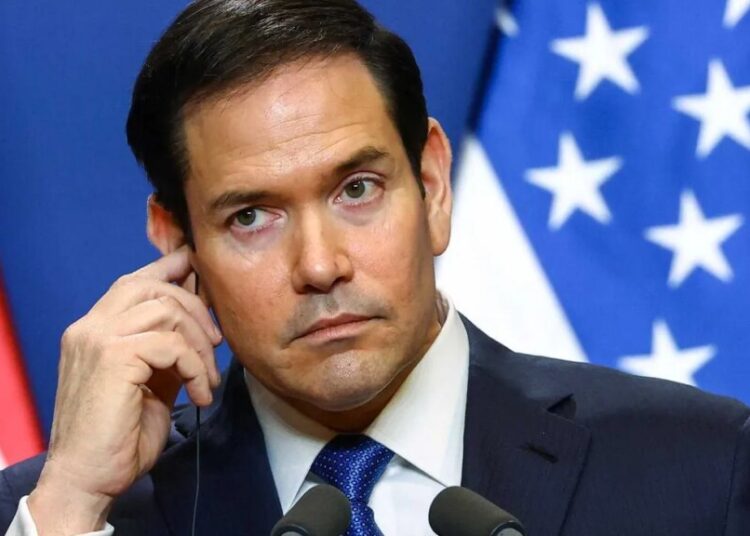
When Tarique Rahman, who is set to become the prime minister of Bangladesh, went into exile in 2008 after being charged with bribery and corruption, many Bangladeshis wrote him off. He was the scion of a political dynasty and, in a country often described as a kleptocracy, it seemed he was finally being held to account.
Nearly two decades later, he has returned to seal a triumphant reversal of fortunes.
Mr. Rahman arrived in Dhaka, the capital of Bangladesh, in December, as the country was gearing up for one of the most significant elections in its history. The vote follows a student revolution that demanded fundamental political change, and Mr. Rahman led his party to a landslide victory by positioning himself as a man of the people.
Mr. Rahman has promised to address the demands of the protest movement — a stronger democracy, less corruption, and more opportunity. But some students have expressed concerns that power in Bangladesh is just seesawing again between two entrenched families that have dominated its history since it gained independence from Pakistan in 1971.
After casting his vote on Thursday morning at a polling station in a wealthy enclave of Dhaka, Mr. Rahman, 60, delivered brief comments pledging that his Bangladesh Nationalist Party would deliver on the pledge for change.
“If we win, our next priority will be to improve the law and order situation so that people can feel safe,” Mr. Rahman said, as police officers and army troops shooed away those who got too close, part of a huge security net around the election.
“If we can form the government, we’ll start working on that from day one,” Mr. Rahman said, before he jumped into a waiting S.U.V. Policemen on toffee-colored horses kept the crowds at bay as the vehicle inched its way toward the B.N.P. office, about a block away.
On Friday, as votes were still being counted, it became clear that his party would lead the new government, most likely with a large majority.
It was rarely in doubt that Mr. Rahman’s party would win, with the Awami League — the party of former prime minister Sheikh Hasina, an autocratic leader who was ousted by the student revolution in 2024 — banned from participating in the election. The Awami League and the B.N.P. have traded power for much of the almost 55 years since Bangladesh split from Pakistan and became a nation. Ms. Hasina is a member of Bangladesh’s other political dynasty.
The B.N.P.’s main opposition this time was Jamaat-e-Islami, which has long pushed a society based on Islamic law but formed an alliance with 10 other parties, including the National Citizen Party, created last year by leaders of the student revolution. While it appeared to have picked up seats, it may not have won enough to exert much influence over the B.N.P.
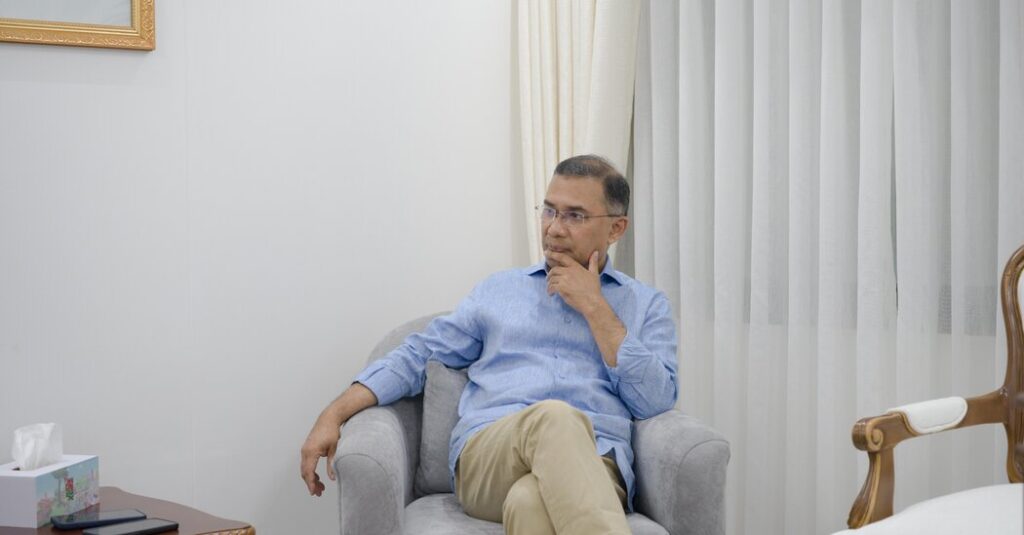
In an interview with The New York Times in his office days before the election, Mr. Rahman seemed ready to reclaim his inheritance. “We are very confident that, Inshallah, we’ll be forming the next government,” he said.
On the campaign trail, Mr. Rahman appeared aware of the challenge of positioning the B.N.P. as a party of change. He spoke directly to the demands of students, sending a message of inclusivity with his “Bangladesh before all” slogan. The B.N.P.’s manifesto mirrored the progressive vision that many student protesters had for their country, including greater participation of women in political life, more economic opportunity and the rule of law.
The B.N.P. had been a party of change before under his mother’s leadership, Mr. Rahman said in the interview. He promised that the party would work to empower women, as had his mother, Khaleda Zia, Bangladesh’s first female prime minister. Ms. Zia was well regarded by many Bangladeshis, who supported her efforts to improve access to education for girls. She was also lauded for building Bangladesh as a garment manufacturing hub, which helped the country’s economic growth. At the same time, critics said that Ms. Zia was unable to control the rise of Islamic extremism in Bangladesh in the early 2000s.
Still, the B.N.P.’s win poses troubling questions for Bangladesh’s future, and for the future of the 2024 student revolution that toppled the government of Ms. Hasina. The revolution grew out of students’ frustration at the lack of economic opportunity, widespread corruption and shrinking political freedoms.
Both Mr. Rahman and Ms. Hasina are the offspring of foundational figures in Bangladesh’s 1971 war of independence. Mr. Rahman’s father Ziaur Rahman, the first military leader of Bangladesh, founded the B.N.P. in 1978. Ms. Hasina’s father, Sheikh Mujibur Rahman, is considered a founding father of Bangladesh.
Ms. Hasina began to tighten her grip on the country after winning the 2014 election. Ms. Zia served as chair of the B.N.P. until her death in late December, despite facing a barrage of legal troubles, leaving Mr. Rahman to manage the party’s affairs from Britain. Ms. Hasina, 78, fled to India after her ouster and remains there.
Mr. Rahman has faced his own challenges. In March 2007, six months after his mother had relinquished power and a military government had stepped in, the police arrested Mr. Rahman on charges of extortion, as part of a sweeping anti-corruption drive. He has denied any wrongdoing.
He left Bangladesh in 2008 and did not return until December.
Asked if he was enjoying being back home, Mr. Rahman said, “Not exactly,” adding, “because I see a lot of challenges ahead of me.”
Voters decided to give his family and his party, another chance.
Milon Almazee, a businessman in Dhaka, said he supported Mr. Rahman for his maturity, and thought he would have working knowledge of government because he was the son of a former prime minister.
“His speech, his diplomacy and his behavior are better than before,” Mr. Almazee said. “He is smarter now.”
Anupreeta Das covers India and South Asia for The Times. She is based in New Delhi.
The post From Exile to Power: The Rise of Bangladesh’s New Leader appeared first on New York Times.