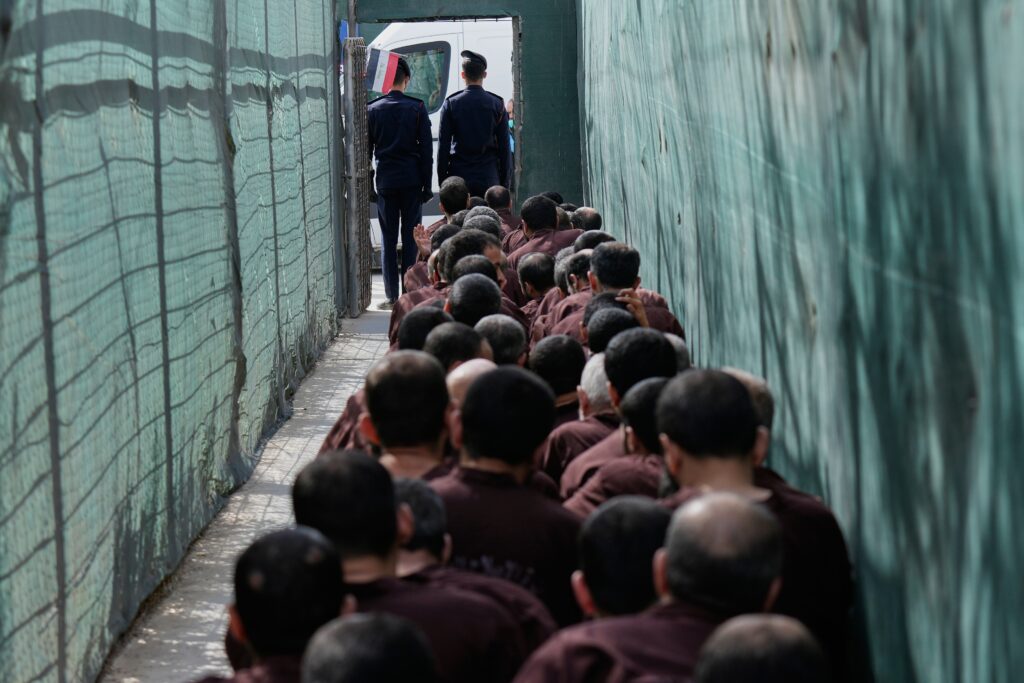
The U.S. military has nearly completed the transfer of thousands of suspected Islamic State fighters to the Iraqi government, setting the stage for the expected withdrawal of many — perhaps even all — American troops from Syria within months, officials familiar with the issue said.
The movement of between 6,000 and 7,000 detainees, underway for weeks, could be completed as soon as Friday, said the officials, who like some others spoke on the condition of anonymity to discuss sensitive military operations. The effort signals a forthcoming end to a years-long mission overseen by the U.S.-backed Syrian Democratic Forces (SDF), a Kurdish militia group that had managed the detention facilities in territory they controlled in northeastern Syria.
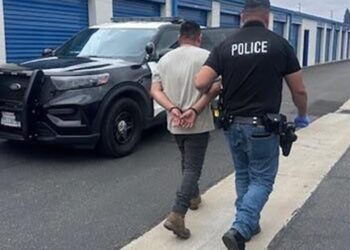
The transfer began last month, with U.S. troops teaming with SDF and Iraqi counterparts to move the detainees using aircraft and armed ground convoys. It marks one of the most significant developments in years for the remnants of the Islamic State, the militant group whose bloody campaign across Syria and Iraq resulted in a multinational military intervention beginning in 2014. A smaller number of Syrians, fewer than 2,000, are expected to remain in Syria in the SDF-run detention centers until they are turned over to the Syrian government.
Many of the detainees who have been transferred are expected to be held at the Al-Karkh prison, an Iraqi facility near Baghdad International Airport, U.S. and Iraqi officials said. It was once called Camp Cropper and used by the U.S. military to house detainees during the Iraq War.
In a statement, the White House said Trump is committed to a Syria that is “stable, unified and at peace with itself and its neighbors.” That requires Syria not being a base for terrorism or to pose a threat in the region and beyond, it says.
The United States is monitoring the situation in Syria and working with all sides, the statement says, to ensure that “ISIS detainees remain in detention,” including an organized transition of other detention centers in Syria to Syrian government control.
The shift underscores a major shift in U.S. policy toward Syria, as President Donald Trump, who has aligned himself with Syrian President Ahmed al-Sharaa, seeks to extricate the roughly 1,000 American troops who have remained there functioning as a backstop to prevent a resurgence by ISIS.
A Defense Intelligence Agency report released last year said that the Islamic State will attempt to “reconstitute its attack capabilities,” including plotting against the West, and free prisoners to rebuild its ranks. Three U.S. troops were ambushed and killed by a suspected Islamic State member in Syria in December, prompting Trump to approve retaliatory airstrikes days later.
Sharaa, a former al-Qaeda militant who broke with the group in 2016, has sought to unify his country since his forces forced the December 2024 ouster of Syrian President Bashar Assad, a dictator whose 24-year rule was marked by mass atrocities and a civil war that killed hundreds of thousands of people. The Islamic State has repeatedly attempted to assassinate Sharaa over the last year, according to a United Nations report released this week.
One step in the withdrawal occurred Wednesday, as U.S. troops at the Tanf garrison in the southeastern part of Syria turned control over to Sharaa’s forces. Adm. Brad Cooper, the top officer overseeing U.S. operations in the region, said in a statement that U.S. forces retain the ability to respond to any threats posed by the Islamic State in the region.
Other bases could be transferred to Sharaa’s forces in coming days or weeks as conditions warrant, two officials familiar with the issue said. Doing so could allow Trump to fully end the U.S. mission there, a goal since his first administration that consistently collided with challenges posed by Syria’s fractured state.
Trump has downplayed Sharaa’s past as a jihadist, telling reporters in January that the Syrian leader was “working very hard.” He’s characterized him as a “tough guy” with a “pretty tough résumé.”
“You’re not gonna put a choir boy in there and get the job done,” Trump said at the time.
Still, U.S. officials said, Washington had privately delivered warnings to their Iraqi counterparts about Sharaa’s ability to ensure security over the ISIS detention camps. One senior U.S. official said in an interview with The Washington Post that the Trump administration had told Baghdad in the fall that it was “entirely likely” that if Sharaa’s government took control of the alleged terrorism suspects, they could be freed or break loose at some point and attack Iraq again.
Sharaa could not be reached for comment.
Iraqi officials acknowledged then that there was cause for concern, the senior U.S. official said. But those anxieties accelerated last month, as Sharaa’s forces pressed forward with an armed offensive into SDF-held territory, forcing the group to abandon two major facilities, the Shaddadi prison and al-Hol camp, allowing about 200 detainees to escape on Jan. 19.
The detainees were considered “low-level” fighters, and dozens were later recaptured, U.S. officials said. But the episode triggered alarm in Washington and Baghdad and prompted numerous phone calls from senior U.S. officials to Sharaa, officials said, including at least one by Cooper on Jan. 21 and one by Trump on Jan. 27, these people said.
Abdulkarim Omar, a representative with the SDF’s civilian government, called the moves of Sharaa’s forces in the region “aggression.” The Kurdish people, he said, “became victims of international arrangements concluded over their heads” and have seen “international silence.”
Cooper also made a visit to northeastern Syria on Jan. 22, as his team attempted to ensure that Sharaa’s forces and the SDF adhered to a ceasefire as the detainees were transferred from Syria to Iraq, according to a U.S. military statement at the time.
“It definitely could have gone completely sideways, to be completely honest with you,” a senior U.S. official told The Post, noting that U.S. soldiers remained in the region as tensions were high between the SDF and Sharaa’s fighters.
Trump acknowledged calling Sharaa, saying his team had “solved a tremendous problem in conjunction with Syria and saved many lives.” He did not elaborate.
The undertaking has triggered mixed feelings in the region, even as officials there appear to cooperate with U.S. desires.
Hussein Allawi, an Iraqi security adviser, said his government is urging other governments to take back ISIS suspects from their countries so that Iraq is not overwhelmed. Iraq, he said is “totally capable” of handling the issue, but will face infrastructure challenges.
Jiwan Soz, a Kurdish researcher, said that “despite the interference of the Americans” in the dispute between the SDF and Sharaa’s fighters, the Syrian president “cannot control the situation.” The armed groups Al-Sharaa relies on have a variety of tribal affiliations and allegiances, he said, and armed skirmishes have continued.
“There are huge challenges there, and I don’t believe Al-Sharaa can succeed,” he said.
Nawar Rahawie, a Syrian official, said the ceasefire is fragile and will require persuasion. Tribal fighters who aligned with both the SDF and the Syrian government have kept their fighters out of the fray, he said, and Sharaa has “a certain level of control over the tribes and fighters.”
He added that people of all kinds were “harmed by the Assad regime,” and credited Sharaa’s government for offering a new way. Syrian officials are investigating “crimes and murder” that have emerged, and will seek accountability, he said.
James Jeffrey, a former U.S. ambassador who focused on Syria during the first Trump administration, told the House Foreign Affairs Committee this week that he is “wary” of Sharaa, but has watched him push Iranian influence away from Syria and combat Islamic State fighters who remain — both core U.S. goals.
U.S. troops in Syria have worked with both the SDF and Sharaa’s forces in recent months, Jeffrey said, and Washington will have a better understanding of what occurs in the region the longer they remain.
Haidamous reported from Beirut, and Salim reported from Baghdad. Mohamad El Chamaa in Beirut contributed to this report.
The post Transfer of ISIS suspects nears end as Trump pursues Syria exit appeared first on Washington Post.