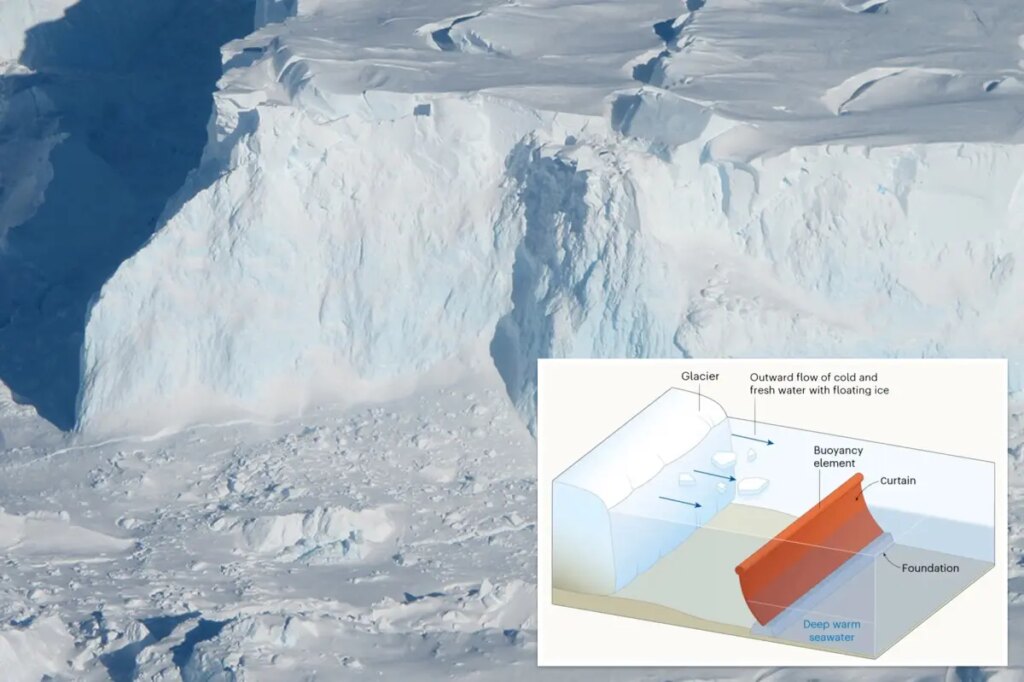
They want to prevent the a-thaw-calypse.
The looming demise of Antarctica’s notorious Thwaites Glacier, colloquially known as the Doomsday Glacier, could send seas rising to catastrophic heights. However, scientists have floated an unorthodox solution to slow the thaw — a 50-mile, 500-foot-tall curtain wall that will keep warm temps at bay.
“For me, it’s kind of a no-brainer,” Marianne Hagen, co-lead of the Seabed Curtain Project, which devised that unlikely solution, told IFLScience. While potentially difficult — not to mention expensive — she believes that there is no “excuse not to try.”
Indeed, scientists that we’ve reached a tipping point when it comes to the colossal ice cube, which is the widest glacier on Earth, spanning some 74,000 square miles, Interesting Engineering reports.
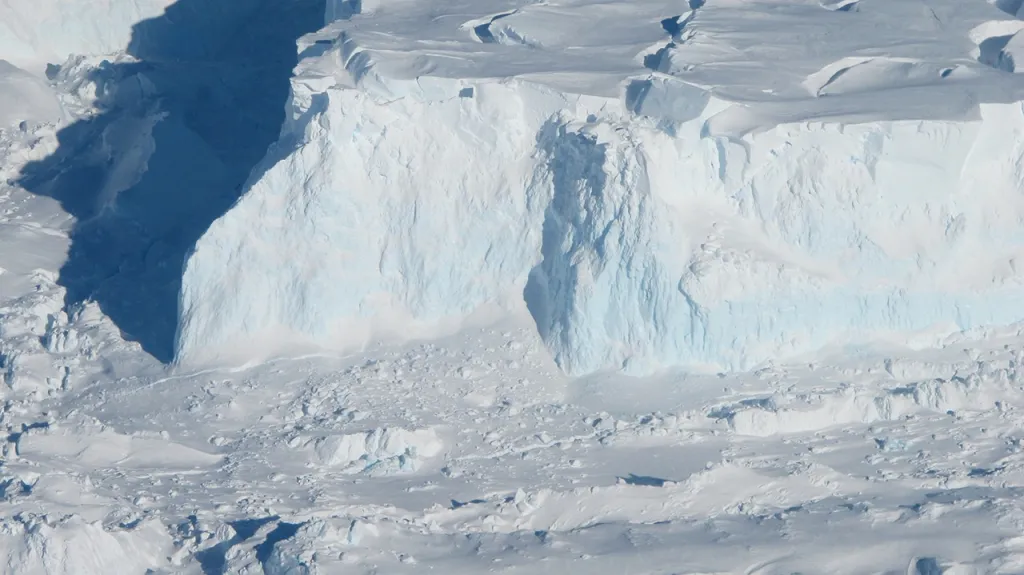
Situated on the edge of West Antarctica, Thwaites has been on the decline over the last 80 or so years, with the volume of melted ice leaching into the sea more than doubling from the 1990s to the 2010s.
This disintegration has accounted 8 percent of the current rate of global sea level rise with scientists projecting that the glacier could disappear completely in the coming decades.
When this occurs, sea levels could rise in two feet, potentially swamping coastal cities and putting millions of people at risk.
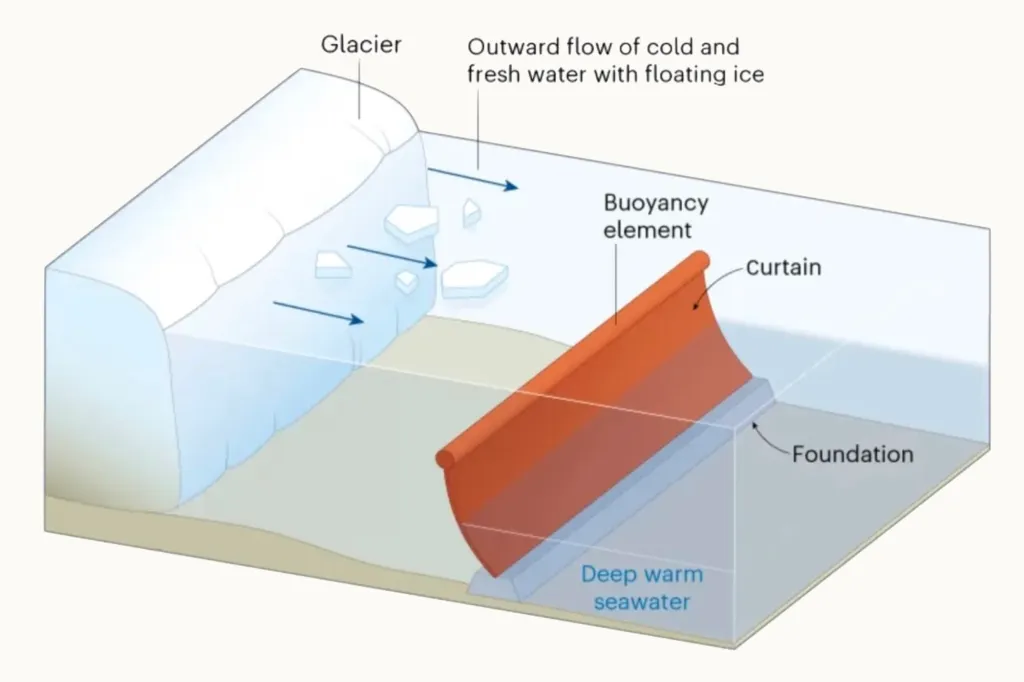
To prevent a global meltdown, the Seabed Curtain Project scientists believe it’s necessary to attack the source of the thaw — the warm water seeping into the gap between the glacier and the continental shelf due to climate change.
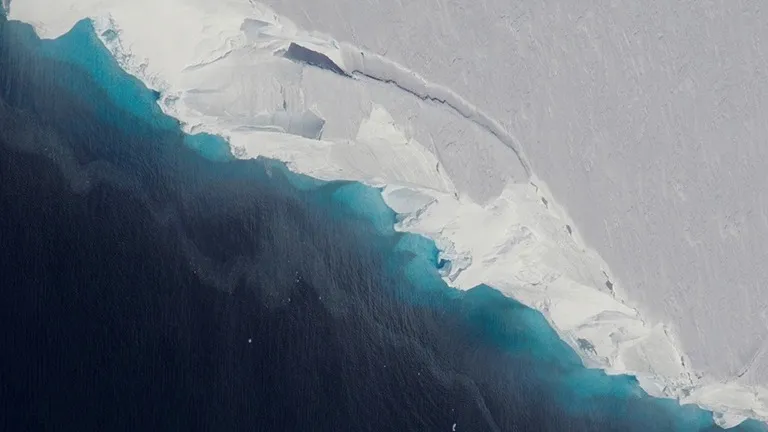
The proposed flexible curtain wall would be anchored to the ocean floor some 2,132 feet down and stretch across key portion of the sea bed in front of the glacier to block the warm ocean currents like a freeze-sustaining forcefield.
This won’t halt the ice loss, but will rather stem the hemorrhage while lawmakers work on reducing global emissions.
This massive cooler campaign will understandably not be easy, given that the barrier will need survive obstacles ranging from extreme Antarctic cold to ice and long-term ocean exposure.
As such, it could be years before they’re able to deploy this underwater heat shield.
That’s why, over the next three years, scientists will be testing a variety of relevant factors, including materials and mooring design.
Meanwhile, the Arctic University of Norway, a partner of the Seabed Curtain Project, will be conducting a dry run by installing a smaller seabed curtain in a Norwegian fjord to see if they can replicate the experiment in Antarctica.
“It would be absolutely insane, from an economic perspective, to go straight to Thwaites and start building something,” said Hagen, who former deputy minister of Foreign Affairs of Norway. “We need to test this at a much lower cost, in less harsh conditions.”
There’s also the question of the price tag, which could sit at a cool $80 billion, the Atlantic reported.
However, Hagen believes the price could be much greater if we don’t act.
“If you compare [the project costs] with the coastal repair and damage cost, it’s a fraction,” she declared. “The cost of this project will run in billions. The cost of the damages will run into trillions.”
The post Scientists think an $80M wall around ‘Doomsday Glacier’ will slow sea level rise appeared first on New York Post.