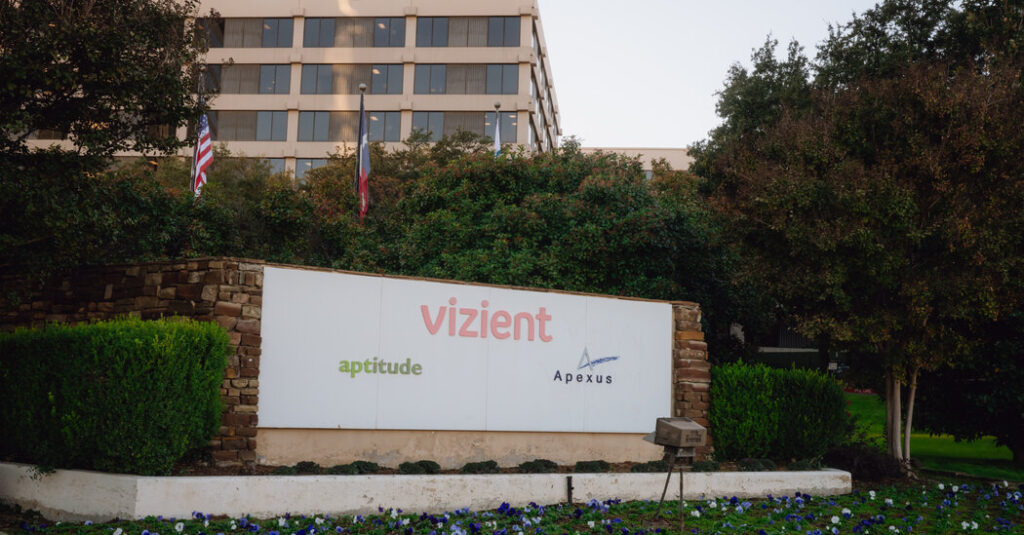
The Senate Health Committee is seeking answers from a private company that makes millions off a federal drug program meant to help the poor.
Senator Bill Cassidy, the Republican committee chairman and a doctor from Louisiana, sent a letter last week to Apexus, the Texas-based company, asking about its profits, business practices and role in the 340B Drug Price Program.
That program, started in 1992, was intended to provide savings to a small number of safety-net hospitals so they could expand their care for needy patients. Providers in 340B buy drugs at a steep discount and charge patients and insurers a higher price, keeping the difference. Apexus manages 340B and collects a fee for almost every drug sold under the program.
But the program has exploded in recent years to encompass more than half of nonprofit hospitals in the United States — drawing criticism from lawmakers, drugmakers and employers who say it has added to ballooning health care costs.
Dr. Cassidy wrote that as a for-profit company, Apexus had benefited from 340B’s “precipitous growth.” That has led to questions about where revenue generated from the federal program is going, he said, and whether that revenue is being used “pursuant to the original intent of 340B.”
He cited a January 2025 investigation in The New York Times that found Apexus was on track to garner $227 million in revenue in 2022 and enjoyed profit margins above 80 percent.
About twenty years ago, the federal government chose Apexus to help run 340B, negotiating with drug distributors and manufacturers to secure better prices and access to medications. Ever since, Apexus, now a subsidiary of Vizient, has been the sole company with a federal contract to handle the program. The government does not pay Apexus — instead, drugmakers and distributors pay the company a small percentage of sales.
Last year, The Times found that Apexus had worked behind the scenes to supercharge the program, expanding its work to help hospitals and clinics capture as many prescriptions as possible, generating revenue for all involved. But it has been unclear exactly how much the company profits because it is private and does not have to report the information to the federal government.
“This company was able to obtain this very enviable position,” said Ge Bai, professor of accounting and health policy at Johns Hopkins University. “No competition. A government-protected monopoly.”
She said the examination of Apexus was necessary to deal with the “unintended consequences” of a program that had grown so much.
A company spokeswoman said Apexus had no comment on the Senate letter but would respond to Dr. Cassidy.
In a statement last year, Apexus said it had simply executed its government contract and not contributed to the growth of the program. But The Times found instances in which company leaders, including the president, Chris Hatwig, were looking for ways to expand within the federal program. Mr. Hatwig did not reply to a request for comment on Dr. Cassidy’s letter.
In his letter, Dr. Cassidy said the 340B program had seen a 3,291 percent increase from 2005 to 2024, with health care companies spending a record $81.4 billion on drugs under the program in 2024.
While some providers say the program has helped keep their doors open, others — especially large nonprofit health systems — have been accused of maximizing payouts and swallowing the profits.
Patients rarely know they are part of this system and can be left with big bills. Their prescriptions can be counted as 340B when they get outpatient treatment at a hospital or clinic that qualifies for the program, regardless of their own income or insurance status. The provider can continue to make money off the patients’ future outpatient prescriptions, even if they get them somewhere else.
Dr. Cassidy has been investigating the 340B program since 2023, given concerns over whether it truly benefits low-income and uninsured patients.
He asked Apexus to answer the pages of questions he sent the company by the end of February. Among other things, he requested Apexus’ annual financial statements, profit projections, revenue sources and employees’ bonus structure.
Ellen Gabler is a Times investigative reporter.
The post Senate Questions Health Care Firm for Profiting Off Program Meant for Poor appeared first on New York Times.