In 1997, IBM supercomputer Deep Blue defeated the reigning world chess champion Garry Kasparov. In 2023, ChatGPT passed the bar exam. And last year, Google DeepMind clinched gold at the International Math Olympiad.
These milestones are only expected to accelerate, with some business leaders, including SpaceX CEO Elon Musk, predicting artificial general intelligence—AI that is able to meet or surpass human intelligence—could arrive as early as this year. While avid sci-fi fans and business leaders are thrilled by the technology’s potential, others caution about the economic downsides.
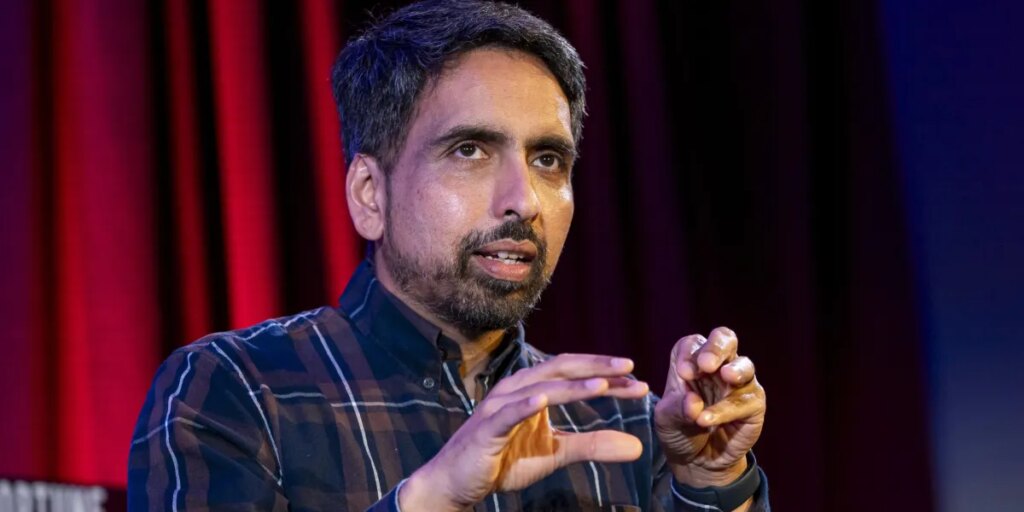
Salman Khan, the CEO of Khan Academy and vision steward at TED—two organizations that provide free online education services for more than 200 million users globally—predicts the AI revolution will hit harder and faster than most are predicting (although the AI doomers are getting louder in early 2026). And while AI experts like Geoffrey Hinton, the British computer scientist widely known as the “godfather of AI,” have warned the technology could trigger mass unemployment, Khan said even a 10% decrease could bring the burn.
“If white-collar work were to shrink even 10%,” Khan told Fortune, “it’s going to feel like a depression.”
But Khan said to look beyond the ensuing AI encroachment on white-collar jobs triggering mass unemployment a bit—it could also cause an identity crisis among a large portion of the population. “They’ve been making upper middle class, affluent salaries for the last 20 years,” Khan said. “Their identity is tied to this. And now all of a sudden, you’re going to have this mass shift in the job market.”
While no one can say exactly how significantly AI will upheave the labor market—if at all—recent research predicts an uptick in unemployment thanks to the technology. A 2025 MIT study found AI could replace nearly 12% of the U.S. workforce, nearly triple the current rate.
From Uber drivers to radiology techs
Part of Khan’s concern stems from conversations he’s shared with business leaders within the tech industry. “People behind closed doors are talking about pretty bold things these days,” he said. “I’ve heard people say you could do the same work with a quarter of the team.”
It’s not just white-collar jobs that will be impacted. Khan predicts robotic automation has already set in motion a displacement among the gig economy. From Waymo to Tesla, driverless cars are popping up across the U.S. While adoption is still uneven, Khan predicts driverless cars will become the norm, potentially impacting more than 1 million rideshare drivers across the country.
Khan’s solution? As detailed in a recent New York Times op-ed, the CEO proposes a 1% commitment from major corporations of personnel costs or profits to fund a national reskilling collective. While many employers already invest in skill development, the CEO said those programs are way too specific and untransferable.
“If you don’t figure out how the laid-off truck driver or delivery driver can become a radiology tech or a nurse’s aid or something,” Khan said, “we’re going to have a huge problem on our hands. I don’t see any other solution.”
To be sure, the economy hasn’t shown signs of a massive reskilling effort just yet. Wednesday’s jobs numbers were much better than expected, with unemployment falling to 4.3%.
Still, AI is starting to chip away at the workforce. Last year, about 55,000 layoffs were connected to AI. Salesforce laid off 4,000 customer service workers after implementing AI. And other business leaders, like Amazon CEO Andy Jassy, have alluded to future AI cuts.
Khan said these early rumbles act as a warning sign that leaders must act now to prevent a severe job disruption. “When three years [from now] the stuff is really hitting the fan, you can’t wait another year to even have something to start mitigating the problem.”
The post The godfather of AI predicts mass unemployment is on its way. This CEO warns even a 10% reduction ‘will feel like a depression’ appeared first on Fortune.