Taking a page from the child molesters’ playbook, hate groups and terrorist organizations are exploiting games like Minecraft and Roblox and other popular online platforms to recruit a new generation of extremists, researchers say.
Across Europe and North America, children now account for 42 percent of terrorism-related investigations — a threefold rise since 2021, according to the United Nations’ Counter-Terrorism Committee Executive Directorate, an agency that identifies emerging terrorism trends. In Europe, from 20 to 30 percent of the counterterrorism workload now involves minors as young as 12 and 13, according to unpublished data compiled by the International Center for Counter-Terrorism, a research group in The Hague.
“It’s a trend that has been taken to the extreme,” said the organization’s director, Thomas Renard. He called the numbers “shocking” and like “nothing we have ever seen before.”
Violent ideological groups from across the political spectrum, attuned to the online era, are finding new members faster than governments are devising strategies to respond, U.N. investigators say.
As extremist recruitment evolves, the age of people entering their fold has been rapidly lowering in the West, according to more than two dozen radicalization experts, youth counselors and people affected by extremism interviewed by The New York Times.
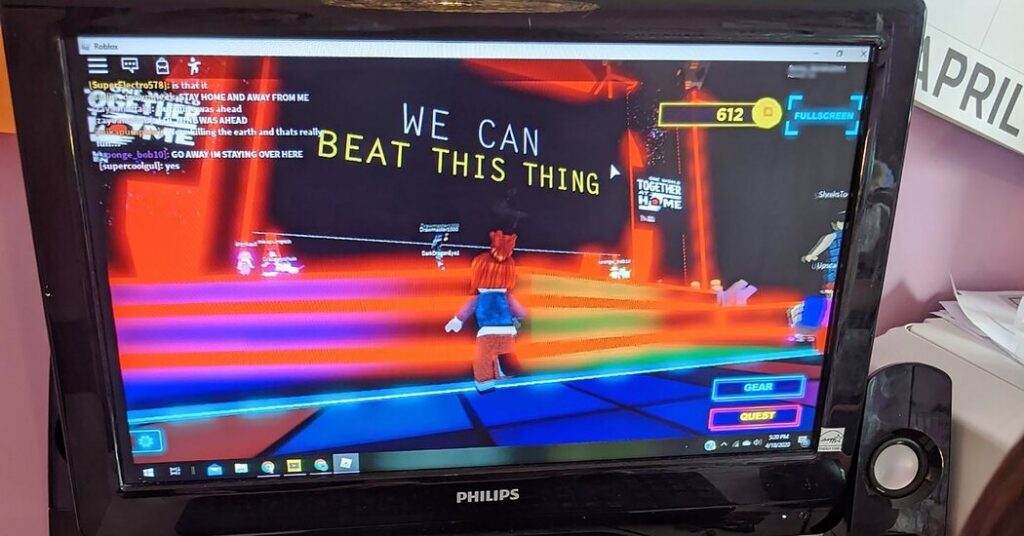
Intelligence agencies in the United States and Australia, for example, have warned of extremists using video games like Roblox and social networking communities like Discord to recruit and train new conscripts. Researchers have documented digital worlds in games on Minecraft and Roblox where players can simulate terrorist violence and mass shootings, like the 2019 attack on two mosques in Christchurch, New Zealand, in which 51 people were killed.
“Extremists are able to create these games themselves, and if they make it something children are interested in, they can get a certain profile of child to join,” said Jean Slater, who researches violent extremist movements, with a focus on Roblox. “People just assume regulators have taken care of this, because there’s no way a platform would allow an adult to talk to a 9-year-old.”
Roblox, in a statement to The Times, said content that glorifies hate “has no place” on the platform, and said it used a variety of measures such as A.I. detection and monitoring teams to identify users promoting extremism. “No system is perfect, so we work every day to improve our systems, and we encourage parents to talk to their children about online risks,” it said.
Minecraft, which offers similar creative freedom to host private servers and design maps, has been used to build “propoganda-filled environments, memorialize violent events, and embed hate speech,” according to a report by the Global Network on Extremism and Technology, a research group affiliated with King’s College London.
In a statement, Microsoft, which owns Minecraft, wrote that it “prohibits extremist content” and uses “proactive detection technologies” to ensure safety. The company said it uses chat filtering, in-game reporting and parental controls on official servers, and applies “enforcement mechanisms as needed” on private servers.
Terrorism proceedings involving minors are often shrouded from the public because of the defendants’ ages, making it more difficult to understand how they became radicalized. But in recent years, some high-profile cases have led experts to point to online platforms.
In Britain, in 2022, a 15-year-old girl groomed by a neo-Nazi in Texas became one of the youngest people arrested on terrorism charges after she downloaded bomb-making guides and posted about blowing up a synagogue. She later died by suicide.
In Estonia, a 13-year-old-boy was found in 2020 to be the commander of a self-styled global neo-Nazi group plotting attacks in Western cities through a Telegram channel.
Whether the ideas being instilled in young people now will one day result in acts of violence is impossible to predict, but the authorities say they are puzzled by the sudden spike in recruitment. Much of the increase has come in the last year and a half, according to the International Center for Counter-Terrorism, though the rise of extreme content online long precedes that.
In many cases, minors swing between competing belief systems — from white power to jihadism — which some argue suggests the problem stems more from loneliness than ideology.
“We can’t always put our finger on why there seems to be a turning point,” Mr. Renard said. “Part of it is a bit of a snowball effect. Perhaps what is happening is we are now confronted with several things that come together quite nicely: the first digital generation, young people who grew up with smartphones in their hands and parents who were quite permissive.”
Radical groups across the ideological spectrum have adapted to those generational changes.
Video games are not their only tool. Children are also being radicalized through what U.N. investigators call “sophisticated funnel strategies.” These guide young people from mainstream platforms like TikTok and X to more extremist communities on channels like Discord or Telegram that are less moderated.
Both the F.B.I. and the authorities in Canada have also raised alarm recently over so-called com networks, transnational groups of loosely organized nihilist extremists who target children online. Sometimes, they pressure children to film themselves engaging in self-harm or sexually explicit or violent acts, and then use the video as blackmail, according to the F.B.I.
“For a long time, your typical contact point would be social media,” said Arno Michaelis, a onetime neo-Nazi who now works with Parents for Peace, a U.S.-based group that helps families affected by extremism across North America. “But it’s a big concern to me that the recruitment has moved outside of social media through platforms that parents would think are more innocuous.”
The far right in particular has made efforts to become more appealing to boys and young men, and less visible to the authorities.
One way is through so-called active clubs, all-white combat groups that train young men for the race war they believe is coming. The model has spread across 27 countries, and a quarter of the newly founded groups are “youth clubs” aimed at boys age 15 to 17, according to the Global Project Against Hate and Extremism.
“It took me a few months to realize I was in it,” said one young Swede who ultimately left the club. “You first believe that people from the Third World don’t belong here. Then you start to believe racial theory.” He spoke on the condition of anonymity because he fears reprisals by members of the club. His account was verified by his counselor.
“At rock bottom,” he said, “I would say if you would ask me then if Hitler did anything wrong, I would have said ‘no.’”
Potential recruits often demonstrate traits that make them seem more vulnerable than other people or socially lost, said Allizandra Herberhold, who works with families and individuals, particularly young women, at Parents for Peace.
“If the fact that you’re white trumps any other achievement, you’re going to cling onto that,” Ms. Herberhold said. “It’s the one thing that gives you a sense of purpose, and not feel like a total failure.”
Child radicalization has torn some families apart, and there is little escaping it.
In a small coastal town in British Columbia, a 15-year-girl began chatting online with a man who tagged himself on Discord as a “national socialist groomer,” according to her parents, Ann and Shawn, who asked to be identified only by their middle names to protect their daughter’s privacy. Over the next two years, they said, she became obsessed with Nazism and began cutting herself more intensely, encouraged by an online community of extremists who advised her to resist her family’s help.
“They’re telling her: Don’t take the medication or listen to your parents. Get out of there,” said Shawn. “Those guys were able to emotionally bond her to an ideology — to this day, she feels like it saved her.”
Now, their daughter lives in a group home and refuses to come home. Her parents, who describe themselves as on the political left, are shocked.
“It’s just completely shattered our world. It’s heartbreaking,” Ann said. “If it can happen in our household, it can happen anywhere.”
Pranav Baskar is an international reporter and a member of the 2025-26 Times Fellowship class, a program for journalists early in their careers.
The post How Hate Groups and Terrorists Use Gaming Platforms to Recruit Young Children appeared first on New York Times.