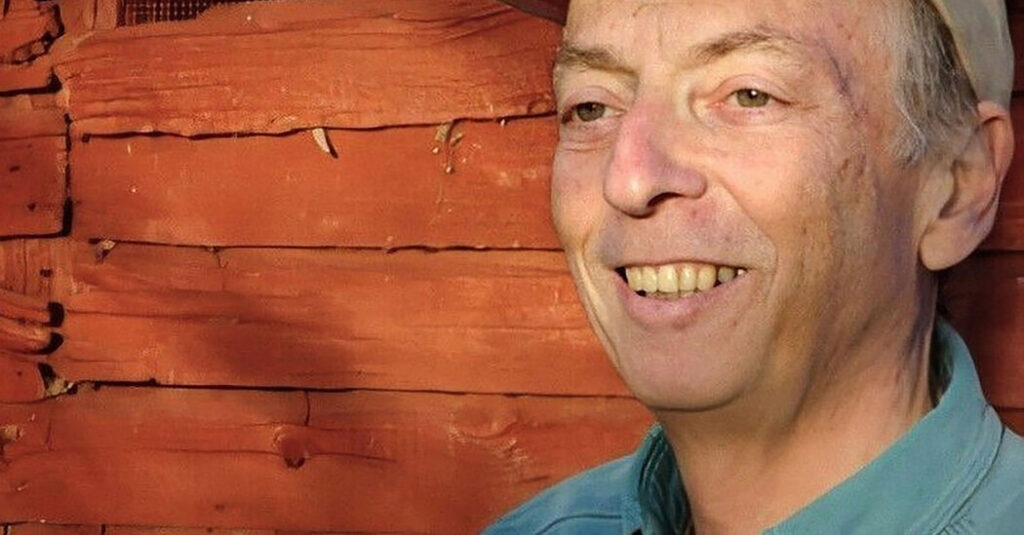
Gabor S. Boritt, who survived the Holocaust and Communist rule in his native Hungary, then arrived in New York as a penniless refugee in 1957 and remade himself into one of the world’s pre-eminent scholars on Abraham Lincoln and the Civil War, died on Feb. 2 in Chambersburg, Pa., not far from Gettysburg College, where he taught for decades. He was 86.
His son Jake said the death, in a hospice facility, was from complications of dementia.
From his perch at Gettysburg, adjacent to the sprawling site of the 1863 battle that changed the course of the Civil War, Professor Boritt built something of an intellectual empire around America’s beloved 16th president.
He founded the Civil War Institute at the college, which sponsored a summer program that brought hundreds of people to campus for days of lectures and tours. And alongside Richard Gilder and Lewis E. Lehrman, he helped found the Gilder Lehrman Institute of American History in New York, as well as the institute’s Lincoln Prize, an annual $50,000 book award.
He also wrote and edited extensively, producing a series of collections on various aspects of Lincoln’s life and presidency for Oxford University Press.
Professor Boritt received the National Humanities Medal in 2008.
“He had that immigrant’s passion,” David Blight, a professor of American history at Yale and a recipient of the Lincoln Prize, said in an interview. “He had that sense of discovery that, to him at least, Lincoln represented America.”
Professor Boritt’s achievements were all the more striking given where he began.
He was born Gabor Roth-Szappanos on Jan. 26, 1940, in Budapest, where his father, Pal, was an economist and journalist and his mother, Rozsa (Schwarz) Roth-Szappanos, managed the home.
As Jews under Hungarian fascist rule, they led an increasingly precarious life during World War II. Things worsened when Nazi Germany invaded the country in March 1944; members of his mother’s family were deported to Auschwitz and murdered.
Gabor and his immediate family, including his siblings, Judith and Adam, were forced into the Budapest ghetto, where they lived in a makeshift hospital. His father served the Resistance by rescuing people from train stations as they awaited deportation, and lived apart from the family to keep them safe in case he was caught.
Conditions deteriorated further during the winter. Later, Professor Boritt recalled watching hospital staff stack frozen corpses in the courtyard. His father returned following the Soviet liberation of Hungary in early 1945, but was imprisoned, along with Gabor’s brother, Adam, by the pro-Soviet government that took over.
Gabor’s mother died soon afterward, and he and his sister were placed in an orphanage.
As a teenager, he took part in the anti-Soviet Hungarian Revolution of 1956. He recalled shouting, “Ruszkik, haza!” (“Russians, go home!”), and helping topple a statue of Stalin.
The Soviet Union quickly crushed the uprising, and Gabor and his sister fled to Austria, where they lived in a refugee camp. There, he had his first taste of Coca-Cola. He was disappointed.
Finally, in 1957, he and his sister received U.S. visas. When they arrived in New York City, Professor Boritt later said, he had just one dollar in his pocket. Their father and brother followed, and the family changed its surname to Boritt; Gabor took part of his original surname, Szappanos, as his middle name.
He worked briefly in a hat factory in New York before heading west, to find what he had been told was the real America. Along the way, he used a booklet of Lincoln’s writings to teach himself English.
He continued his studies at Yankton College, in South Dakota, graduating with a degree in history in 1962, and at the University of South Dakota, where he received a master’s degree, also in history, in 1963.
In 1968, after earning a doctorate in history from Boston University, he joined the U.S. Army and did a tour of duty in South Vietnam, teaching American history to soldiers.
The same year, he married Elizabeth Norseen. Along with their son Jake, she survives him, as do two other sons, Beowulf and Dan, and five grandchildren.
Professor Boritt taught at Harvard, Michigan, Washington University in St. Louis and Memphis State University (now the University of Memphis) before he arrived at Gettysburg in 1981.
His first book, “Lincoln and the Economics of the American Dream,” appeared in 1978 to wide acclaim. In it, he argued that Lincoln was driven by an optimistic view of American development rooted in free labor, economic growth and government-supported infrastructure.
Professor Boritt lived in a 1799 farmhouse that had been owned before the Civil War by a free Black man, Basil Biggs, and used as a stop on the Underground Railroad. During the Battle of Gettysburg, the Confederate Army used it as a field hospital.
Aside from his classroom and scholarly duties, Professor Boritt was in high demand as a tour guide of the Gettysburg battlefield, especially for visiting celebrities and dignitaries. Among those he personally showed around the site were Elie Wiesel, Charlton Heston, Gen. Colin Powell and President George W. Bush.
His final book, “The Gettysburg Gospel: The Lincoln Speech That Nobody Knows” (2006), encapsulated many of the ideas about Lincoln that drove Professor Boritt throughout his career.
“His words pointing to rebirth went even deeper than the Christian message,” he wrote of Lincoln, “reaching the primeval longing for a new birth that humankind has yearned for and celebrated with every spring since time immemorial.”
Clay Risen is a Times reporter on the Obituaries desk.
The post Gabor Boritt, Refugee Who Became Expert on Lincoln, Dies at 86 appeared first on New York Times.