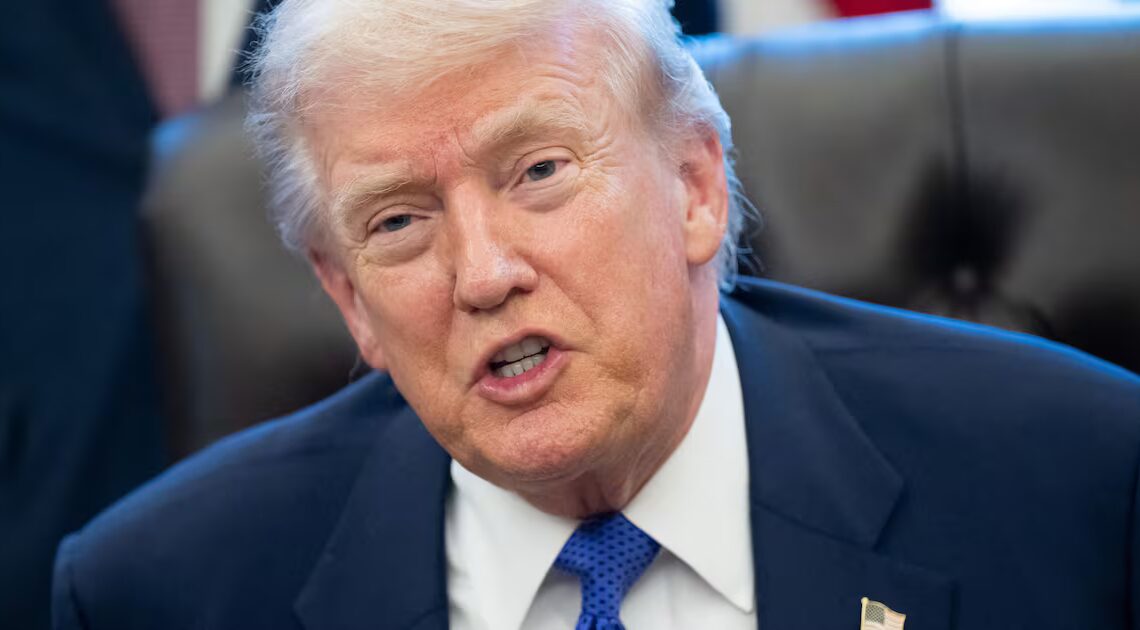
American optimism about the future has sunk to its lowest point in nearly two decades under President Trump, according to damning new polling.
The findings come from Gallup’s National Health and Well-Being Index, which has tracked public sentiment since 2008. It charts a broad retreat in expectations about life five years from now.
Roughly six in ten Americans now say they anticipate having a “high-quality life” in the future, a level Gallup reports is about nine percentage points lower than at the height of the Covid-19 pandemic.
“I think that’s disconcerting, and says a lot about the mood of the American public today,” said Dan Witters, research director for the index.
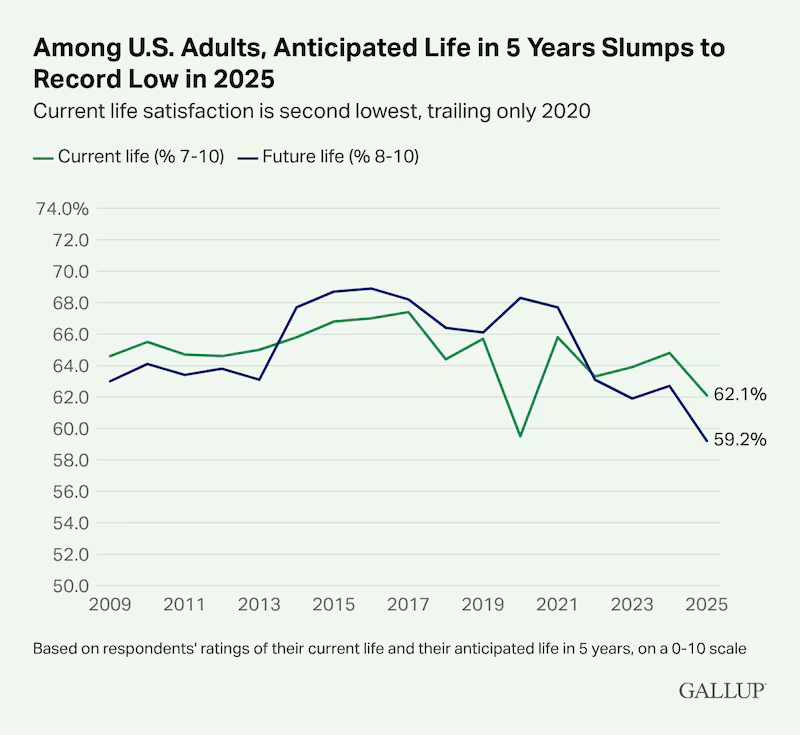
Gallup found overall optimism fell by 3.5 percentage points since 2024. Hispanic adults saw the sharpest decline, dropping from about 69 percent to roughly 63 percent. The findings are based on four quarterly surveys conducted throughout 2025, involving 22,125 respondents.
The poll asked adults to rate their current lives and their expected lives in five years on a scale of one to 10. Over the past year, about 62 percent rated their present lives at seven or higher, while roughly 59 percent said their future lives would reach an eight or above. Both measures have slid amid years marked by a pandemic, affordability pressures, turbulent national politics, and global conflict.
While respondents were not asked to explain their answers, Witters said the downturn began as high inflation strained household budgets in 2021 and 2022. “Even as the pandemic was kind of receding, those affordability issues… had a lot to do with it,” he said.
The slide has continued following Trump’s return to office. Democrats reported a 7.6 percentage-point drop in expectations for their future lives since 2024, while independents fell by 1.5 points. Republicans, by contrast, saw a modest increase of 0.9 points.
Such partisan swings are common after a change in the White House, Witters noted. But unlike 2021, when shifts largely canceled each other out after Joe Biden’s election, the gaps in 2025 did not.
Black and Hispanic adults recorded some of the largest declines in recent years, a pattern Witters said suggests minority groups have borne the brunt of lingering affordability problems. He added that the particularly steep drop among Hispanic adults, alongside the widening partisan divide, could point to the impact of Trump administration policies.
Latino voters moved away from Republicans in recent special elections, a shift Democrats have framed as backlash against the administration’s aggressive immigration enforcement campaign.
Nearly two dozen Trump voters shared their assessments of the president with Reuters. The interviews were ostensibly meant to detail what they want the 79-year-old to accomplish in 2026, with the November midterms approaching.
But a hefty chunk of the 20 respondents detailed what they think Trump could do better. A main concern was Trump’s take on immigration reform, which respondents thought he could carry out in a more discerning manner. They also demanded more of a focus on domestic issues.
Fourteen said they were disappointed by his rhetoric about annexing foreign countries, such as Venezuela and Greenland, a territory of NATO ally Denmark.
His tendency to “inflame divisions through social media posts” also irked some of his voters. Steve Egan, 65, a promotional product distributor in Tampa, Florida, said he could do the unthinkable and switch parties if things don’t change.
“When Trump’s out of office, I’m sorry, I can’t vote Democratic generally, but if there’s a Democrat that talks more sense than Trump’s doing, then I’ll probably vote for him,” said Egan.
The post American Optimism Crashes to All-Time Low Under Trump appeared first on The Daily Beast.