The Trump administration was quick to pin the blame.
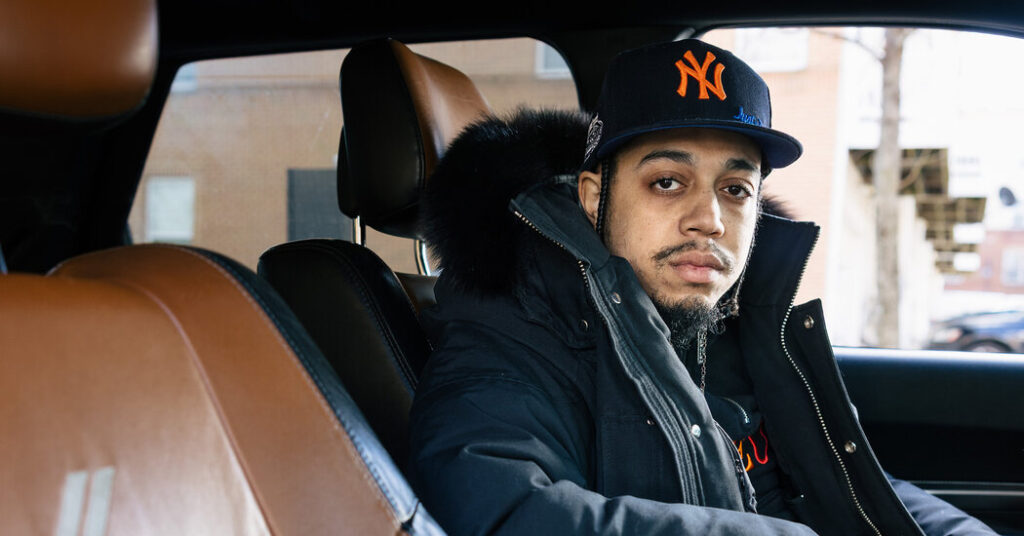
Days after a federal immigration agent shot at Phillip Brown, a U.S. citizen, last October at a busy commercial intersection in Washington, D.C., a spokeswoman for the Department of Homeland Security claimed Mr. Brown had made a “deliberate attempt” to run officers down with his car. Mr. Brown, 33, was arrested, charged with a felony — fleeing from law enforcement — and spent three days in jail.
In court, however, the case against Mr. Brown quickly unraveled as a judge found that the government failed to present any evidence supporting its claims. The judge dismissed the charges and said the agent had fired his weapon “for reasons that are completely unclear to me.”
Mr. Brown’s case is among the 16 shootings by on-duty federal immigration agents patrolling in U.S. cities and towns over the past year, including those that took the lives of Minnesota protesters Renee Good and Alex Pretti.
The Trump administration’s rush to declare Ms. Good and Mr. Pretti at fault for instigating violence was quickly undercut by a barrage of viral videos. But a New York Times review of the other shootings found that similar claims by officials fell apart more quietly when the cases went to court.
In four of the shootings where prosecutors brought assault or other charges, including against Mr. Brown, the cases fizzled after evidence emerged that contradicted the administration’s initial description of events. The charges were either dismissed or prosecutors dropped the case.
Charges against six other people who were shot at by immigration agents are pending. Five of the defendants have denied aspects of the D.H.S. accusations or presented differing accounts in court. Two cases are going to trial in April.
Tricia McLaughlin, a D.H.S. spokeswoman, stood by past statements in which she and the agency blamed people shot by officers, including labeling some of them “domestic terrorists.”
“We work every day to give the American people swift, accurate information on evolving, challenging law enforcement operations as federal law enforcement officers are facing a highly coordinated campaign of violence against them,” Ms. McLaughlin said.
She also defended the charges that have been brought by the government after violent encounters.
“Assaulting and obstructing law enforcement are felonies and federal crimes,” she said, adding that anyone “who assaults or obstructs law enforcement will be prosecuted to the fullest extent of the law.”
Ms. McLaughlin referred questions about the four cases where charges were brought and later dropped or dismissed to the Justice Department, which declined to comment.
While the administration has been quick to investigate those who were shot or fired upon, there are only two cases in which civil rights or criminal investigations into the officers’ conduct have been announced.
The two officers who shot Mr. Pretti were placed on leave. D.H.S. declined to say whether officers involved in any of the other shootings have been disciplined or suspended from their duties.
It is not unheard-of for prosecutors to bring assault charges against people shot by federal law enforcement, especially after incidents that involve people brandishing weapons or directly striking officers. But lawyers who investigate police misconduct said that consistently filing charges against people who are shot by officers can be a sign of abusive practices.
“It’s a way to discredit individuals and tip the scales so that the use of force seems more reasonable from the outset,” said Christy Lopez, a Georgetown University law professor who led such investigations at the Justice Department during the Obama administration.
“When you look at cases and it doesn’t seem like the charges are valid or that many are quickly dismissed, it’s definitely a red flag that they are misusing criminal charges,” she added.
These are the four cases that fell apart in court:
Francisco Longoria
Around 8:45 a.m. on Aug. 16, Francisco Longoria was driving a pickup truck in San Bernardino, Calif., after making a delivery for his party supply rental business when he was directed to pull over by officers in unmarked cars.
He refused demands to roll down his window. Within about 30 seconds of the officers approaching his car, they began smashing both front windows, according to videos of the incident.
As Mr. Longoria peeled away, an officer shot at the truck. A surveillance camera at a nearby business captured the encounter; Mr. Longoria’s son and his daughter’s fiancé, who were in the pickup with him, also filmed it on their cellphones.
Within a day, D.H.S. had issued a statement saying that Border Patrol officers had been injured during “a targeted enforcement operation” when Mr. Longoria “attempted to run them down with his car.” Calling him a “suspect,” the statement said he “drove directly at the officers” and then fled.
Nearly two weeks later, a team of agents went to Mr. Longoria’s house around 4 a.m. to arrest him. The agents broke the locks on the doors and aimed assault rifles at the people inside, family members later recounted. Officers detained Mr. Longoria and charged him with assaulting a federal officer with a deadly weapon, a crime that can carry a prison sentence of up to 20 years.
But when prosecutors took the case to court, they were unable to support the D.H.S. description of events.
Mr. Longoria, who is originally from Mexico and had been living in the United States for more than two decades without legal status, was not said to be the subject of a specific immigration enforcement action targeting him. Instead, court records show, federal immigration agents were conducting what Cory Burleson, a Justice Department lawyer, called a “compliance check.”
Mr. Burleson also said that he knew of no evidence showing that officers had been hurt during their interaction with Mr. Longoria. “I’m not aware of any injuries,” Mr. Burleson said at the hearing.
After viewing the video filmed from inside the truck, U.S. Magistrate Judge Joel Richlin said he could understand how, from Mr. Longoria’s perspective, “it’s quite scary.” Judge Richlin also questioned why Mr. Longoria was being pulled over. “I don’t see an allegation that there was a lawful basis to stop the vehicle,” he said.
On Sept. 17, a month after Mr. Longoria was pulled over, the government withdrew its case. Mr. Longoria remained in an immigration detention center until December, when a judge ordered him released on bond.
Marimar Martinez
The government also backed away from its case against Marimar Martinez, 31, a U.S. citizen who was shot by federal agents during an Oct. 4 encounter in Chicago and accused by the Trump administration of trying to attack the officers.
Federal immigration agents had been patrolling in Chicago for over a month as part of Operation Midway Blitz when Ms. Martinez saw a silver Chevrolet S.U.V. that she assumed belonged to immigration agents. She began following the S.U.V., honking her horn and shouting, according to footage she live-streamed on Facebook at the time. After several minutes, other motorists started following the S.U.V., too.
Ms. Martinez’s car collided with the S.U.V. Moments later, a Border Patrol agent stopped his vehicle, climbed out and fired five shots. She was struck by multiple bullets.
Later that day, in a statement posted on the D.H.S. website, Ms. McLaughlin said Ms. Martinez and another motorist had “rammed federal agents with their vehicles.” She also called them “domestic terrorists” and said that Ms. Martinez had a gun in her car. Both were charged with assaulting a federal officer with a deadly or dangerous weapon.
In court, the facts were not so clear.
The agent who shot Ms. Martinez, Charles Exum, described the collision differently than Ms. McLaughlin had: “So this was side to side,” he testified. “So I would describe it more of, I guess you’d say hit and not rammed.”
Text messages that emerged in court proceedings appeared to show Mr. Exum bragging about shooting Ms Martinez. “I fired 5 rounds and she had 7 holes. Put that in your book boys,” Mr. Exum wrote in a group message with other agents.
d, Mr. Exum drove the S.U.V. to his home in Maine, which Ms. Martinez’s legal team said raised concerns about the preservation of evidence. When reached by phone for comment, Mr. Exum hung up.
Ms. Martinez had a permit for the handgun. The government’s lawyers said in court that the firearm was not visible to the agents, and that Ms. Martinez did not brandish the weapon during the encounter.
In November, federal prosecutors moved to dismiss the indictment against Ms. Martinez and the other motorist. Government lawyers told a judge in January that there was an open criminal investigation into Mr. Exum.
Despite the dismissed charges, D.H.S. has continued to call Ms. Martinez a “domestic terrorist.” At a congressional hearing last Tuesday, Ms. Martinez said she wanted to hear the administration apologize. “Just a ‘Sorry, you’re not a domestic terrorist. We were wrong,’” she said. “A simple sorry. That’s all I want.”
Phillip Brown
On the night he was shot at, Mr. Brown, a father of three, was on his way to his cousin’s house in Northwest Washington to catch some of the night’s N.B.A. games. He did not realize that he had driven into a joint operation between the local police and federal agents aimed at fighting crime in the capital.
Two D.C. police officers and two federal agents had decided to pull him over for a missing front license plate and “heavily” tinted windows, according to the arrest report.
In court, a D.C. police officer later testified that he had heard Mr. Brown’s engine rev and then come to a stop after colliding with a motorist in front of him, followed by the sound of gunshots. No officers were positioned in front of Mr. Brown’s car, he testified, and he made no mention of Mr. Brown driving at any of them.
The shots had been fired by an agent from Homeland Security Investigations, the investigative arm of ICE. The agent had jumped out of the moving police car and fired at least three times at Mr. Brown. Two bullets struck the front passenger seat. One grazed the top collar of his jacket.
“When it finally got quiet and I realized it was cops shooting at me, I asked them, ‘What is all of this for?’” Mr. Brown said in an interview. “They were looking around and saying, “We’re trying to figure that out.’ And I’m like, ‘How do you not know why you just shot at me?’”
Although Mr. Brown was uninjured, he said he was still traumatized and angry about what happened.
“If I would’ve died, how many angles would they have tried to spin on me, to say I was the bad guy?” he said. “How are they able to draw weapons on U.S. citizens and not have no type of repercussions?”
A spokesperson for the U.S. attorney’s office in Washington said in an email that “there could be no prosecution” of the officer who fired at Mr. Brown “because no one was struck.”
Carlitos Ricardo Parias
The statement from Ms. McLaughlin made it sound as if the government’s case against Carlitos Ricardo Parias would be open-and-shut.
Mr. Parias, 44, had entered the country from Mexico more than 20 years ago without authorization. He built a following as a social media content creator under the name Richard LA and had posted about the presence of immigration agents in Los Angeles. In June, he was briefly handcuffed by ICE agents and then let go, video of the encounter shows.
A few months later, on Oct. 21, ICE agents again tried to arrest him while he was driving in Los Angeles. The agents smashed his car windows, and one agent shot him. He was taken to the hospital, where he had surgery and was detained.
In a statement later that day, Ms. McLaughlin said Mr. Parias had “weaponized his vehicle and began ramming the law enforcement vehicle in an attempt to flee.” The officer had fired “defensive shots” because he “feared for the safety of the public and law enforcement,” she said. Mr. Parias was charged with assaulting a federal officer.
Then the case went to court, and the evidence revealed a different story.
An officer’s body-worn camera footage showed that Mr. Parias’s car had been boxed in by vehicles driven by the federal officers. As he tried to maneuver his car away, several officers approached on foot and smashed the car’s front windows. An ICE officer aimed a gun through the passenger-side window at Mr. Parias, who held up his hands. The officer tried to open the passenger-side door, the video shows, and shifted the gun to his left hand, where it immediately went off, hitting Mr. Parias in the arm. The officer reacted with an expletive.
The F.B.I. conducted a use-of-force review, a government lawyer disclosed in court in December, but the outcome was unclear.
As the case against him proceeded, Mr. Parias was moved to a detention center in Adelanto, Calif., a couple of hours away. His lawyers have said he remained in severe pain from the gunshot wound and did not have access to medication except ibuprofen.
At the end of December, a judge dismissed the case against Mr. Parias, finding that the agency had detained him without ready access to his lawyer. The judge also noted that the government had delayed producing documents and other evidence as required, including submitting the body-camera footage after a court-imposed deadline. The Justice Department has appealed.
Mr. Parias remains in the detention center. Last month, a judge denied his request to be released.
Mr. Parias’s son, Ulises Parias, 19, said he had distraught conversations with his mother over how best to help his father.
“They’re basically free while they shot my dad,” Ulises Parias said. “How is that fair?”
Arijeta Lajka and Matt Schwartz contributed reporting. Georgia Gee contributed research.
Alexandra Berzon is an investigative reporter covering American politics and elections for The Times.
The post When Trump Officials’ Claims About Shootings Unravel in Court appeared first on New York Times.