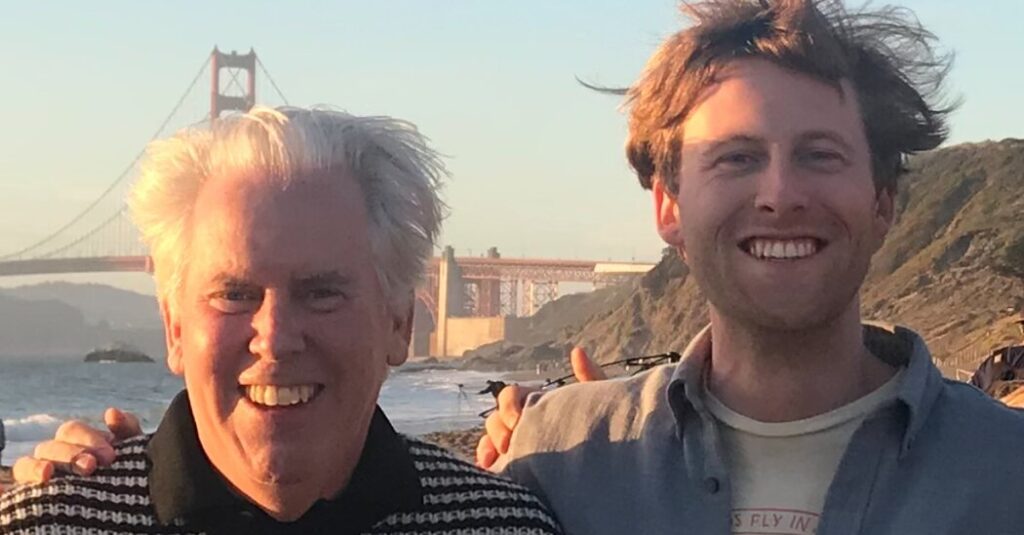
John T. McGowan had hoped that sitting in a periodontist’s chair in Ridgefield, Conn., for a three-hour root canal would be the worst part of his day. In fact, he was praying it would be.
It was Nov. 11, 2024, and John, 66, knew he had a long afternoon of worry ahead. His youngest son, Henry, was struggling with significant mental health issues and was traveling in Europe, far from his parents, his four siblings and his psychiatrist.
In a long phone conversation from Paris the night before, Henry had promised to cut his trip short and come back to the States in a day or two, after a quick stop in London and then Dublin. Henry’s family members, a close-knit crew, were holding their collective breath awaiting his return.
After the appointment, John received a call. A close friend had just met Henry for lunch in London and was alarmed. Henry, who stood 6-foot-2 and usually dressed conservatively, was roaming the city in a hot pink faux fur jacket and had, the friend thought, a wild look in his eyes. The friend was alarmed by Henry’s mystifying and paranoid ramblings and thought that he might be in free fall, a danger to others and to himself.
John and his wife, MaryAnne, were anguished. They discussed whether she should go to church to light a candle for their son.
Within hours, Henry, then 30, was sending troubling text messages to his family. He told them that he was off his medication and would see them at Thanksgiving.
Henry needed help, perhaps urgently. As his siblings, mother and doctor called the airlines, airport officials and the Irish and British police, John booked an overnight flight to Dublin.
He was certain he could find Henry and save him from himself. He had already done it once before.
From the airport in New York, John spoke by phone and texted with his other children as he awaited his flight. They thanked him for taking care of Henry and told him they loved him.
When Deirdre McKechnie, one of John’s sisters, learned he had decided to go to Ireland, she was not surprised, and she understood. “We always think we can save our children,” Ms. McKechnie said.
Twenty-four hours later, John was dead. Henry was charged with his murder.
A Father’s Priorities
In March 2022, more than two years earlier, Henry slipped out of his apartment in SoHo without alerting his family and flew to Europe.
In the months before, it had become clear to his family that he was suffering from an acute mental illness, three of his siblings said.
They asked not to be named for fear of having their private trauma known to anyone who ever searches their name on the internet. The account of what happened to Henry and John is based on interviews with them and others, as well as documents reviewed by The New York Times.
After figuring out that Henry was headed to France, John and one of his daughters rushed to board a plane. With the help of a New York City police officer working in Paris, they found him in a hospital. When John laid eyes on his son — alive and unharmed — he was visibly relieved.
Henry spent a month at a psychiatric hospital in Paris, and John remained close by, joined by his daughter and then his wife.
He played chess and basketball with Henry and chatted with other patients. Some days he arrived at the hospital with his pockets stuffed with oranges, blueberries and croissants, hoping to give his son a reprieve from hospital food.
John’s family said his devotion to his troubled son during that crisis was unsurprising: He was devoted to all five of them, making each of his children feel like the highest priority from the time they were small.
The McGowans, who raised their family in Greenwich, Conn., built their social life around their children, and they did not travel without them. John, who worked in finance, drove his children to school and was home for dinner most nights. “He helped feed the kids, he helped with bedtime, he was on the ground playing, he was in the pool all summer,” said Ms. McKechnie, his sister.
John cooked stews, he grew peonies, he sailed two-person boats, teaching his children to read the wind by studying the white peaks of waves on Long Island Sound and on Lake Michigan.
His children described him as warm, down-to-earth, intellectually curious and sometimes goofy. He was a proponent of books, crosswords and athletics, and provided one small television for his children that was turned on only when the Chicago Bulls were playing.
John and MaryAnne had never especially worried about Henry before the pandemic, not any more than parents worry about all their children. He had attended private school and graduated from the University of Virginia in 2016. He had an active social life and moved to San Francisco after college to work as a data analyst. He lived in Lake Tahoe for a stint during the remote-work era of the pandemic, and in late 2021 he moved closer to home, to New York City.
That was when the family began to notice worrisome changes.
A math-minded thinker who was skeptical about ideas that lacked tangible proof, Henry was sending long, stream-of-consciousness texts to the family about metaphysical spirituality and a certainty that mystical forces were responsible for connections that were wrongly considered coincidental.
He began spending a lot of money on art that his siblings thought was of questionable value. Generally even-tempered, he was now euphoric and bursting with conviction about his new beliefs.
But after his hospitalization in Paris, Henry seemed to return to himself as he rebuilt his life in New York. He was committed to following his treatment plan and took his medication. He hired a lawyer to set up guardrails that would allow his psychiatrist or family members to take control of his finances should his condition worsen.
He was doing well at the fintech company where he worked. He met a woman and fell in love. He set out to run the 2023 New York City Marathon, raising money for mental health awareness. He wrote on a fund-raising page that he had suffered a manic episode in January 2022 and was diagnosed with bipolar disorder 1, resulting in a hospitalization.
“There is no greater lesson from this experience than the importance of community,” he wrote. “My friends, family, therapists/psychiatrists and employer were a formidable force that put a large landing pad (spanning NYC to Paris) underneath me, one that very well could have saved my life.”
He raised more than $10,000 for the National Alliance on Mental Illness, an organization that he told local news media at the time he favored because of its focus on “the family of the individuals and empowering them and educating them to help that person.”
Henry’s marathon success was a triumph for the entire family. And for a time, the McGowans were able to exhale.
A Rescue Mission
Less than a year later, in October 2024, the anxiety returned. Henry quit his job and abruptly broke up with his girlfriend. He was making risky financial investments against his father’s advice and was fixated on a global economic crisis that he insisted was imminent. He made plans to travel, to Europe and then Bhutan, despite his parents’ opposition.
Henry stayed in close touch while abroad, sometimes having hourslong phone conversations with his parents and siblings.
By early November, they were distressed. He had sent a manic-sounding text to a close friend, and the family could tell his mental health was deteriorating. One sibling described it as a pit in the stomach that never left.
So when Henry’s friend in London reached out to say he was alarmed by how Henry looked and acted on Nov. 11, John hardly paused before booking a flight to Dublin, where the family had determined Henry was scheduled to fly that evening.
None of them knew what awaited John on the other side of the Atlantic. On the phone with one of his daughters from the airport, John said he was considering ordering a vodka. She suggested he order two.
As he waited for his flight, his children came together in a sort of digital war room. They texted and met over FaceTime, exchanging information and coordinating ideas to help John help Henry.
The family wanted the Irish police to intercept Henry at the airport and hold him there until John arrived. But after Henry’s plane landed, the police were unable to find him. The family had been tracking his location from his phone, but it stopped updating after he arrived at the airport.
John landed in Dublin around 9 a.m. and finally — two hours later — Henry surfaced, leaving his mother a voice mail message saying that he loved her and was at a hospital.
He then called one of his sisters and told her that he had thrown away his medication, phone and passport at the airport and had run six and a half miles to the Mater Misericordiae University Hospital. His thoughts had been racing uncontrollably, he said, and he was hoping to get admitted.
She called her father and told him where to find Henry.
It was about 6 a.m. for the McGowan family in the States. They had been up all night and now shifted their focus to helping John get Henry admitted to the Mater Hospital. MaryAnne was working on arrangements to fly in the next day.
While John and Henry were at the hospital, the information the family received was chaotic. Henry was being evaluated. Then he disappeared, and his father and the hospital staff could not find him. Then they did. John told his family that Henry would be admitted. But later he said a bed wasn’t available. John and Henry left the hospital. The family texted each other with their anguish and worry.
“The Mater Misericordiae University Hospital’s priority is to be at the frontier of compassion, concern and clinical care for all our patients and their families,” a spokeswoman for the hospital said. “The Mater Hospital cannot comment on individual patient cases for confidentiality reasons.”
‘Safeguard him.’
More than 150 miles away in County Mayo, Lisa Cunningham picked up her phone. An emergency room and medical helicopter doctor, she had been connected by a mutual acquaintance to the McGowans to help them navigate the Irish medical system, and now she was speaking to John.
He explained that staff members at the Mater Hospital had advised them to go to another nearby hospital the next morning. They would spend the night at the five-star hotel Henry had already booked, Ballyfin Demesne. The accommodations were in a restored manor estate near Portlaoise, about two hours by car from Dublin in traffic.
John thought it would be easier to keep an eye on Henry there than in the city, and wanted to placate Henry when he could, in this case by staying at the hotel he had chosen. John told Dr. Cunningham that he planned to stay awake all night, watching over his son to keep him safe. “I’ve done it many times before,” she said he told her.
John said the room Henry had reserved cost about 1,000 euros (almost $1,200) a night. He told Dr. Cunningham that Henry had thrown out his passport and was talking about buying land in Ireland.
She was convinced that Henry needed immediate help. What John had described to her, she felt, were obvious signs of mania. “It didn’t sit well with me,” she said.
Dr. Cunningham started making calls and connected with a hospital a short distance from the hotel. The doctor she reached agreed that Henry should be admitted as soon as possible. She told him that she would encourage John to bring Henry that evening. “Don’t let him go,” she told the doctor. “Safeguard him.”
After speaking to Dr. Cunningham about the nearby hospital, the family tried to reach John to convey the new plan.
He was not answering his phone.
One of his daughters called the hotel and told the concierge she urgently needed to speak to her father. The concierge said he would walk around the property to find him and would call back in 10 minutes.
But the call did not come.
In New York and Connecticut, the McGowans hovered over their phones, increasingly panicked.
One daughter texted Dr. Cunningham that she had a bad feeling.
“My stomach just dropped,” Dr. Cunningham said.
The McGowans called the hotel, over and over. They dialed and redialed John’s phone. Dr. Cunningham called the Portlaoise police and implored them to send officers to the hotel to check on Henry and John.
But the police were already there, she was told. There had been an emergency.
She texted the McGowans and told them what she had learned.
The family reached the police just before 9 p.m. An officer said there was bad news but could not share more.
At 11:30 p.m., one of the McGowans did an internet search and found a local news article: “A man in his 60s has died after he was assaulted in Co Laois,” it said. “A man, aged in his 30s, was arrested.”
The daughter texted Dr. Cunningham the link and wrote, “Henry killed our dad.”
On Trial for Murder
In the months since his father’s death, Henry has been held at a forensic mental hospital outside Dublin.
He has been diagnosed by doctors in Ireland with schizoaffective disorder, a designation with some similarities to both bipolar disorder and schizophrenia. People with schizoaffective disorder can experience a combination of hallucinations, delusions and disordered thought processes, as well as intense episodes of mania and depression.
This week, Henry is standing trial in a Dublin courthouse, accused of the murder of his father.
On Monday, he entered a plea of not guilty by reason of insanity. If the jury agrees, he could be held indefinitely in a psychiatric hospital.
Henry’s lawyer, Michael Staines, declined to comment.
The trial is the latest source of torment for the McGowans, who decided to speak to The Times because they want the public to know that John was a loving and exceptionally devoted father and husband who tried to save Henry, and gave his life doing so.
They have visited Henry over the past year and speak to him often. As they mourn their father, they worry about their brother.
They know their father would want them to protect him.
“The complexity of it is indescribable,” said John’s sister, Ms. McKechnie. “We all love Henry.”
Ali Watkins contributed reporting from Ireland.
Katherine Rosman covers newsmakers, power players and individuals making an imprint on New York City.
The post A Desperate Father, a Troubled Son and Death in a 5-Star Hotel appeared first on New York Times.