Extreme winter temperatures can pose an onslaught of technical challenges for drone operators on Ukraine’s front lines, a local drone commander said as his country was hit by a cold snap.
Sr. Lt. Serhii Andrieiev, deputy commander of the “Kraken” drone company in the 3rd Army Corps, told Business Insider that the cold can heavily disrupt reconnaissance and first-person-view attack drones because their parts often aren’t designed to withstand such conditions.
“Their behavior is unpredictable, how they will operate in the frost. It’s a bit, kind of like Russian roulette,” Andrieiev said. “Will it work, or will it fall on the field?”
Many drones in Ukraine are built with off-the-shelf components ordered online. The freewheeling nature of the supply market means it’s difficult to assess how consistently each individual part performs in the cold, Andrieiev said.
“These components are serially manufactured components. They are not mil-spec components. They are cheap, and well, most of them are from China,” he said.
He said Ukrainian units have learned to adapt, but these issues can delay critical missions or add to mental strain for troops already dealing with harsh weather. Such challenges also imply risks for other militaries seeking to bolster their drone forces, especially as concerns grow that potential new wars may spill into the Arctic regions.
Andrieiev was speaking as Ukraine had just experienced one of its coldest weeks since the full-scale war began. Average temperatures in the first week of February dropped to about -19°C, or -2.2°F.
In Kharkiv, where Andrieiev’s troops are fighting, some nights registered temperatures as low as -6°F.
How winter can strike a drone
Almost every part of the drone is susceptible to such cold. For example, Andrieiev said, low temperatures can significantly reduce the voltage of its battery, causing it to die more quickly when used at full capacity.
“You can’t predict the behavior of this battery. To switch on the drone, no problem. The problem starts when it flies and hits the maximum power of its battery,” Andrieiev said.
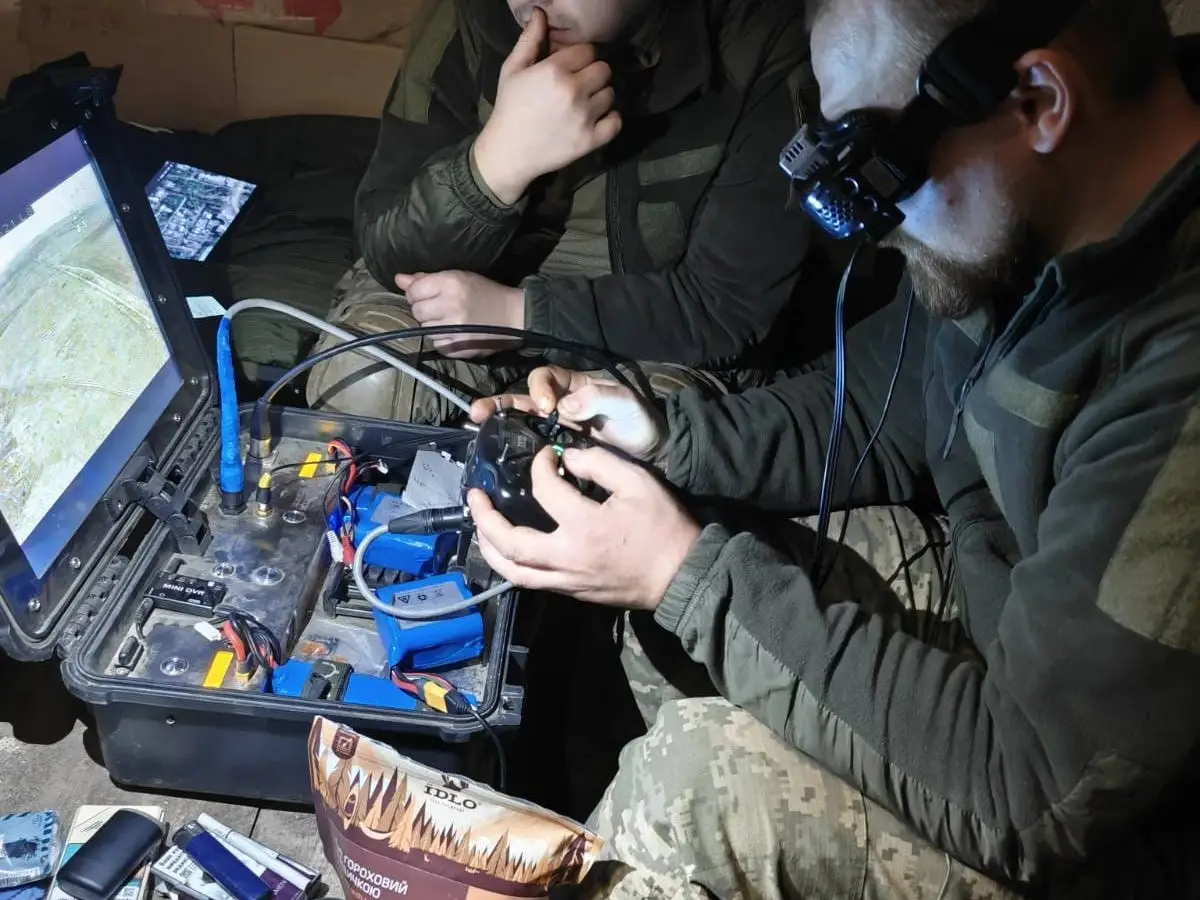
A bigger issue arises because the drone generates heat as it flies. When it’s cold out, the temperature gap between the aircraft’s internal structure and the environment puts stress on its electronics and motors.
The drone can also get wet through condensation, disrupting its wiring or fogging up its lenses. Even aerodynamics can be affected when frost and small icicles grow on the chassis or propellers.
The result can be frustrating for the drone pilot, Andrieiev said. Sometimes, they watch helplessly as their drone, still transmitting footage to their screen, crashes to the ground or into a tree because a component fails.
“You identify your target, you should hit the target. You prepare your drone, drone is starting, drone flying to target, and just in the middle of the flight, it falls to the ground. And that’s it,” he said.
When his units receive drones that aren’t working well in the cold, they typically return the entire batch to the manufacturer and request improvements.
While Andrieiev said that quality issues are becoming “much less of a problem” for Ukrainian drone manufacturers, returning drones costs valuable time.
“It takes time, and you should have a buffer stock of those components and drones, so that you can replace it faster than the manufacturer,” he said.
Other equipment for attack drones, such as antennae, transmitters, or supporting relay drones that extend signals, can also fail. Hair-thin fiber-optic cables used to circumvent Russian jamming need to be high-quality to avoid damage from the frost as well, he added.
“The FPV drone is just one link, one element of this whole system,” Andrieiev said.
Read the original article on Business Insider
The post Drones on Ukraine’s frontline perform so unpredictably in frigid weather that it’s like ‘Russian roulette’: commander appeared first on Business Insider.