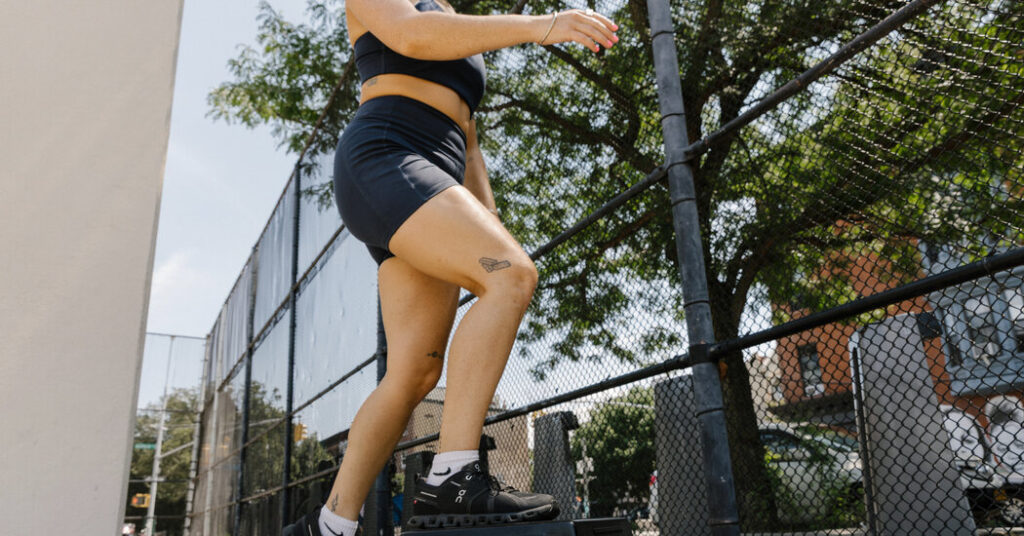
I recently got serious about exercise and now have an existential question: When working out, should brands be mixed, or should I loyally commit to a single brand? Will what I wear affect my performance? — Jonathan, Copenhagen
Pretty much every serious sports brand is engaged in a technological arms race, busy adding new advances to its workout wear — wicking, padding, springing — all in an effort to convince you that its stuff, and its stuff alone, will make you better at your sport.
While this may be true for professional athletes, who work closely with their uniform sponsors and for whom every second shaved counts — Nike designed a superlight 3-D-printed sports bra for the runner Faith Kipyegon to help her attempt to break the four-minute mile — it is less important for amateurs. For amateurs, let’s face it, stretching probably counts more.
Indeed, when it comes to picking workout gear, or committing to a type of workout gear, the issue for most of us may be more mental than physical. If you feel that you have more power or speed because your shoe or shirt is lighter, you may move as if that is true. And exert yourself as if it is true.
There is nothing wrong with that. Pretty much anytime I have spoken to serious competitive athletes, they have said that what they wear makes a difference. If they feel good, they perform better. In part this is what is behind the trend among female athletes to finally take control of their own uniforms rather than wearing shrunken versions of men’s looks.
As to how you choose what you wear to work out, there are a number of considerations.
The first criteria for amateurs should simply be what feels good and what you can afford. Investment in gear should be calibrated by how serious you are about a sport. Remember all those movies about middle-aged people dressed up in the latest sports tech as if they were about to compete in a world championship? They are almost all comedies.
Then there’s the question of association. Like fashion brands that sign celebrity ambassadors as a way to woo fans, sports brands connect with star performers to sell you the promise that the tech that made that person a success is going to filter down to you. Whether or not that is true matters less than whether or not you idolize the athlete.
On a larger scale, sports brands, even more than fashion brands, have become adept at creating communities around their values, so often people think of themselves as “Nike people” or “Adidas people” or “Sketchers people” or even “Chuck II people.” I have often thought there is an anthropological study waiting to be done in gyms around the city that could map sociocultural groups by sports brand.
And that doesn’t take into account the anti-brand disciplines, like climbing, where looking slavishly beholden to a outfitter is like wearing a neon sign that says “not serious.”
All of which is to say, if On CloudTec sneakers and NikeSKIMS leggings and Adidas Techfit tops are your jam, mix and match with abandon. Just be aware that you may be scrambling your signals.
Finally, whatever you do, stay away from the sports gear from high-end fashion brands. There may be an element of arch irony in a Louis Vuitton bicycle or Chanel boxing gloves, but that works only in magazine photo shoots, or maybe Gstaad.
Your Style Questions, Answered
Every week on Open Thread, Vanessa will answer a reader’s fashion-related question, which you can send to her anytime via email or X. Questions are edited and condensed.
Vanessa Friedman has been the fashion director and chief fashion critic for The Times since 2014.
The post Does It Matter What I Wear to Work Out? appeared first on New York Times.