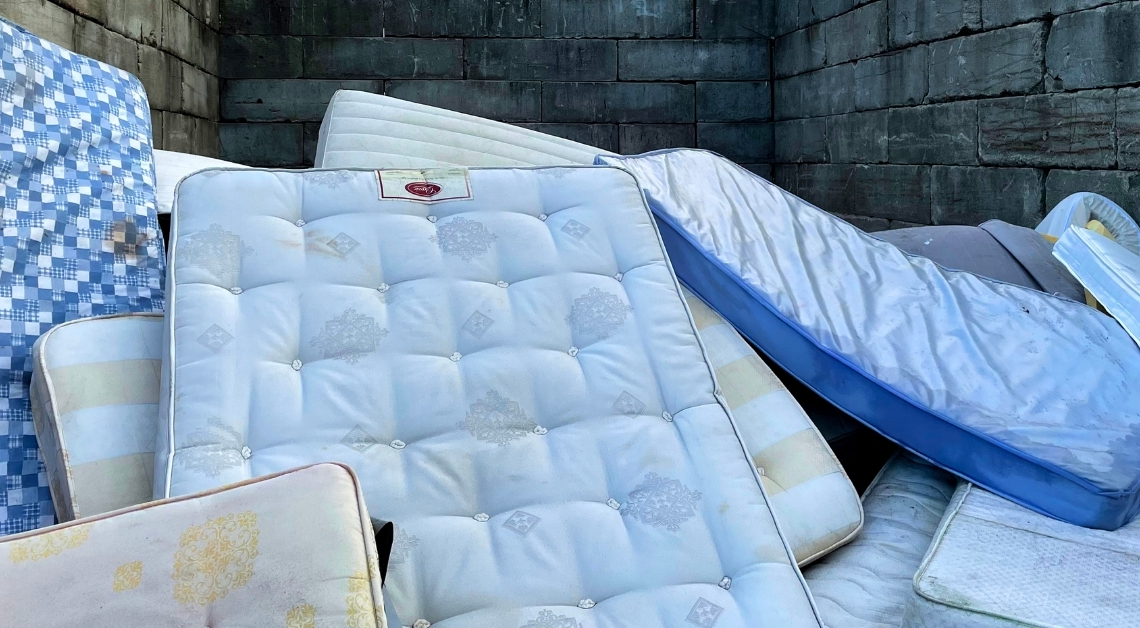
Your old, filthy mattress filled with several years’ worth of dead skin cells and dirt could one day be turned into a fire-resistant building installation grown with fungus.
In a study published in Scientific Reports, scientists at Swinburne University of Technology in Australia describe a process that combines shredded mattress foam with the fungus Penicillium chrysogenum. As the fungus grows, it binds to the foam and produces mineral compounds that can withstand temperatures up to nearly 1,000 degrees Celsius (1,832 degrees Fahrenheit).
The material is lightweight yet solid, performing almost as well as commercial insulation already used in homes and offices.
Scientists Are Turning Old Mattresses Into Something That Could Save Lives
The same qualities that make mattresses notoriously difficult to recycle also make them well-suited to serving as a fungal farm, using strains similar to those used in the food and medical industries. They are highly durable, bulky, and readily available because they are constantly tossed into landfills, where they will stick around for ages.
It can take 120 years for a mattress to break down. Considering that in the U.S. alone, more than 50,000 mattresses are thrown away every day, that’s a lot of potential forming material being tossed into landfills.
The fungal strains used are closely related to those in the food and medical industries. In a statement released, study co-author The Hong Phong Nguyen believes there’s potential beyond insulation, including fire-resistant panels and components for future construction methods such as 3D-printed buildings.
The tech is still a long way from commercial application, and even then, it won’t erase the colossal mattress waste crisis overnight. But it is a promising example of how trash can turn into something sustainable and scalable.
The post How Scientists Are Using Old Mattresses to Help Save Lives appeared first on VICE.