One of the fastest-growing left-wing pages on YouTube doesn’t look like other online political content. There are no direct-to-camera rants. And politicians don’t get much face time.
Instead, More Perfect Union has racked up millions of views with documentary-style investigations of hot dog prices at Madison Square Garden, explainers on President Donald Trump’s tariffs and reporting on local backlash to Google data centers.
The content — part of a media operation run by two longtime advisers to Sen. Bernie Sanders (I-Vermont) — presents as nonpartisan while advancing a clear progressive agenda aimed at Democrats, independents and disaffected Trump supporters.
After quietly building for five years, the outlet is breaking through and expanding at a time when Democrats are desperately seeking to counter the right-wing media sphere that helped draw working-class voters to Trump.
Now, with an eye on the midterms and the 2028 election, the channel is expanding its economic populism message into sports, culture, food, entertainment and personal finance, while also building an organizing arm modeled on successful college campus-based efforts on the right. They look to Fox News as the model for their side — a force that drives the agenda.
The approach, and early success, has turned More Perfect Union into a closely watched experiment among politicians and media analysts across the ideological spectrum, eager to see whether the left can compete online without relying on star personalities or overt partisan outrage to fuel growth.
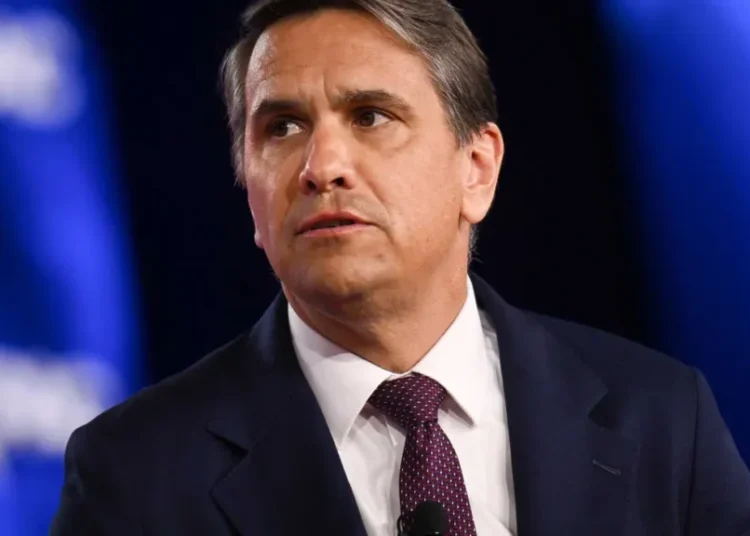
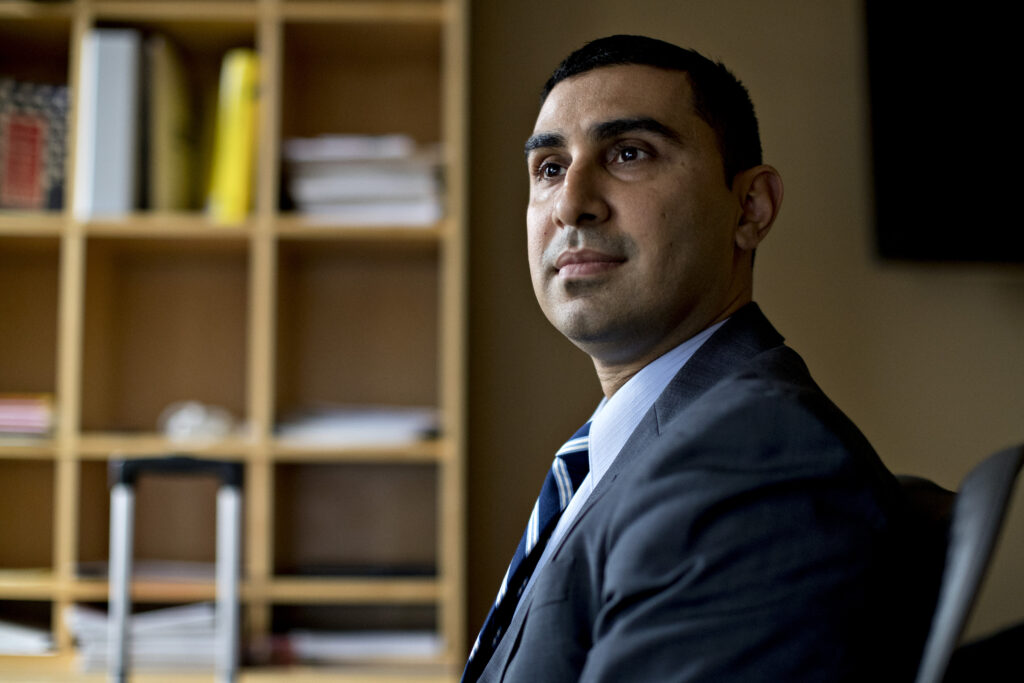
Top Democrats, including potential 2028 presidential candidates, have sought cameos on the channel, according to its founders, Faiz Shakir, who managed Sanders’s campaign and remains his adviser while also serving as executive director of the organization, and Josh Miller-Lewis, the editor in chief and former Sanders creative and digital communications director — a sign of its growing influence and ability to reach crucial constituencies.
Even some Republicans have taken notice.
“It’s obviously done through their worldview — that I think is a little warped — but they tell a good story. It’s a good product,” said Nathan Brand, a Republican strategist who also runs a newsletter that aggregates the latest trends in conservative media, noting that the focus of many videos on affordability is “meeting people where they’re at.”
While top right-wing media figures have drawn millions of followers through overtly partisan or pro-MAGA messaging — on issues such as immigration and perceived threats to masculinity — that formula of hyper-partisan rhetoric and cultural rabble-rousing has proven less effective for More Perfect Union.
Its videos have a clear perspective, championing populist economic ideas. And it seizes on many of the same issues as other successful online right-wing content, including how corporations are scamming everyday Americans, while avoiding explicit endorsement of any politician or political party. “I Investigated the $25 Billion Airline Scam,” “We Went To Nebraska: The Beef Crisis Will Shock You” and “Why Starbucks Sucks Now” are among the channel’s most recent videos.
“We’ve never hidden that our approach is always going to be to hold the rich, the powerful accountable in order to rebalance power in this country,” Miller-Lewis said.
But the outlet has struggled to replicate that success when spotlighting noneconomic issues. Shakir said YouTube videos about women’s rights and abortion have not found the same audience, as well as other topics that viewers perceive as explicitly partisan, such as immigration.
The worst-performing videos have been those featuring politicians — “except for Bernie,” Miller-Lewis said. The video “I Took Bernie Into Deep Trump Country. Can He Win Them Over?” went viral, the group’s most viewed to date with more than 10 million on YouTube alone.
Most successful political content on YouTube follows a formula: titles in all caps, a focus on sensational topics and one or two hosts looking straight at the camera to rant about news of the day, said Kyle Tharp, author of the left-leaning politics and media newsletter Chaotic Era. Numerous Democrats with podcasts or YouTube shows have built their brand by sharing their outrage about Trump’s latest actions or conducting interviews with pundits similar to what one might view on cable TV.
“I’ve always worried that, over the past year, some of these more overtly political, Dem-leaning channels are all preaching to the same audience,” said Tharp, who said More Perfect Union’s short documentary-style videos — similar to the type of content once produced by Vox or Vice News — help with audience diversification.
More Perfect Union has added more subscribers in the past 90 days than any other liberal or progressive political channel on YouTube and the third most overall, said Tharp, who runs a tracker of the top political accounts. His research shows More Perfect Union trails only Tucker Carlson, the former Fox News anchor at the center of the debate over MAGA’s future, and Nick Shirley, whose allegations of day care fraud inflamed Minnesota.
Shakir and Miller-Lewis deliberately kept their names off the first video they published, in 2021, a two-minute explainer on an Amazon union vote in Bessemer, Alabama. Its success reinforced their belief that a non-personality-driven channel, untethered from their political backgrounds, would be more effective at reaching viewers across the political spectrum.
Shakir said the decision to avoid a single star host is deliberate: He wants to build an outlet that can scale beyond any one personality and, over time, shape the political agenda the way Fox News has on the right. The organization has grown from a tiny upstart to a 30-employee operation with a $10 million budget.
Shakir said the YouTube account loses viewers around election days, when the content can veer more partisan, but otherwise consistently shares overlapping audiences with Carlson, Fox News, Fox Business and Joe Rogan, according to the data provided to them by the platform.
“They speak to the working class’s frustration at our economic and political system in a way that people can actually connect with and understand,” said Sen. Ruben Gallego (D-Arizona), a potential 2028 presidential contender who was recently interviewed on the program.
In addition to the constant CNBC stream on his TV and the copy of the Wall Street Journal scattered on the floor of his office, Shakir said he follows other channels and creators on the right — more than those on the left — for inspiration and information gathering. He credited More Perfect Union’s growth over the past year to voters’ discontent with Trump’s handling of the economy and cost-of-living concerns, and Democratic leaders’ failure to effectively address those issues.
Now the organization is seeking to grow past the online algorithm with a college program aimed at “getting beyond the liberal bubble that the left has been sort of too happy to live in,” Miller-Lewis said.
“We have a lot to learn from the way that the right and Turning Point engage,” he said, pointing to the conservative organization’s work on community college and commuter campuses, where there are large populations of working-class students.
Elise Joshi, head of More Perfect Union’s campus program, argued that the opportunity for the right to “posture as true working-class champions … only exists because we created that vacuum.”
The program will train students in advocacy journalism that they can use to pressure their universities, as well as government and corporations. It will also feature events with politicians and musicians.
“My generation as a whole are fed up with a world built by and for billionaires,” Joshi said. “We’re seeing universities act more and more like a business than an education provider. Capitulating to the Trump administration. Union busting against grad workers. We’re entering a job market that’s more and more uncertain as the cost to obtaining a degree just goes up.”
The post How two Bernie Sanders allies are trying to counter the online right appeared first on Washington Post.