The billionaire exchanged nearly 2,000 emails with the sex offender Jeffrey Epstein over more than a decade, revealing deeply personal thoughts about life, loneliness and growing old.
He kept their relationship from his investors, apparently confident that all the links between Mr. Epstein and himself, including the business they were partners in and the trips he had made to visit Mr. Epstein in jail, would never be disclosed.
But the release of three million additional pages of the Epstein files on Jan. 30 has made it clear that the billionaire, the New York real estate mogul Andrew Farkas, had a profound friendship with Mr. Epstein, whom he called “one of the blessings” in his life and “one of the bravest men I’ve ever known.”
Their relationship played out in the trading of deep confidences, swapped introductions to powerful people and visits to Mr. Epstein’s island, the documents show, and their business partnership was a mutually beneficial real estate deal that helped Mr. Epstein save millions of dollars in taxes.
In an emailed statement on Friday, Mr. Farkas issued no denials about the nature of the two men’s connection.
“I deeply regret ever associating with Jeffrey Epstein,” he said. But he disputed that he had kept the marina partnership a secret, saying that he was under no obligation to disclose it.
Over the weekend, Mr. Farkas sent over a second statement noting that his 15 years of exchanges with Mr. Epstein could “be mischaracterized” if they were “taken out of context or without understanding my broader communication style.” He added, “At no time have I conducted myself inappropriately.”
Mr. Farkas has not been charged with any crime or accused of any impropriety.
The emails between the two men, peppered with crude misogyny and casually dropped names of power players, show that Mr. Epstein’s and Mr. Farkas’s business ties were the byproduct of friendship. Seeming eager to keep Mr. Epstein in his good graces, Mr. Farkas often appeared willing to cut him in on deals. Mr. Epstein, in turn, seemed happy to be Mr. Farkas’s connector to political figures, influential bankers and others.
Mr. Farkas, 65, the scion of a family that built the department store chain Alexander’s, is the founder of Island Capital, a New York-based merchant bank, whose real estate acquisitions include the $373 million Sheraton Times Square. He is also a generous donor to Harvard University, his alma mater, where he serves as chairman of a social club called the Hasty Pudding Institute and endowed a building, Farkas Hall, in honor of his father.
In 2005, Mr. Farkas, an avid boater with a taste for massive, custom-made yachts, was looking to expand into the luxury marina business. He launched a new company, Island Global Yachting, on St. Thomas in the U.S. Virgin Islands, where Mr. Epstein had owned a private island since 1998.
In July 2006, Mr. Epstein was charged in Florida with felony solicitation of prostitution. About four months later, Mr. Farkas emailed him with news of a pending deal in the Caribbean.
“We are now in contract to buy American Yacht Harbor, where you keep your tenders,” Mr. Farkas wrote, referring to a small but lively marina on the eastern edge of St. Thomas where Mr. Epstein’s financial services business was headquartered.
“I would like to be in on that,” Mr. Epstein wrote back.
The exchange, revealed in the latest document release, contradicts a statement Mr. Farkas made to Island Capital board members in 2019, shortly after Bloomberg News wrote about the marina deal. In the statement, he insisted that any negotiations with Mr. Epstein began “before he was charged with, let alone convicted of, any crime.” Mr. Epstein died in a Manhattan jail in August 2019.
Mr. Epstein was jailed in the Palm Beach County Stockade in June 2008. People with knowledge of the matter said that during the time that he served that 13-month jail sentence for the Florida sex crimes, Mr. Farkas visited him regularly. His name has never appeared on any jail visitor log, but Mr. Epstein, in an unusual arrangement, was permitted to leave the Palm Beach jail six days a week to put in a 12-hour “workday” at his office in West Palm Beach. It was there, the emails suggest, that Mr. Farkas traveled from New York City to secretly see him.
“Great seeing you,” Mr. Epstein wrote Mr. Farkas in an email on Nov. 18, 2008, a few months into his jail sentence. “Sorry it was such a schlep.”
In an email sent on Aug. 28, 2009, Mr. Farkas described his “regular pilgrimages to Palm Beach to visit a dear friend” in reference to Mr. Epstein.
“I did not visit him inside prison,” Mr. Farkas said when asked about the emails.
After Mr. Epstein was released from jail, he and Mr. Farkas both received generous tax breaks in St. Thomas. They earned reductions on both personal and corporate income tax related to their businesses, saving as much as 90 percent, thanks to an agreement with the U.S. Virgin Islands Economic Development Authority, according to the Epstein files and documents reviewed by The New York Times.
“IGY finance and tax guy are going to speak with your guys to reconcile the tax treatment for you,” Mr. Farkas wrote to Mr. Epstein in August 2009, referring to a tax specialist employed by Island Global Yachting.
Multiple additional emails over the next decade show how Mr. Epstein and Mr. Farkas together applied and reapplied for special tax treatment in St. Thomas. The tax deals in the Virgin Islands ultimately saved Mr. Epstein more than $300 million, according to a lawsuit by JPMorgan Chase.
American Yacht Harbor was not the only business venture the two considered, the emails show. In 2012, Mr. Farkas exchanged several messages about bringing Mr. Epstein into a venture with C-III Capital Partners, the real estate investment firm that Mr. Farkas also leads.
“Let’s try to concoct a structure that works for you and I and c3,” Mr. Epstein wrote Mr. Farkas in June 2012.
“I can’t be a part of it directly,” Mr. Farkas responded the next day. “But I can organize it as between you and I and c-iii.”
The messages do not make clear what type of deal they were discussing or whether it ever went forward. But in his statement on Sunday, Mr. Farkas said it never did.
The emails also show that Mr. Farkas took trips to Mr. Epstein’s island and that the men appeared to refer to women as “gifts” on numerous occasions.
In one message, after Mr. Epstein asks if Mr. Farkas is “still waiting on gift?” Mr. Farkas responded with the name of a woman, instructing Mr. Epstein “just google and you’ll get her site and phone number.”
“If you have a masseuse out there, that would be great,” Mr. Farkas wrote in another note, while making plans for a visit to Little St. James.
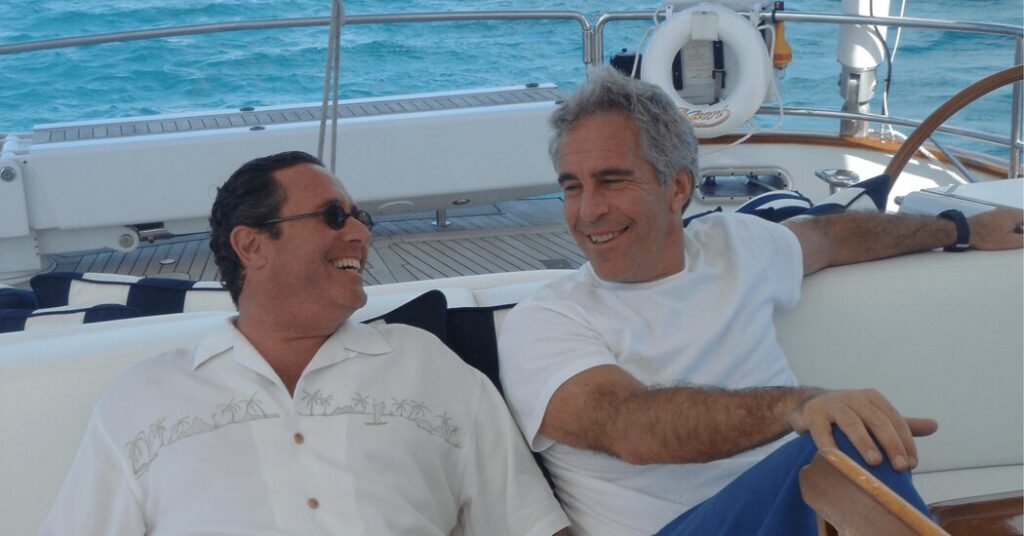
Photos released by the Justice Department also show Mr. Farkas as part of a gathering on a yacht with Mr. Epstein and Jean-Luc Brunel, the French modeling agent and Epstein associate who was found dead by hanging in prison in 2022. A number of young women are seen on the boat as well; in one image, Mr. Farkas stands on the side of the yacht with his arms wrapped around one of them.
Mr. Farkas also helped Mr. Epstein open a St. Thomas bank account in 2016.
He apparently called in a favor from Richard Carrión, the chief executive of Banco Popular, one of the largest banks operating in St. Thomas.
Mr. Farkas sent Mr. Epstein the name of a contact at the bank the next day, adding that Mr. Carrión “made the referral personally.”
Mr. Carrión and representatives for the bank did not respond to requests for comment.
And Mr. Epstein, in turn, did favors for Mr. Farkas, including making a connection to Celestino White, one of the many government leaders in St. Thomas who has been accused in legal filings of accepting bribes from Mr. Epstein in exchange for access and influence.
“He seems like the real deal,” Mr. Farkas said about Mr. White. “I hope he can help.”
Mr. Epstein also appears to have opened a door to Jes Staley, a key player at J.P. Morgan who for years served as Mr. Epstein’s chief defender there.
“Jes was everything you said he was. Great guy,” Mr. Farkas wrote Mr. Epstein in 2012. “Just left his office. I’m sure he’ll be in touch.”
Mr. Farkas sold Island Global Yachting in 2022, three years after Mr. Epstein’s death, and over the last year, as his name has continued to appear in Epstein’s documents, he has begun a campaign to buy the company back.
A legal petition that Island Global Yachting filed on Friday in Federal District Court in Manhattan accuses him of a “bribery scheme” in that bid.
The company, which is now owned by MarineMax, accuses Mr. Farkas of promising a cash payment of $900,0000 to an Island Global Yachting employee in order to obtain confidential information about the company that could help him buy it back.
Since the summer of 2024, Mr. Farkas has written several open letters to MarineMax shareholders, charging mismanagement and proposing that he buy the company back.
Mr. Farkas also offered the employee more money — up to $3 million — if and when he was able to purchase the yacht company back, the legal filings say.
“The allegations in this filing are false and meritless,” Mr. Farkas said in an email.
Debra Kamin is an investigative reporter for The Times who covers wealth and power in New York.
The post Billionaire Called Epstein a ‘Blessing’ as They Made Deals appeared first on New York Times.